

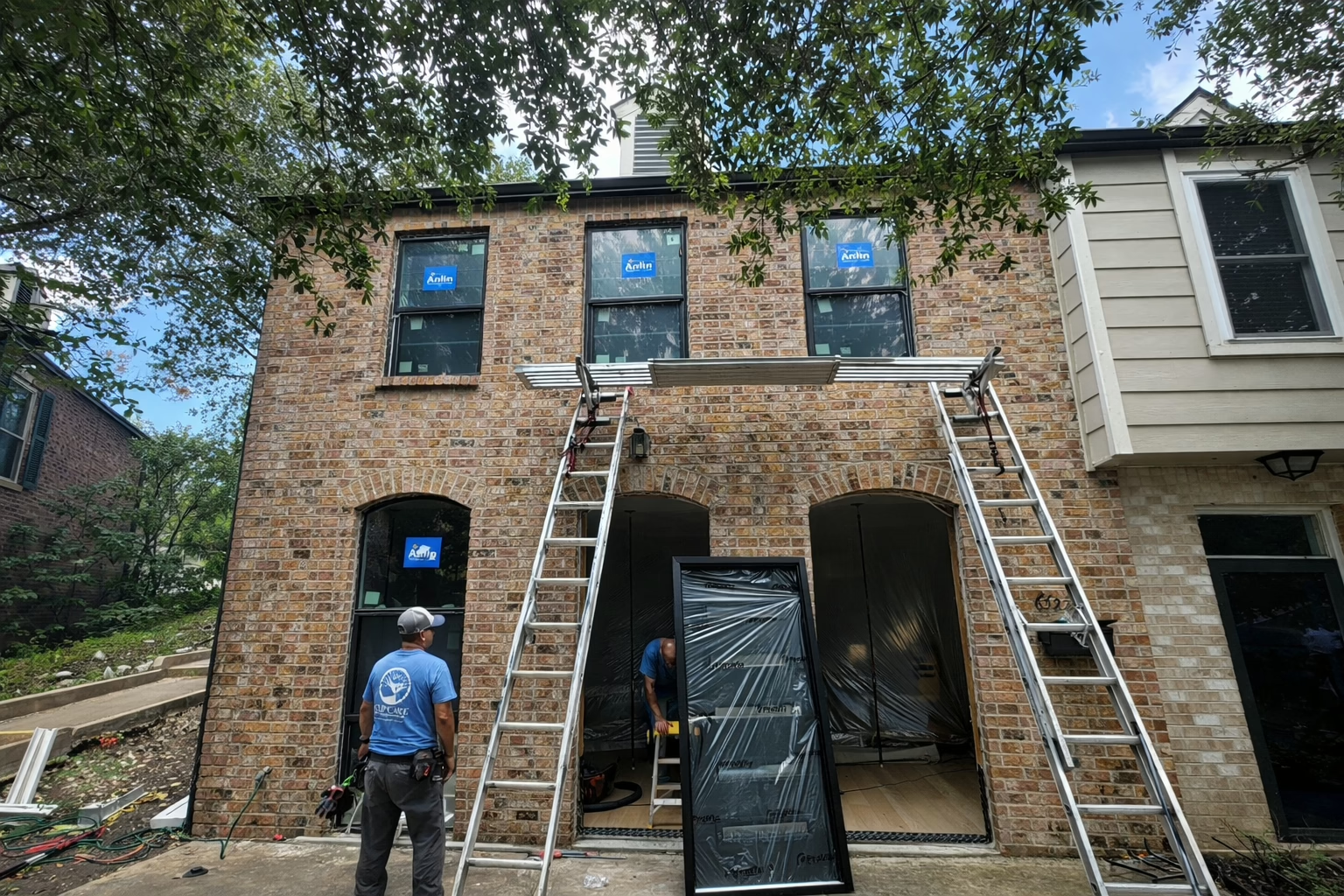
Window Leaks: Where Water Actually Comes From and How to Stop It
Water coming in around a window is one of the more urgent problems a homeowner can face — and one of the more frequently misdiagnosed. The source of a window leak is almost never where the water appears inside the home, and treating the symptom rather than the cause produces repairs that fail the next time it rains. Window leaks have a predictable set of causes, most of which trace back to either how the window was installed or how the materials around it have aged. Getting the diagnosis right before any repair work begins is what determines whether the fix holds. For the full list of window problems common to Central Texas homes, see the common window problems overview or the replacement windows overview.
Where Window Leaks Actually Come From
Water that appears on the interior wall or sill below a window has traveled to get there. It entered the building envelope at a specific point and followed the path of least resistance — along framing, through insulation, across a sill — before becoming visible inside. That entry point is almost never directly above where the water shows up. Identifying the actual source rather than the symptom location is the essential first step.
Failed or missing flashing
Flashing is the waterproofing layer installed at the perimeter of the window rough opening — typically a combination of flexible membrane flashing at the sill and sides and rigid metal or drip cap flashing at the head. When flashing is installed incorrectly, applied in the wrong sequence, or missing entirely, water that runs down the exterior wall finds its way behind the window frame and into the wall cavity. This is the most common cause of serious window leaks and the one most likely to produce significant wall damage before it becomes visible inside. It is also entirely a function of installation — the window itself is not the problem.
Failed perimeter caulk
The caulk joint at the exterior perimeter of the window frame is the first line of defense against water infiltration between the frame and the surrounding cladding. Caulk shrinks, cracks, and separates over time — particularly at corners and transitions where movement concentrates. A failed caulk joint is often the simplest window leak to identify and repair, but only if it is actually the source. Recaulking over a failed caulk joint when the underlying flashing is also compromised produces a repair that fails quickly because it hasn’t addressed the primary entry point.
Frame deterioration and gaps
A frame that has warped, cracked, or deteriorated to the point of creating gaps between the frame and the surrounding wall — or between the frame and the sash — allows water a direct path into the wall assembly. Wood frames that have not been consistently maintained are the most common source of this failure mode: once rot begins, the frame loses the dimensional integrity that kept the window sealed. The relationship between frame deterioration and water intrusion is tightly connected to the chronic condensation that accelerates it — moisture that sits on wood frames eventually works its way in.
Windows that don’t close fully
A window that can’t be closed completely or latched leaves a gap that wind-driven rain enters directly. This is an operational failure that produces a water intrusion problem — and the two need to be addressed together. Resealing around a window that still doesn’t close fully does not prevent water entry through the operational gap. The connection between windows that won’t close or latch and subsequent water damage is one of the most common patterns in window service calls after significant rain events.
Above-window roof or flashing failures
Water appearing at or below a window is not always a window problem. Water that enters through a roof failure, a failed kick-out flashing above a wall-roof intersection, or a compromised through-wall penetration above the window can travel down the wall cavity and emerge at the window location. This failure mode is particularly common on two-story homes and on additions where the roof intersects the exterior wall above a window. Treating the window as the source when the actual entry point is the roof produces a repair that has no effect on the leak.
Why Installation Is the Primary Factor in Window Leak Prevention
The majority of serious window leaks — the ones that cause wall damage, mold growth, and structural deterioration — are installation failures, not window failures. The window unit itself is a manufactured product with known performance characteristics. What determines whether that unit sheds water reliably over its service life is how the rough opening was prepared, how the flashing was sequenced, how the frame was sealed to the surrounding cladding, and how the sill was sloped and protected before the window went in.
A window installed with correct flashing — sill pan flashing sloped to drain outward, flexible membrane flashing up the jambs lapping over the sill, head flashing or drip cap directing water away from the top of the frame — will shed water reliably for decades regardless of how hard it rains or how wind-driven the rain is. A window installed without those components, or with them applied in the wrong sequence, will leak regardless of how good the window unit is. This is why installation quality is not a secondary consideration — it is the primary variable in long-term water management at every window in the home. What correct installation involves at every step is covered on the installation process page.
What Window Leaks Do to a Home Over Time
A window leak that is visible as a stain on the interior wall or sill has already been active long enough to saturate the materials it has traveled through. The damage that follows compounds with every subsequent rain event and expands in scope the longer it goes unaddressed.
Frame and Sill Rot
Wood frames and sills that are chronically wet begin to rot — softening, discoloring, and losing structural integrity progressively. Once rot is established in a wood frame, it spreads into the surrounding rough framing members. A frame replacement that should have been a window replacement becomes a framing repair when the rot has reached the jack studs and sill plate beneath the window. The cost and scope expand significantly once the structural framing is involved.
Wall Cavity Damage
Water that enters the wall cavity saturates insulation — which loses its R-value when wet and does not recover it when dried. It wets the sheathing behind the cladding, promoting rot and delamination. It wets the interior drywall, producing staining, softening, and eventual structural failure of the wall surface. None of these materials are visible during a normal inspection — the damage accumulates behind the wall finish until it is severe enough to show through.
Mold Growth
Mold establishes in wet wall cavities within 24 to 48 hours of water exposure and spreads through framing and insulation as long as moisture is present. Window leak mold is particularly common in wall cavities where insulation traps moisture against framing members — conditions that are invisible from the exterior and interior until the mold has spread significantly. Remediation of established mold in a wall cavity is a multi-trade project that typically involves opening the wall, removing contaminated materials, treating the framing, and rebuilding the wall assembly.
IGU Seal Failure
Water that reaches the perimeter of the insulated glass unit — through the frame or through failed perimeter sealing — accelerates the breakdown of the IGU seal. A window that begins leaking at the frame often progresses to foggy glass between the panes as the moisture works on the spacer and seal from the outside. The two failure modes — frame leak and seal failure — are connected and often appear together on windows with significant water intrusion history.
How Frame Material Affects Leak Susceptibility
Frame material does not determine whether a window is correctly flashed and sealed at installation — that is entirely a function of how the work was done. But frame material does determine how the window responds to whatever moisture does reach it over its service life, and that difference compounds over decades.
Wood frames are the most vulnerable — they absorb moisture, swell, and eventually rot when exposed to sustained water intrusion. A wood frame that has been chronically wet from a slow leak is likely to require full replacement rather than repair, because the frame material itself has been compromised. Vinyl frames do not absorb moisture and do not rot — water that reaches a vinyl frame runs off or sits on the surface without penetrating the material. Fiberglass frames share vinyl’s imperviousness to moisture absorption while also maintaining dimensional stability that prevents the gaps and warping that give water a path in. The full comparison of how frame materials respond to moisture over time is on the window frame materials overview.
Frequently Asked Questions: Window Leaks
How do I know if my window is leaking or if the water is coming from somewhere else?
The location of interior water staining is rarely a reliable indicator of where the water entered. Water that appears at or below a window may have entered through the window frame, through failed flashing at the rough opening perimeter, through a roof failure above the window, or through a through-wall penetration nearby. The only reliable diagnostic approach is a systematic exterior inspection during or after rain — looking for where water is running on the exterior wall — combined with an interior inspection of the wall cavity if the staining is significant. A professional assessment is the most efficient path to identifying the actual entry point before any repair work begins.
Can I fix a leaking window by recaulking the exterior?
Sometimes — if failed perimeter caulk is the only entry point and the underlying flashing is intact and correctly installed. But recaulking applied over a failed caulk joint when the flashing beneath it is also compromised produces a repair that fails quickly, because the caulk is not a substitute for correct flashing. And recaulking the exterior does nothing for water that is entering through the rough opening framing due to missing or incorrectly sequenced flashing. A recaulk repair that holds for one or two rain events before failing again is a reliable indicator that caulk was not the primary source.
My window leaks only during heavy wind-driven rain — is that normal?
No — a correctly installed and maintained window should not leak under any rain conditions, including wind-driven rain. Wind-driven rain is a standard condition that window installation details are specifically designed to manage. A window that leaks only under wind-driven rain typically has a perimeter sealing failure — either caulk, flashing, or weatherstripping — that allows water in when pressure drives it horizontally against the wall rather than vertically down it. The entry point is worth identifying and addressing rather than dismissing as an extreme weather anomaly.
How much damage can a window leak cause if left unaddressed?
Significant — and the scope expands the longer it continues. A slow leak that produces a small stain is already saturating insulation and wetting framing behind the wall. Mold establishes in wet wall cavities within 24 to 48 hours of exposure. Wood framing that stays wet begins to rot. What starts as a window repair becomes a wall opening, insulation replacement, framing repair, and mold remediation once enough time has passed. The repair cost of an unaddressed window leak typically multiplies several times over compared to addressing it when first identified.
Does a new window installation fix a leaking window?
Only if the installation is done correctly — with proper flashing sequenced correctly at the rough opening. A new window unit installed without correcting the flashing deficiencies that caused the original leak will leak again, because the window unit is not what was leaking. The rough opening preparation and flashing sequence are what determine whether the installation is waterproof. This is why installation quality is the most consequential variable in whether a window replacement actually resolves a leak problem or simply defers it.
What should I look for when a contractor proposes to fix a leaking window?
The proposal should identify the specific source of the leak — not just the symptom location — and describe what work will be done to address that source. A proposal that consists of recaulking the exterior without inspecting the flashing is not a complete diagnosis. A proposal to replace the window without addressing the rough opening flashing is not a complete repair. Ask specifically: where is the water entering, what is the condition of the flashing at the rough opening, and will the rough opening be inspected and corrected as part of the scope. A contractor who can’t answer those questions specifically is not approaching the problem correctly.
Water Coming In Around a Window? Let’s Find the Source.
A free inspection covers the window, the rough opening, the surrounding wall, and the flashing — so you know exactly where the water is entering and what it will take to stop it before any repair decisions are made.
- Leak source identified — not just the symptom location
- Flashing and rough opening condition assessed
- No deposit required to get started
- Written scope before any work begins