

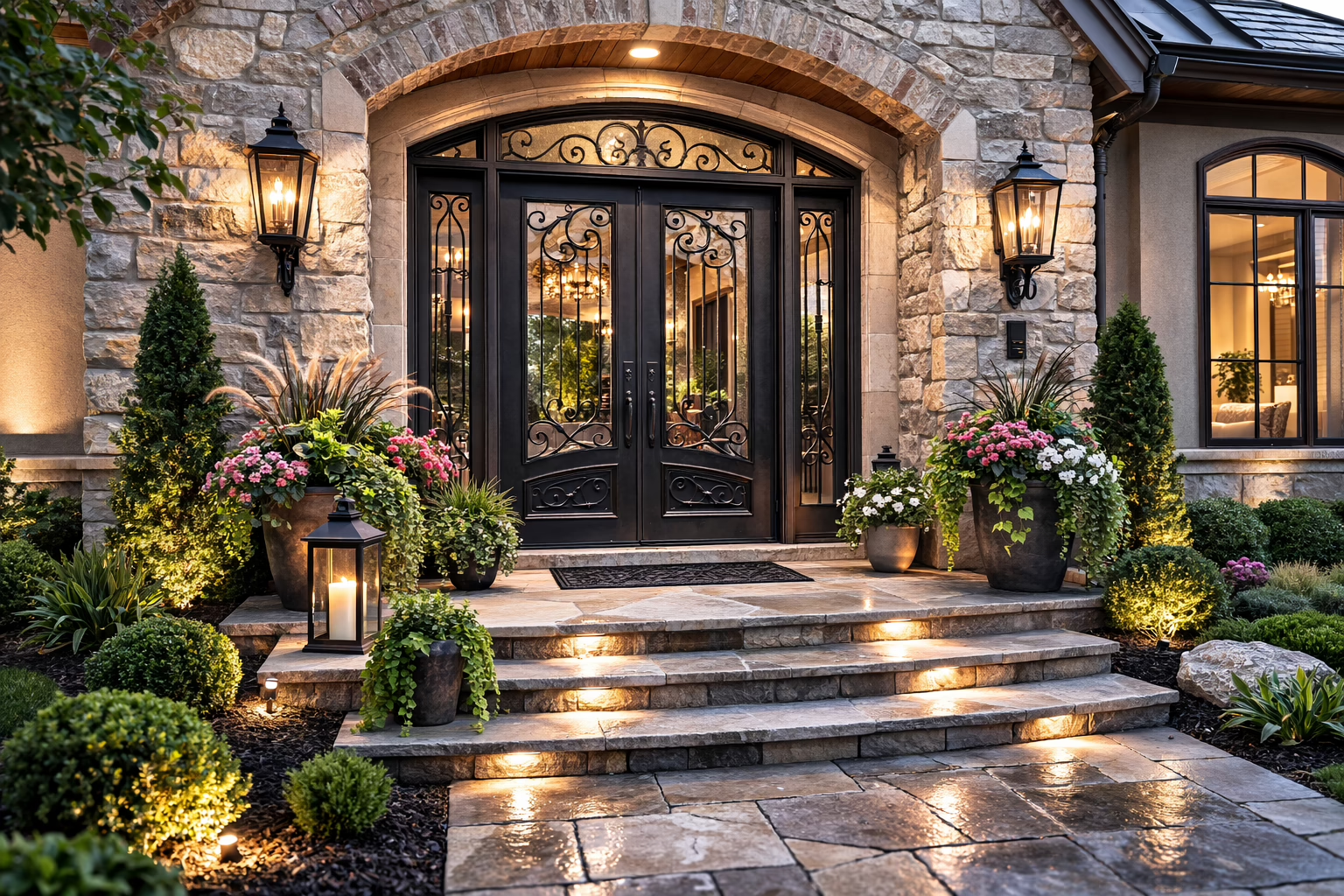
Door Replacement Cost — Installed Ranges by Type, Material, and Configuration
Door replacement cost depends on door type, frame material, glass selection, and rough opening condition. A storm door installation starts around $1,500. A full custom french door system with sidelights, transoms, and decorative glass can reach $25,000. Most single entry door replacements land between $3,000 and $7,000. The range within any door type is driven almost entirely by glass and configuration — not installation labor. Rough opening condition is the variable that can’t be fully assessed until tear-out, and it’s the one most homeowners don’t account for. For the full door overview see the door replacement overview.
| Door Type | Installed Range* | Notes |
|---|---|---|
| Storm Door | $1,500–$3,500 | ProVia exclusively — configuration and glass type drive the range |
| Steel Entry Door | $3,000–$5,000 | ProVia Legacy — glass selection and hardware configuration |
| Fiberglass Entry Door | $3,000–$7,000 | ProVia Signet or Ascent — most common entry door replacement path |
| Vinyl Sliding Patio Door | $3,000–$5,000 | Anlin Malibu — size and glass package |
| Wood Entry Door | $5,000–$10,000 | Pella Reserve or Lifestyle — species, aluminum cladding, glass |
| Fiberglass Sliding Patio Door | $7,000–$10,000 | Pella Impervia — size, glass package, configuration |
| French Doors — Basic | $7,000–$10,000 | Double door, no sidelights — glass and series |
| French Doors + Sidelights | Up to $15,000 | Configuration, glass, and surround complexity |
| Full French Door System | Up to $25,000 | Sidelights, transoms, decorative glass, custom configuration |
| Multi-Panel Sliding Door | $20,000+ | Three- or four-panel configurations, oversized openings |
* All ranges are installed cost including labor and flashing materials. Final price depends on glass selection, hardware, configuration, and rough opening condition — all assessed and quoted before anything is ordered.
These numbers tell you where to start — but they won’t tell you why two quotes for the same door opening can differ by $2,000, or why the cheaper one sometimes costs more in the long run. That’s what the rest of this page covers.
Want real contracted job values from completed Greater Austin door projects — what homeowners actually paid? We published the data.
What Drives Door Replacement Costs Up
Higher door costs reflect real differences in product quality, installation scope, and long-term performance. The variables worth paying for are specific — not marketing language.
Frame Material
The single largest cost driver within any door type. Steel is the most accessible price point. Fiberglass costs more upfront — it won’t rust, holds its finish longer, and doesn’t require the maintenance cycle steel does on south- and west-facing exposures. Wood from Pella sits above fiberglass. On patio doors, fiberglass thermoset construction costs more than vinyl but holds track alignment and dimensional stability significantly better under Central Texas thermal cycling. See door materials for the full comparison.
Glass Selection
Glass is the second largest cost variable and the one most homeowners underestimate. A small lite in a steel door is a fraction of the cost of a full sidelight system with decorative glass. Low-e coatings, laminated glass, privacy patterns, and art glass all add cost — and on french and patio doors where glass occupies most of the door, the glass package often costs more than the frame. Glass selection also has a meaningful impact on energy performance, particularly on south- and west-facing exposures.
Configuration
Single door, double door with sidelights, full surround system — each configuration step adds product cost and installation complexity. A straight single door replacement is the simplest scope. A full french door system with sidelights and transom involves multiple flashing integration points, more trim, and significantly more product. Configuration is the decision that most affects whether a project lands at the bottom or top of a cost range.
Correct Installation Details
Sill pan flashing, head flashing integrated with the WRB, low-expansion foam, permanently flexible perimeter caulk — these add time and material cost to a scope. They’re also what separates an installation that performs correctly for 20 years from one that develops leaks and frame rot within five. Most of what shows up on the common door problems page is the downstream cost of skipped installation details that looked like savings on the day of installation.
What Drives Door Costs Down — and What It Usually Means
Cheap door prices don’t happen by accident. They happen because something was removed from the scope, downgraded, or left as future risk for the homeowner.
How Low Bids Get Low
- Sill pan flashing omitted — the most commonly skipped installation detail and the primary cause of frame rot at the base of the door
- Head flashing not integrated with WRB — water enters above the door unit and travels down inside the wall before appearing inside
- Big box product at manufacturer price — sold as equivalent to manufacturer-grade product
- Trim excluded from scope — “door only” quotes that leave the surround to the homeowner
- No framing assessment — price written before anyone looked at the rough opening condition
- Short or no workmanship warranty — accountability disappears after the job
What a Legitimate Scope Includes
- OSI sill pan flashing at the base of every rough opening
- Head flashing integrated with the WRB before trim is applied
- Manufacturer-grade product — ProVia, Pella, and Anlin — with real warranty coverage
- Interior and exterior trim included in scope
- Rough opening assessed and documented before ordering anything
- 10-year workmanship warranty on every installation
Where Our Prices Fall
We’re not the cheapest — and we’re not the most expensive. Our prices reflect manufacturer-grade product from ProVia, Pella, and Anlin, correct installation with OSI flashing throughout, and a 10-year workmanship warranty that means something. We don’t cut installation details to win on price, and we don’t pad margins to create the impression of premium that isn’t there.
What we are is consistent: written scope before any product is ordered, documented assessment of the rough opening before work begins, and a company that answers the phone after the job is done. The price you’re quoted is the price you pay — rough opening corrections discovered at tear-out are the only exception, and those are documented and discussed before we proceed.
Initial Price vs. Long-Term Cost — The Decisions That Matter Most
The upfront cost difference between material tiers is real. So is the long-term cost difference. These are the two door decisions where the lifetime cost argument is clearest.
Steel vs. Fiberglass Entry Door
$3,000–$5,000
$3,000–$7,000
10 years
15 years
Real
None
Every 5–8 years on exposed entries
Minimal
For most Central Texas homeowners planning to stay long term, fiberglass delivers better total cost over the life of the door — particularly on south- and west-facing entries. Fiberglass door details →
Vinyl vs. Fiberglass Patio Door
$3,000–$5,000
$7,000–$10,000
Lifetime — parts, labor, glass
Moderate — affects operation over time
Minimal — thermoset holds dimensions
8x stronger
Vinyl is the right call for most standard patio door replacements — Anlin’s warranty is the strongest in the category. Fiberglass makes sense on high-exposure west/south-facing installations and long-term ownership. Vinyl vs. fiberglass details →
The Variable No One Quotes Accurately Before Tear-Out
Every door replacement quote is based on what’s visible before the existing door comes out. What’s behind the jamb — framing condition, flashing that was never installed, moisture damage that hasn’t surfaced yet — isn’t visible until tear-out.
What We Do When We Find Damage
When the existing door comes out and we find framing damage, rot, or failed flashing — we stop, photograph what we found, and walk the homeowner through it before proceeding. The additional scope is explained specifically: what we found, what needs to be corrected, and what it adds to cost.
Frame rot found at tear-out is the most common cost escalation on door projects. By the time rot is visible on the exterior jamb surface, it has typically progressed into the structural framing behind it. Frame rot details and what correct correction involves →
Is a New Door Worth It?
The honest answer depends on what the door is doing — or failing to do — and what’s being replaced.
Entry Doors — Almost Always Worth It
A failing entry door affects security, energy performance, curb appeal, and the first impression of the home. A new door from ProVia or Pella with correct installation holds its appearance and performance for 15–20+ years. The ROI on entry door replacement is consistently strong — it’s one of the highest-return exterior projects on resale, and the functional improvement is immediate.
Patio Doors — Worth It When the System Is Failing
A patio door that operates correctly and seals well doesn’t need replacing. When rollers are worn, the meeting rail is drafting, the glass has fogged, or the frame has deformed — replacement is the right answer. A quality fiberglass or vinyl patio door from Pella or Anlin eliminates the operational and energy performance problems that drove the replacement conversation and holds up reliably for the ownership horizon.
Storm Doors — Worth It on the Right Entry
A storm door adds air sealing, protects the primary door finish from direct weather, and gives ventilation options during mild weather. At $1,500–$3,500 installed for a ProVia storm door, the payback in extended entry door finish life and reduced drafting is straightforward on entries without significant roof overhang protection. Not worth it over a door that’s failing — the primary door problem needs to be addressed first.
Anlin’s Warranty Changes the Math on Patio Doors
Anlin’s Limited Double Lifetime Warranty — parts, labor, and glass replacement for a lifetime, transferable to the next homeowner — changes the long-term cost calculation on vinyl patio doors specifically. Accidental glass breakage is covered for as long as you live in the home. The warranty transfers with the home at resale, which is a real point of differentiation in a listing conversation. Full Anlin warranty details →
Door replacement is a meaningful investment. We offer financing options so timing doesn’t force a bad decision — or a delayed one that costs more later.
Related — Brands, Materials, Installation, and Common Problems
Door Materials
Material is the primary cost driver within each door type — and the performance differences justify the price differences. Full comparison by material.
Door Brands
ProVia, Pella, and Anlin — what each brand installs, what the warranty terms are, and where each is the right call.
Installation Process
What a complete installation scope includes, what the flashing details are, and why installation quality affects long-term performance more than product selection does.
Common Door Problems
Frame rot at tear-out is the most common cost escalation. What it looks like, how far it typically extends, and what correct repair involves.
Frequently Asked Questions
Why do two door quotes for the same opening differ by $2,000?
Almost always because one of them is missing something — sill pan flashing not included, head flashing not specified, big box product quoted as equivalent to manufacturer-grade, trim excluded, or no framing assessment built into the scope. A $2,000 difference on a door project rarely reflects negotiating room — it usually reflects a different scope. The question to ask any contractor is specifically what flashing system is included and whether framing repair is covered if deterioration is found at tear-out.
Does fiberglass cost more than steel over time?
On most Central Texas entry door applications — no. Fiberglass costs more upfront but doesn’t rust, holds its finish for up to 15 years on ProVia Signet, and doesn’t require the repainting cycle that steel on exposed entries does. A steel door on a south- or west-facing entry that develops rust or finish degradation within ten years has a real remediation cost — repainting, rust treatment, or replacement — that the fiberglass door doesn’t. For homeowners planning to stay long term, fiberglass delivers better total cost on most exposures.
What adds cost that isn’t obvious before the job starts?
Rough opening condition is the primary variable. Frame rot found at tear-out is the most common cost escalation on door projects — by the time rot is visible on the exterior jamb surface, it has typically progressed into the structural framing behind it, which needs to be corrected before the new door can be installed correctly. We document everything found at tear-out with photographs and discuss any additional scope before proceeding. The second common addition is out-of-square rough openings that require shimming and structural correction.
Is a storm door worth the cost?
On entries without significant roof overhang protection, yes — a ProVia storm door at $1,500–$3,500 installed delivers meaningful air sealing improvement, protects the entry door finish from direct UV and rain, and adds ventilation options. The payback in extended entry door finish life alone is real on exposed entries. It’s not worth it over a failing entry door — fix the primary door first — and not worth it on deeply recessed entries that are already well protected from weather.
Do you require a deposit?
No — we don’t require a deposit to get started. The assessment and scope are free, the written quote is free, and work begins without upfront payment. We’re not concerned about finishing what we start.
Get a Written Quote Before Anything Is Ordered
Free rough opening assessment, written scope with all flashing and installation details, and honest pricing before any product is selected or ordered. No deposit required.
- Free assessment and rough opening inspection
- No deposit required to get started
- Written scope before any work begins
- 10-year workmanship warranty on every installation