

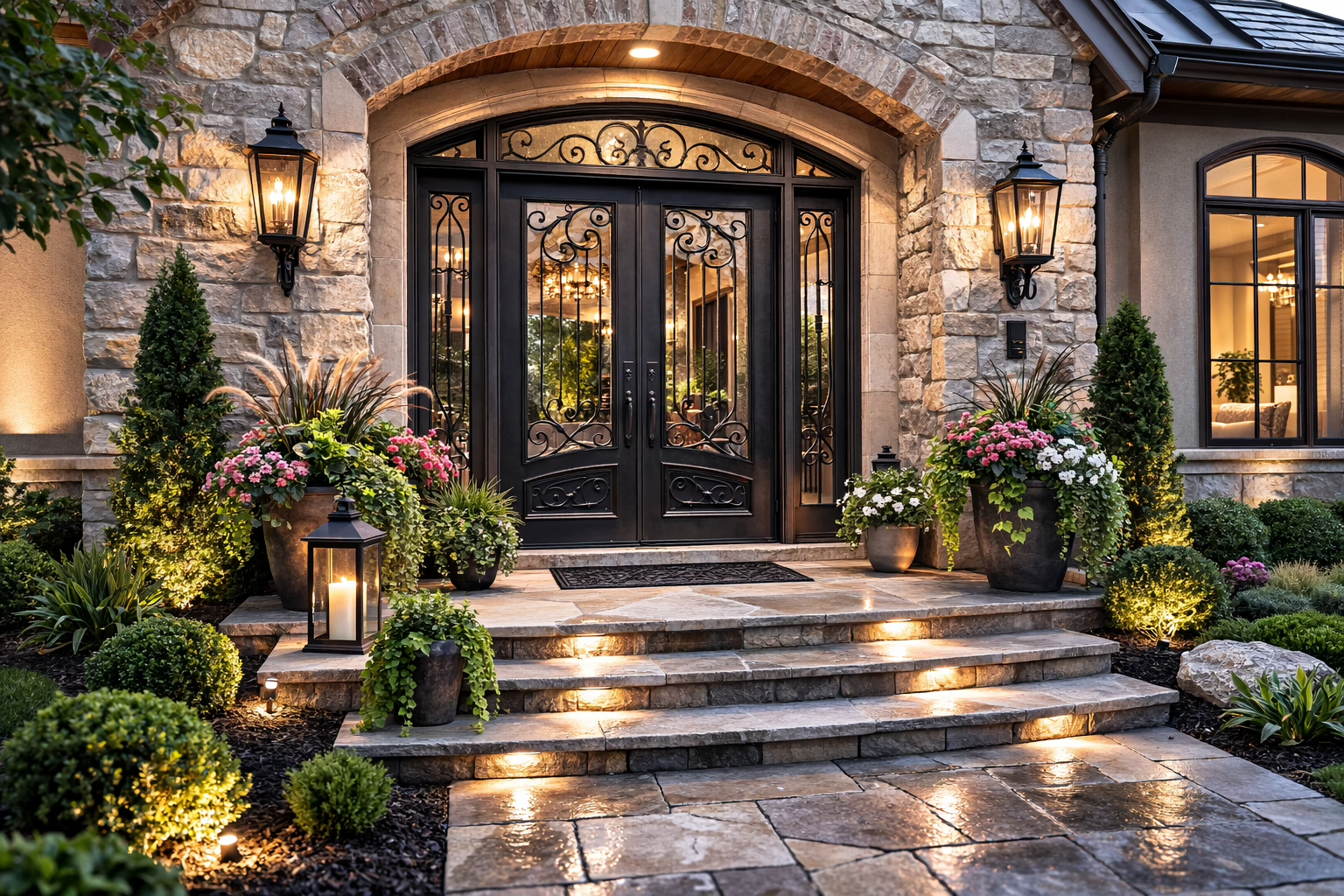
Iron Doors — What They Are, What They Require, and When They Make Sense
Iron doors are an architectural and design decision — not a performance upgrade. A wrought iron entry makes sense when the home’s style supports it: Mediterranean, Spanish Colonial, certain custom and luxury builds where a heavy iron door with scrollwork and glass is architecturally appropriate to the property and the neighborhood. The practical considerations before choosing iron are structural weight (a double iron door can weigh 300–500 lbs and requires reinforced framing and heavy-duty hinges), thermal performance (iron conducts heat and cold directly and performs poorly on energy metrics without a thermal break), installed cost (significantly higher than steel or fiberglass), and maintenance (iron rusts without proper sealing and periodic upkeep). We don’t install iron doors. If iron is the right answer for your home we’ll tell you that and point you to a specialist. For the full material comparison see the door materials overview, or for the full door overview see the door replacement overview.
What Iron Doors Are — Construction and Types
Iron doors are typically constructed from mild steel or wrought iron — the terms are often used interchangeably in the residential door market, though technically wrought iron refers to a specific hand-worked iron alloy and most modern “iron doors” are fabricated from mild steel tubing and bar stock. The construction involves welded steel frames with decorative ironwork — scrolls, forged elements, geometric patterns — and glass panels that range from clear to decorative to privacy glass.
Single Iron Doors
A single iron door typically runs 80–150 lbs depending on the amount of ironwork and glass. Standard single door openings can often accommodate a single iron door without structural modification, though the hinge side framing and hinge hardware need to be rated for the weight. Single iron doors are more common on residential entries where a double door would overwhelm the opening or the architectural context.
Double Iron Doors
Double iron doors are the most architecturally dramatic configuration — two full panels with ironwork and glass that together can weigh 300–500 lbs. The structural requirements are significant: reinforced rough opening framing, heavy-duty threshold, and hinges rated for the panel weight. Double iron doors are most appropriate on large entries with adequate surrounding masonry or structural framing to carry the load.
Glass Options
Most iron doors incorporate glass — clear, rain, flemish, obscure, or decorative art glass. The glass selection affects both privacy and light transmission, and on south- and west-facing entries the glass package has a meaningful impact on cooling load. Low-e glass options are available on quality iron door products and are worth specifying on any high-sun exposure in Central Texas.
Finish and Coating
Iron doors are finished with paint, powder coat, or applied patina finishes. Powder coat is the most durable option — it bonds to the metal surface and provides better corrosion resistance than liquid paint. Even with powder coat, iron doors require periodic inspection and touch-up at any point where the finish is compromised, because exposed iron oxidizes and rust develops faster in humid conditions than in dry climates.
What to Know Before Choosing an Iron Door
Iron doors are a legitimate architectural choice for the right home. The considerations below aren’t reasons not to choose iron — they’re the things worth understanding before committing to a product that has real structural, thermal, and maintenance implications that lighter door materials don’t.
Structural Requirements
The weight of an iron door — particularly a double door — requires that the rough opening framing be assessed and potentially reinforced before installation. Standard wood framing adequate for a fiberglass or steel door may not carry a 400 lb double iron door without modification. The hinge side takes the full dynamic load of the door swinging — the hinge hardware and the framing it attaches to both need to be rated for the weight. An iron door installer should assess the structural condition of the opening before quoting or installing.
Thermal Performance
Iron is a conductor — it transfers heat and cold directly through the material. Without a thermal break, an iron door in Central Texas summers will be noticeably warm to the touch on the interior side and will transmit heat into the entry more than a foam-core fiberglass or steel door. The glass portion of the door is the larger thermal variable — the glass area in a typical iron door is substantial, and low-e glass on south- and west-facing entries matters significantly. Iron doors are not selected for energy performance — they’re selected for appearance. That’s an honest tradeoff worth understanding going in.
Cost
Iron doors carry a significant premium over fiberglass and steel — both in the product and in the installation. A quality single iron door installed runs several thousand dollars. A custom double iron door with decorative glass and full surround installation can reach $10,000–$20,000 or more depending on the ironwork complexity and opening requirements. The cost range is wide because the product range is wide — a simple iron door with minimal scrollwork is a different product from a custom-fabricated double door with hand-forged elements and art glass. For full context on door costs see the door cost page.
Maintenance
Iron rusts when the protective finish is compromised and moisture reaches the metal substrate. In Central Texas’s humidity — particularly during spring and fall wet seasons — any breach in the powder coat or paint finish is a rust initiation point. Periodic inspection and touch-up at scratches, chips, and hardware attachment points is non-negotiable maintenance on an iron door. A well-maintained iron door holds its appearance for decades. A neglected one can show surface rust within a season at compromised points.
Architectural Fit
An iron door that doesn’t fit the architectural context of the home and neighborhood looks out of place regardless of how well it’s built or installed. Iron doors read as a specific aesthetic statement — Mediterranean, Spanish Colonial, certain transitional and luxury styles. On a traditional brick colonial or a contemporary ranch, an iron door typically conflicts with the architecture rather than enhancing it. The neighborhood context matters too — an iron entry that reads as appropriate on a custom home in a luxury neighborhood may read as an anomaly on a similar street where no other homes have that aesthetic.
When Iron Is the Right Answer
Iron makes sense when:
- The home’s architecture is Mediterranean, Spanish Colonial, or a style where iron is contextually appropriate
- The neighborhood supports the aesthetic — other homes in the area have similar design language
- The entry opening has or can accommodate the structural requirements
- The thermal performance tradeoff is accepted — the home has adequate HVAC capacity and the entry aesthetic is the priority
- The maintenance commitment is accepted and budgeted for
- The budget supports the full installed cost including any structural work required
If this describes your project, we’ll point you toward an iron door specialist who can assess the opening and fabricate or source the right product.
Consider alternatives when:
- The home’s architecture doesn’t support the iron aesthetic — it will look out of place
- The entry opening isn’t structurally prepared for the weight
- Energy performance is a priority — iron is the lowest-performing door material on thermal metrics
- The maintenance commitment isn’t realistic — an iron door that doesn’t get maintained deteriorates visibly
- Budget is constrained — iron is the most expensive residential door option
For most entry door and french door projects, fiberglass or steel is the right answer — and we’ll give you an honest assessment of which one fits your situation.
Frequently Asked Questions
How much does an iron door cost installed?
The range is wide. A straightforward single iron door installed runs $3,000–$6,000 depending on the ironwork complexity and glass selection. A custom double iron door with decorative glass, full surround, and any required structural work can reach $10,000–$20,000 or more. Custom-fabricated doors with hand-forged elements and art glass sit at the top of the range. The product quality, fabrication complexity, and opening requirements all drive the final number significantly.
Do iron doors rust in Central Texas?
They can — at any point where the protective finish is compromised and moisture reaches the underlying metal. Central Texas humidity, particularly during spring and fall wet seasons, accelerates rust development at unprotected points. Powder coat provides better corrosion resistance than liquid paint and is the recommended finish for iron doors in this climate. Periodic inspection and touch-up at scratches, chips, and hardware attachment points is the maintenance routine that prevents surface rust from becoming a structural issue.
Do you install iron doors?
We don’t — iron door installation is a specialized scope that requires fabricators and installers who work specifically with that product. We install fiberglass and steel entry doors from ProVia, and fiberglass and vinyl patio doors from Pella, Anlin, and ProVia. If iron is the right answer for your home we’ll tell you that clearly and can point you toward the right resource for this market.
How heavy is an iron door?
Single iron doors typically run 80–150 lbs depending on construction and glass area. Double iron doors can weigh 300–500 lbs for the pair — 150–250 lbs per panel. The weight determines the structural requirements for the rough opening framing and the hinge hardware. Standard residential framing adequate for a fiberglass or steel door may not carry a heavy iron door without modification — a structural assessment of the opening is a necessary first step before selecting or ordering an iron door.
What architectural styles work with iron doors?
Iron doors read most naturally on Mediterranean, Spanish Colonial, Tuscan, and certain transitional and luxury custom styles. These architectural languages share design elements — arched openings, stucco or stone exteriors, decorative ironwork elsewhere on the property — that make an iron entry door contextually appropriate. On traditional American styles (colonial, craftsman, farmhouse), contemporary, or mid-century homes, an iron door typically conflicts with the architecture rather than enhancing it. The neighborhood context matters as much as the individual home — an iron entry makes sense where other homes in the area share the design language.
Not Sure Which Door Material Is Right for Your Home?
We’ll give you an honest assessment — including whether iron is the right call or whether a different material fits better. No deposit required, no pressure.
- Free assessment with honest material recommendation
- No deposit required to get started
- Written scope before any work begins
- 10-year workmanship warranty on every installation