

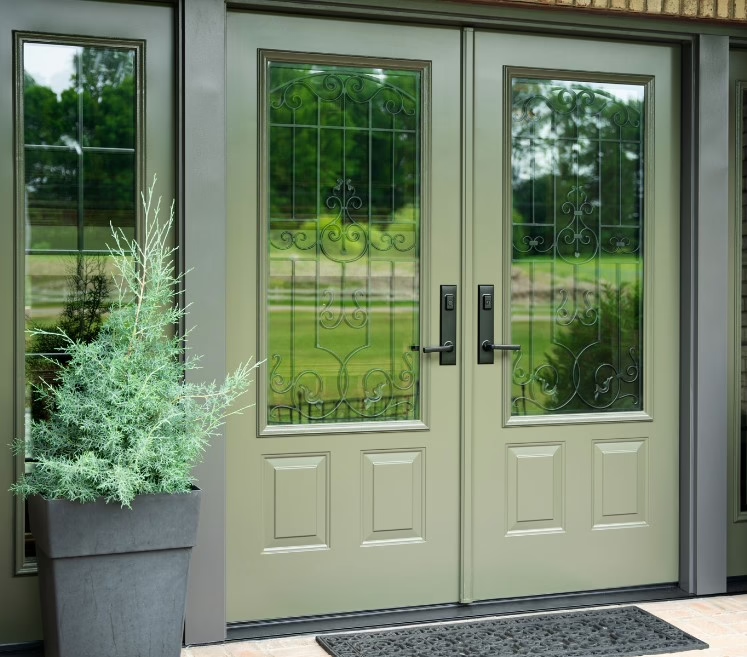
Steel Entry Doors — ProVia Legacy 20-Gauge Steel Door Installation
Steel is the most straightforward entry door material — strong, secure, and less expensive than fiberglass. It’s not the most nuanced choice, and in Central Texas conditions it has real limitations on south- and west-facing entries where sustained UV and heat accelerate finish degradation and introduce rust risk if the surface is ever compromised. But for budget-conscious projects, north-facing entries with limited sun exposure, or situations where security per dollar is the primary driver, a well-built steel door is a legitimate answer. ProVia’s Legacy line is what we install — 20-gauge steel, 49% thicker than the standard 24-gauge used by most manufacturers, with a finish system and construction quality that outperforms what’s available at the lumber yard. For the full material comparison see the door materials overview, or for the full door overview see the door replacement overview.
What a Steel Entry Door Actually Is
Steel entry doors are not solid steel — they’re steel skins over an internal frame with a foam insulation core. The steel skins provide structural rigidity, impact resistance, and the substrate for the finish. The internal frame provides the structural attachment points for hinges, lock hardware, and the door’s dimensional stability. The foam core provides the insulation value.
Gauge — Why It Matters
Steel gauge measures thickness — and the difference between 20-gauge and 24-gauge steel is significant. ProVia Legacy uses 20-gauge steel, which is 49% thicker than the standard 24-gauge used by most competitors including big box options. Thicker steel means more resistance to denting, more rigidity under impact, and a stiffer door that holds its frame alignment better over years of use. A dented steel door can’t be repaired the way a fiberglass door sometimes can — gauge determines how likely that is to happen.
Construction — What’s Inside
ProVia Legacy uses a continuous steel skin that wraps the edges of the door — not skins that butt at the edge where water and corrosion find entry points. A tab-and-slot mechanical interlock system connects the steel components, a composite lock block provides solid hardware attachment, and foam insulation fills the interior. The composite top and bottom end caps resist moisture entry at the most vulnerable points on the door assembly.
Finish Options
Steel doors are paint-only — they cannot be stained. ProVia Legacy is available in smooth steel, woodgrain textured steel, high-definition embossed steel, and Shaker embossing. The woodgrain texture on a steel door is embossed into the skin rather than created from a wood mould the way fiberglass woodgrain is — it reads as textured paint rather than real wood when examined closely.
Energy Performance
ProVia Legacy reaches a U-factor as low as 0.17 — strong thermal performance at the price point, ENERGY STAR capable. Steel conducts heat more than fiberglass at the edges where the skins meet, but the foam core delivers meaningful insulation at the center of the door. For most entry door applications the thermal performance difference between steel and fiberglass is less significant than the glass package selection.
ProVia Legacy — What We Install
ProVia Legacy is the steel line we install on entry door projects. It’s built to a significantly higher standard than big box steel doors and priced accordingly — but the construction quality shows up in how the door performs and how long it holds its finish.
ProVia Legacy — Key Specifications
20-gauge — 49% thicker than standard 24-gauge
Continuous steel skin wrapping all edges
Tab-and-slot mechanical interlock
Composite lock block for hardware attachment
Composite top and bottom — moisture resistant
Foam-filled interior
As low as 0.17 — ENERGY STAR capable
Z-AC auto-adjusting threshold
10 years
Smooth, woodgrain, high-definition embossed, Shaker
Full ProVia door line details including glass options and hardware at ProVia doors page →
Steel vs. Fiberglass — The Honest Comparison
Steel and fiberglass are the two dominant entry door materials — and the decision between them is the most common question on entry door projects. The honest answer is that fiberglass wins on almost every performance metric in Central Texas conditions, and steel wins on price and security per dollar. Whether the premium for fiberglass is worth it depends on the specific situation.
| Factor | Steel | Fiberglass | Winner |
|---|---|---|---|
| Upfront Cost | Lower — most accessible price point | Higher upfront investment | Steel |
| Security | Strongest material against forced entry — 20-gauge is physically harder to breach | Good structural integrity at lock points — not the same as raw material strength | Steel |
| UV Resistance | Moderate — finish degrades faster under sustained UV, rust risk if finish is compromised | Excellent — quality finish systems hold 10–15 years even in high UV exposure | Fiberglass |
| Rust Risk | Real risk on compromised finishes — particularly on south/west-facing entries | None — fiberglass doesn’t corrode | Fiberglass |
| Finish Options | Paint only — no staining, limited woodgrain realism | Paint or stain — woodgrain created from real wood mould looks like real wood | Fiberglass |
| Dent Resistance | Dents permanently under impact — thicker gauge reduces but doesn’t eliminate risk | Won’t dent — can crack under severe impact but generally more impact-tolerant | Fiberglass |
| Thermal Performance | U-factor as low as 0.17 — strong at the price point | U-factor as low as 0.16 — marginal improvement, glass package matters more | Roughly equal |
| Finish Warranty | 10 years | 10–15 years depending on series | Fiberglass |
| Long-Term Value | Good on budget-constrained or low-exposure entries | Better for long-term ownership on high-exposure entries | Fiberglass |
The full fiberglass case — including how the manufacturing process produces the woodgrain and why thermoset fiberglass holds up better under Central Texas thermal cycling — is on the fiberglass door materials page.
When Steel Is the Right Answer
Steel makes sense when:
- Budget is the primary driver — steel delivers the best performance per dollar
- The entry faces north and doesn’t get significant direct sun exposure
- Security against forced entry is the top priority
- Shorter ownership horizon — the long-term value argument for fiberglass diminishes over 5 years
- The aesthetic goal is clean painted steel rather than wood appearance
Steel is the wrong call when:
- The entry faces south or west and takes sustained direct sun — rust risk and finish degradation are real on these exposures
- Wood stain appearance is the goal — steel can’t be stained
- Long-term ownership of 15+ years — fiberglass holds finish and appearance longer
- High-traffic entries prone to impact — dents are permanent on steel
For south- and west-facing entries on homes with longer ownership horizons, see the fiberglass door page →
For most front entry door replacements on budget-constrained projects or lower-exposure entries, ProVia Legacy delivers legitimate performance. It’s not the answer for everything — but it’s not the compromise product it’s sometimes characterized as either. 20-gauge steel with a composite lock block and continuous edge wrapping is a real door built to a real standard.
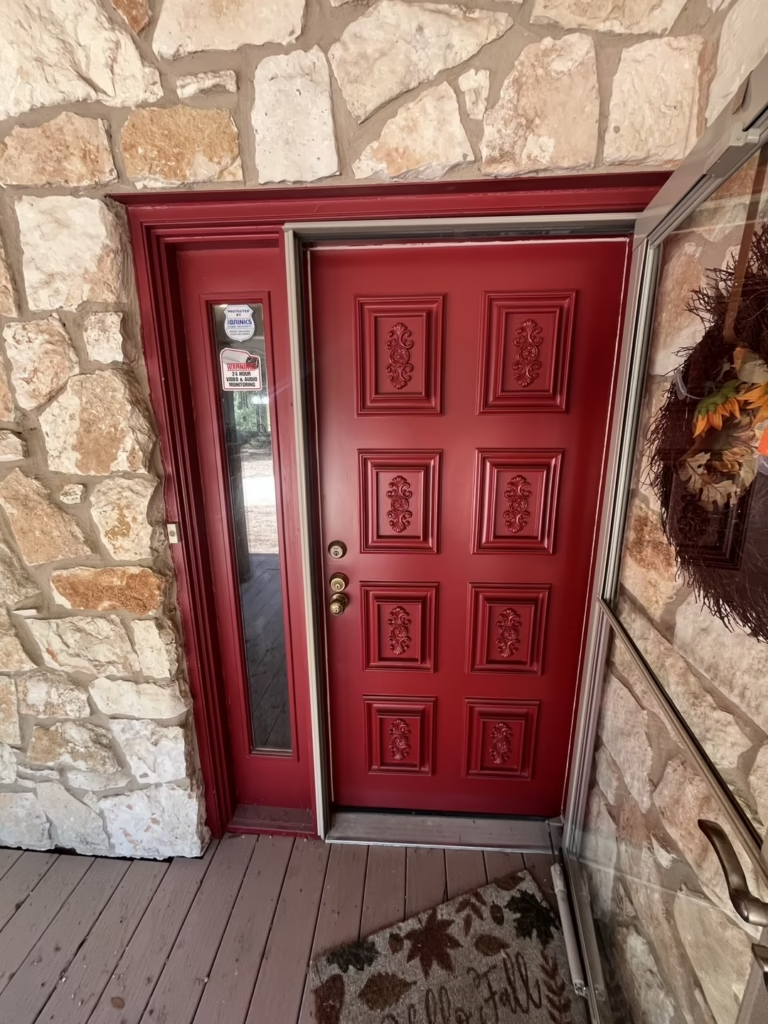
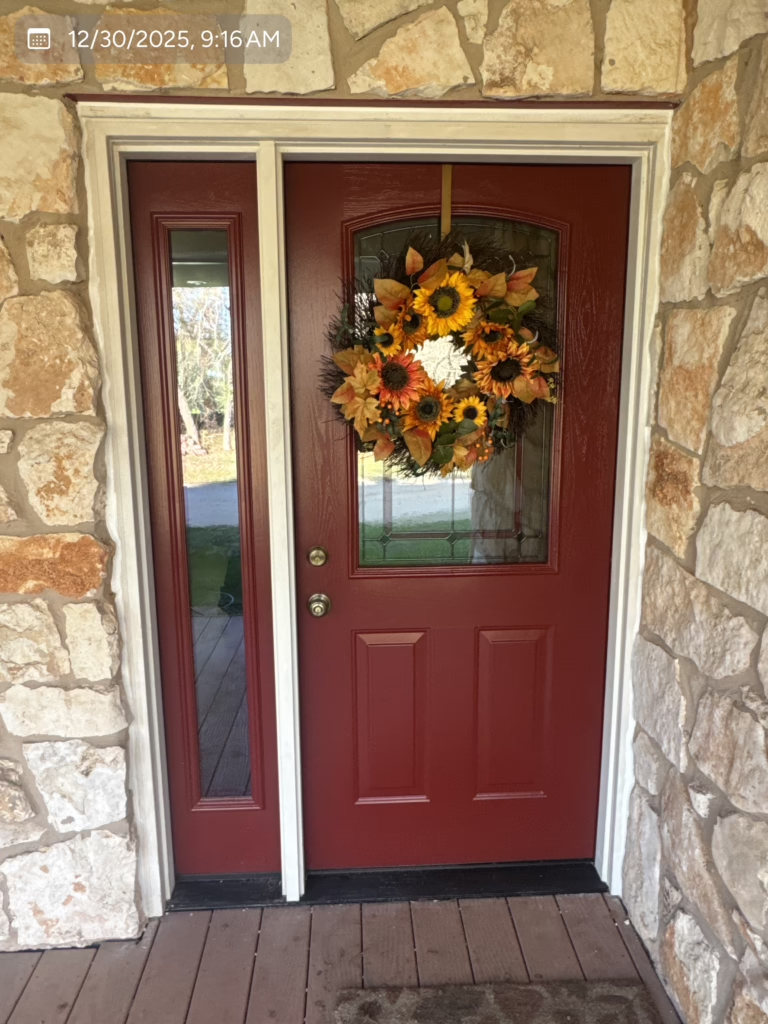
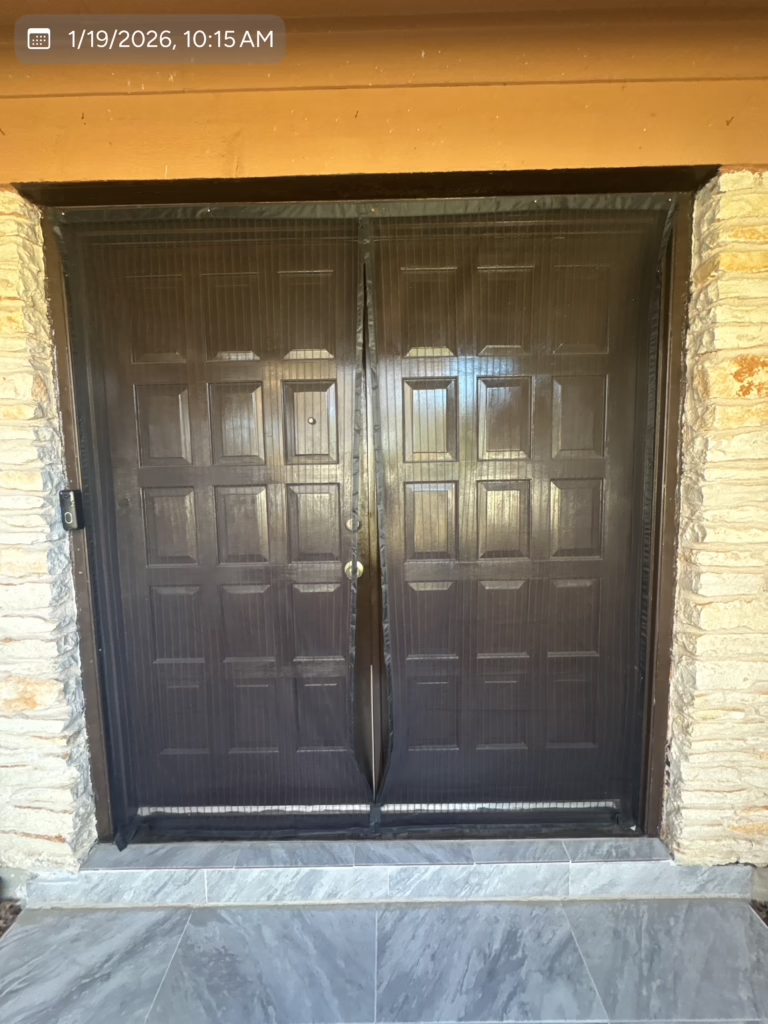
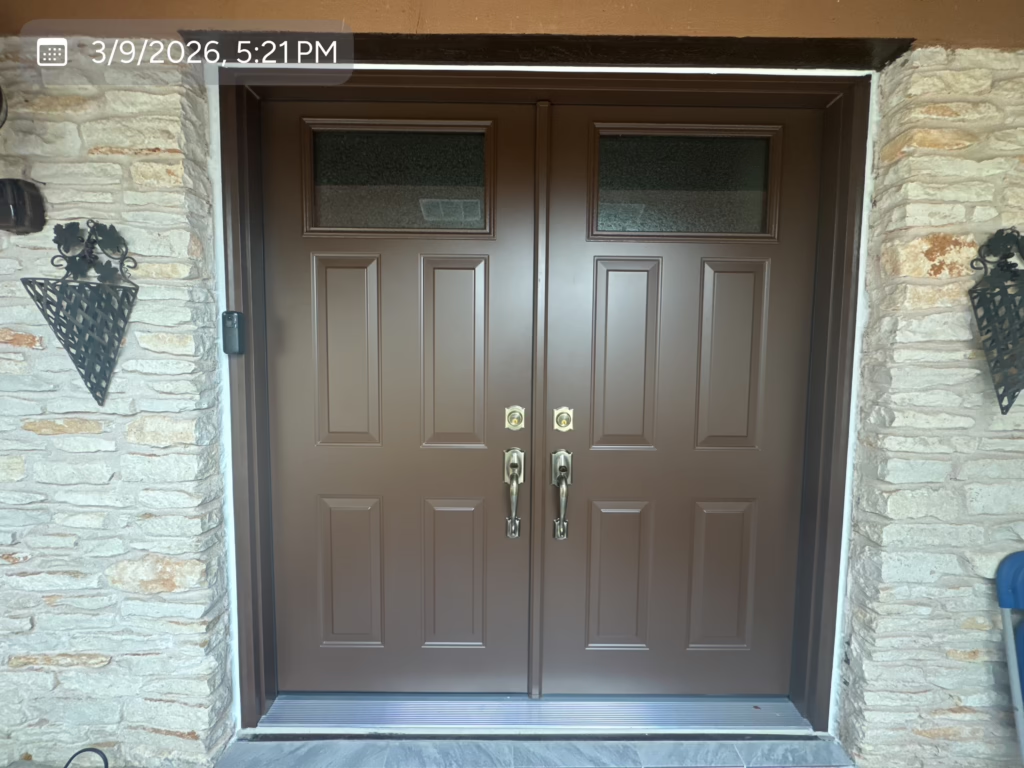
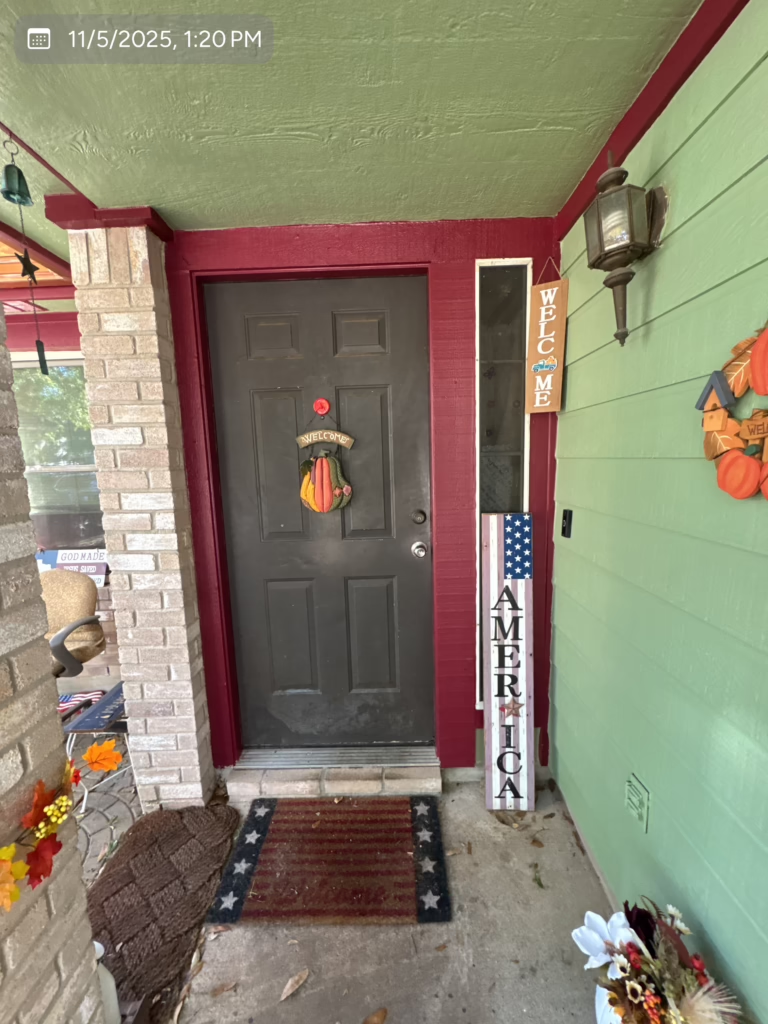
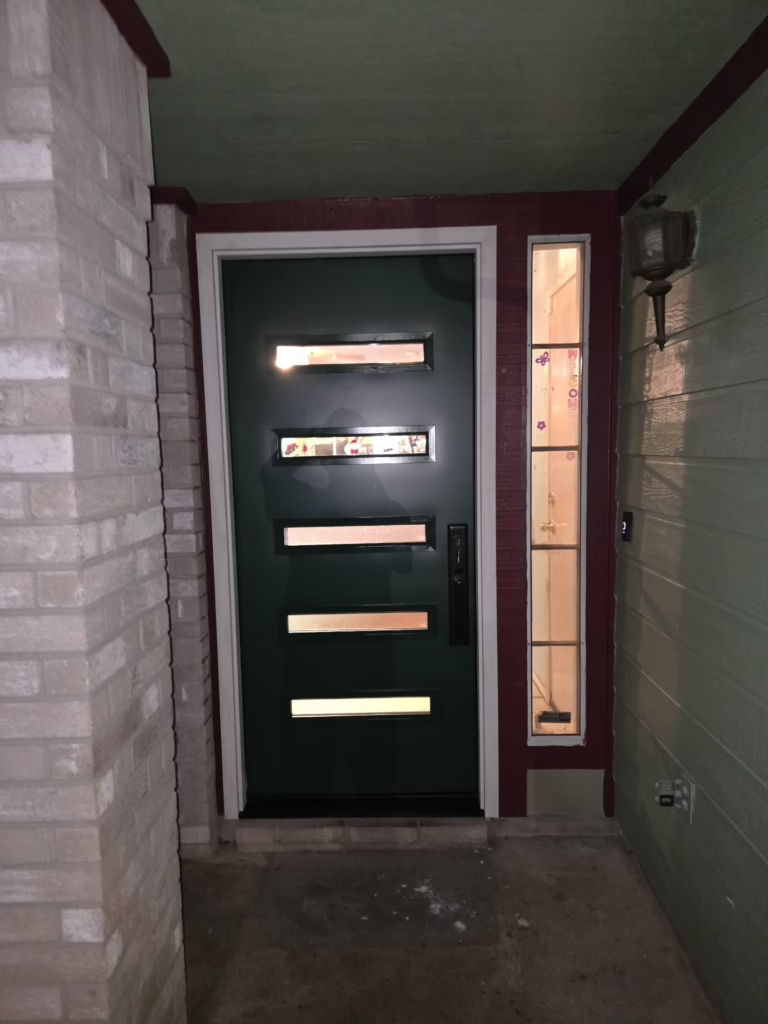
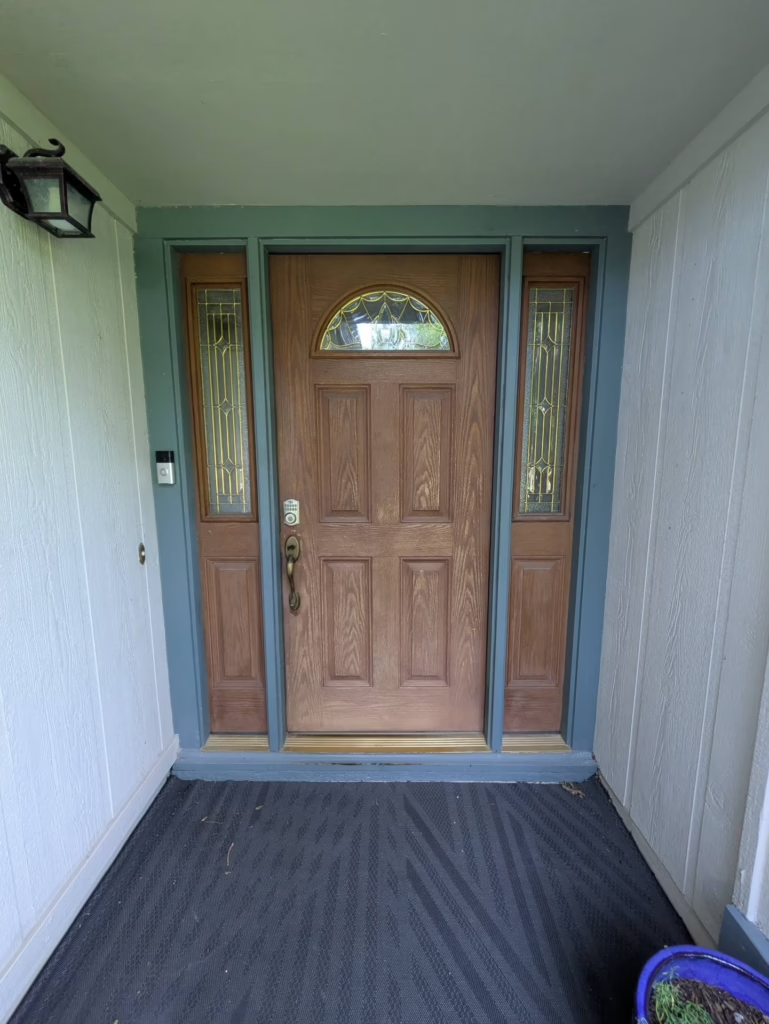
Recent Steel Entry Door Projects Across the Austin Area
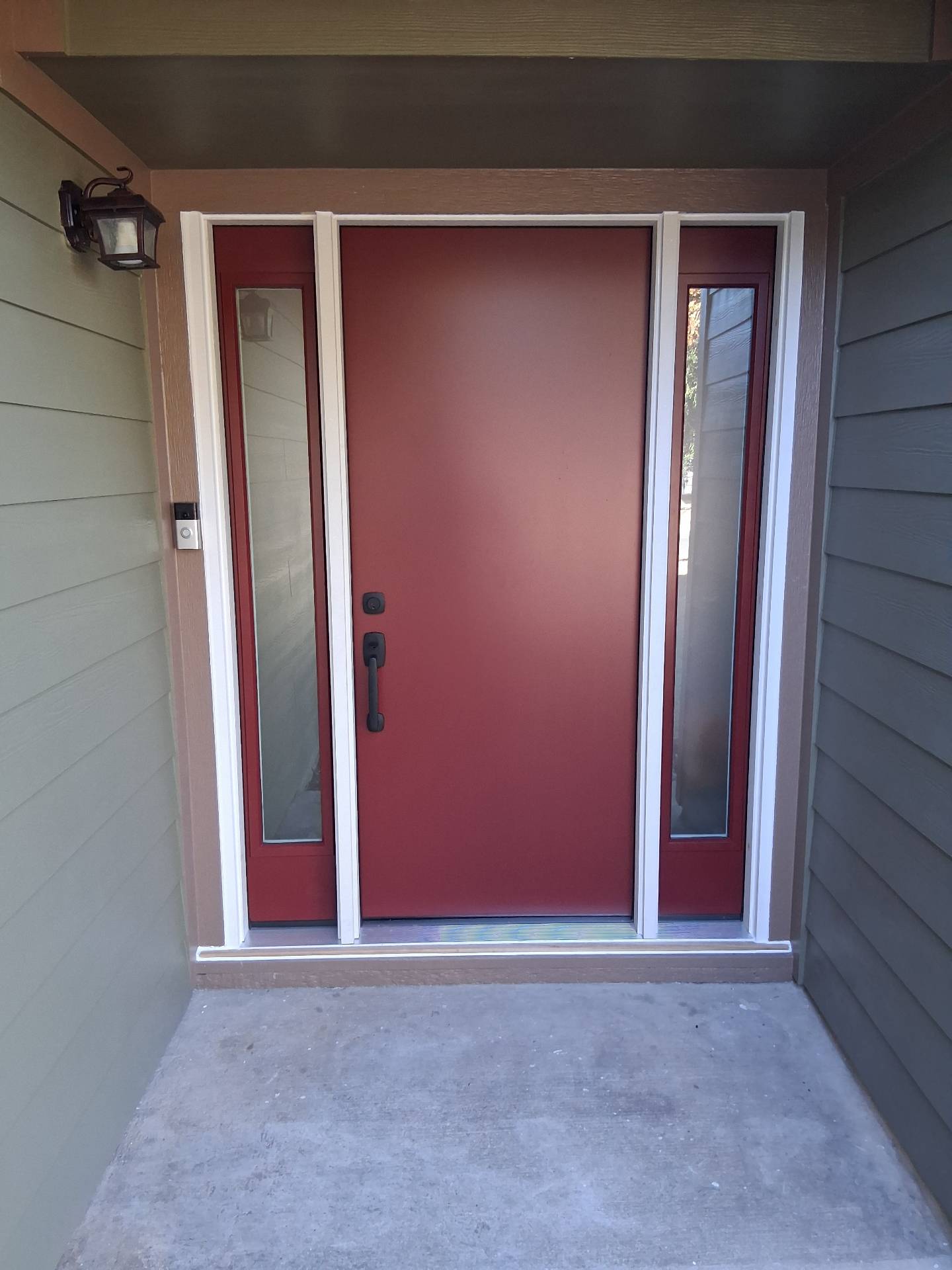
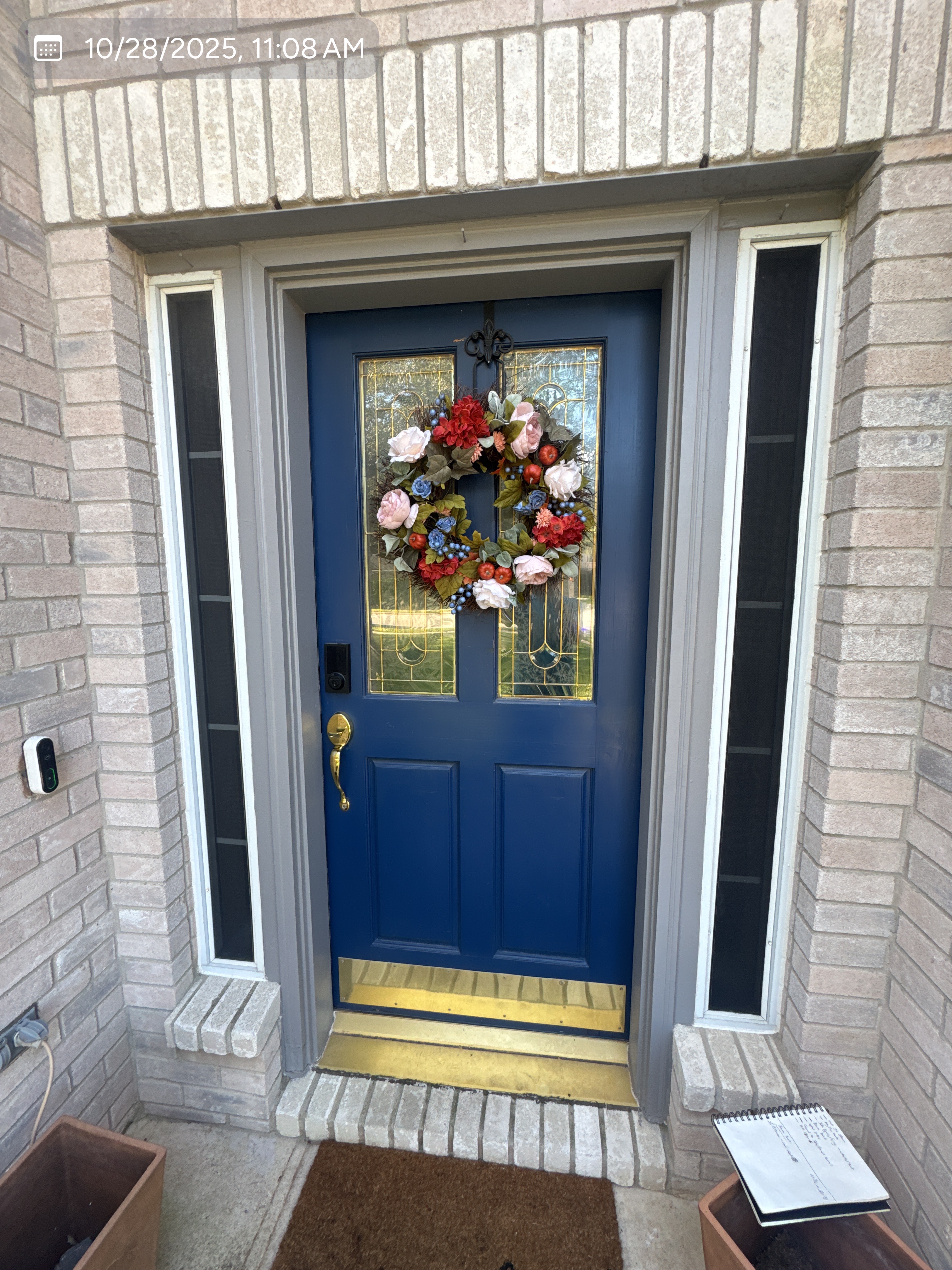
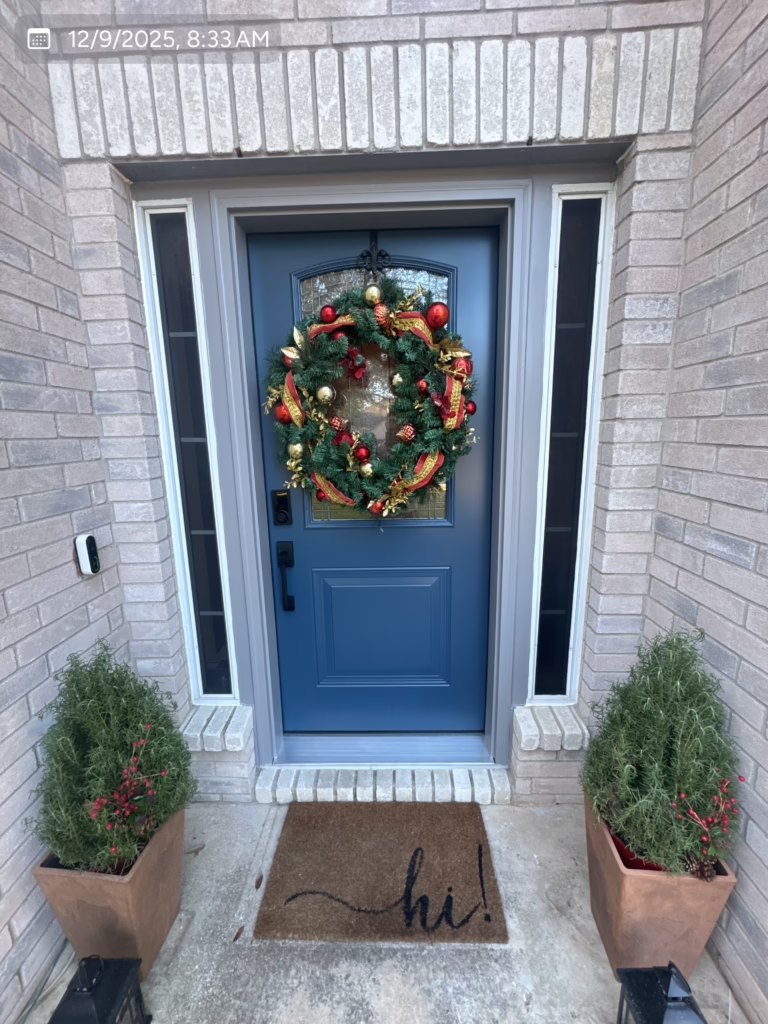
Real steel entry door installations completed for Austin-area homeowners — before and after, different styles, different conditions. This is what a properly installed steel entry door looks like when the framing, weatherstripping, and finish details are handled correctly.
Frequently Asked Questions
Will a steel door rust in Austin?
It can — but rust on a steel door is almost always a finish failure first. An intact finish prevents moisture from reaching the steel substrate. Where rust appears on steel doors is typically at scratches, dings, or chips in the finish that weren’t touched up, at the bottom edge where water sits, or on south- and west-facing entries where sustained UV degraded the finish faster than expected. ProVia Legacy’s 10-year finish warranty reflects real-world performance under normal conditions. On high-exposure entries where the finish is likely to take sustained UV stress, fiberglass eliminates the rust risk entirely.
What is the difference between 20-gauge and 24-gauge steel?
Gauge is counterintuitive — lower numbers mean thicker steel. 20-gauge steel is physically thicker and heavier than 24-gauge steel. ProVia Legacy’s 20-gauge construction is 49% thicker than standard 24-gauge doors, which translates to more dent resistance, more structural rigidity, and a door that holds its frame alignment better over time. The difference is noticeable when you handle both — a 20-gauge door feels substantially more solid than a 24-gauge door of the same nominal size.
Can I paint a steel door myself if the finish starts failing?
Yes — steel doors can be repainted, which is an advantage over vinyl where color is integral to the material and can’t be corrected. The process matters: any rust needs to be addressed before painting, the surface needs to be cleaned and primed correctly for the new paint to bond, and the right exterior paint needs to be used. A poorly executed repaint on a steel door peels faster than the original factory finish. If the finish is degrading from UV on a high-exposure entry, repainting is a legitimate option — but it needs to be done correctly to hold.
Is a steel door more secure than fiberglass?
Against raw forced entry — yes, steel is inherently harder to breach than fiberglass. The material itself is stronger under impact. Where fiberglass closes the gap is at the hardware attachment points: a well-constructed fiberglass door with a solid hardwood stile provides a lock block that performs as well as steel over time and doesn’t degrade the way a thinner stile can. For most residential applications, the lock, deadbolt, and frame reinforcement matter more than the door material itself — a well-secured fiberglass door is not meaningfully easier to breach than a steel door. But if raw material strength is the deciding factor, steel is the honest answer.
How long does a steel door last?
The door itself can last decades — the structural components of a well-built steel door don’t have a defined lifespan under normal use. What limits steel door service life in Central Texas is finish degradation and rust risk on high-exposure entries, and hardware wear over time. ProVia Legacy carries a 10-year finish warranty. On north-facing or shaded entries that don’t take sustained direct sun, a ProVia Legacy steel door can easily serve 20–30 years before the finish needs attention. On south- and west-facing entries in full sun, the finish timeline is shorter.
Not Sure Whether Steel or Fiberglass Is Right for Your Entry?
We’ll assess the existing opening, factor in orientation, exposure, and budget, and walk you through ProVia Legacy and fiberglass options before anything is ordered. No deposit required.
- Free rough opening and orientation assessment
- No deposit required to get started
- Written scope before any work begins
- 10-year workmanship warranty on every installation