

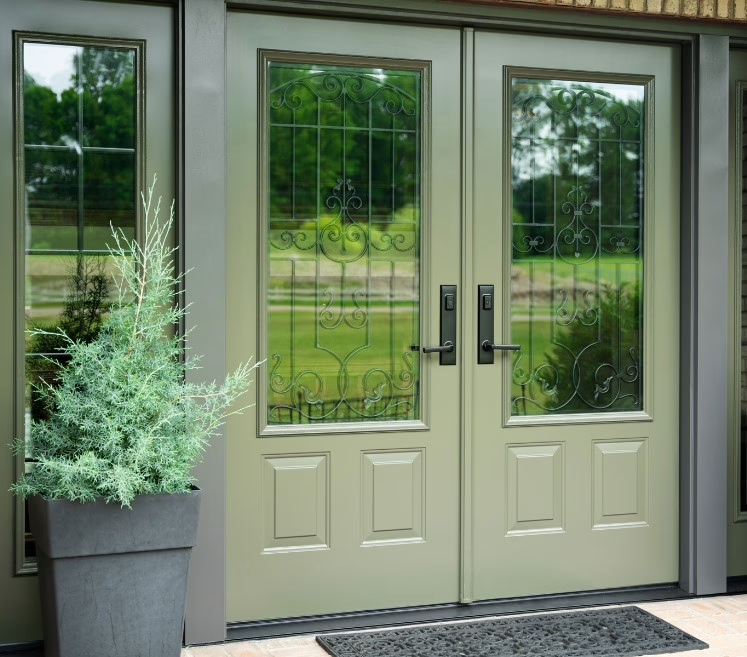
French Door Replacement in Austin, TX — Fiberglass French Doors and Full Surround Systems
French doors are two panels meeting in the center — mostly glass, opening to a patio, a garden, or a formal dining room. They’re one of the more demanding door types to install correctly because every seal point matters: the center seam where the panels meet, the threshold where both panels contact the sill, and the perimeter flashing at the head and jambs. Get those details right and the system stays tight for decades. Skip them and you’re dealing with drafts and water intrusion at the center seam within a few years. The configuration range is genuinely wide — a basic double door replacement is a very different project from a full surround with sidelights, transom, and decorative glass, and the price reflects that. We install ProVia Signet and Ascent fiberglass french doors — for the single-panel entry door story see front entry doors, or for the full door overview see the door replacement overview.
What Makes French Doors Different from Other Entry Doors
French doors are a two-panel system — two door panels that meet in the center, typically with glass occupying most of each panel. That configuration creates performance considerations that don’t exist on single-panel entry doors, and they’re worth understanding before selecting a system.
The Center Seam
Where two panels meet in the middle is the most vulnerable point in a french door system — it’s where air infiltration concentrates and where weatherstripping wears fastest. An astragal (the vertical molding that covers the seam) and the quality of the center seal determine how well the system performs over time. Cheap hardware and thin weatherstripping at the center seam is one of the most common reasons french doors that looked good on installation day are drafting within three to five years.
Threshold and Bottom Rail
French doors have significant glass area extending close to the floor — and the threshold where the two panels meet the sill is the most common water entry point in the entire system. Sill pan flashing done correctly, combined with an auto-adjusting threshold, is what keeps water out. A french door installation without correct sill pan flashing is a water intrusion problem waiting to happen, particularly during the severe storm events Austin experiences through spring and fall.
Glass Area and Heat Load
French doors are predominantly glass — which means the glass package selection has a direct and meaningful impact on cooling load in Central Texas. A west- or south-facing french door system with clear uncoated glass is one of the most efficient ways to heat the interior of a home during Austin’s long summer. Low-e glass with the right solar heat gain coefficient for the orientation is not optional on french doors in this climate — it’s a meaningful energy decision.
Active vs. Inactive Panel
Most french door systems designate one panel as the active door (the one used for entry) and one as the inactive panel (held in place by top and bottom flush bolts). The inactive panel’s flush bolt quality and the precision of how it seals against the threshold and head jamb affect both air sealing and security. ProVia’s french door systems use multi-point locking on the active panel and robust flush bolt systems on the inactive panel — both of which contribute to long-term performance.
ProVia French Door Options
ProVia’s Signet and Ascent fiberglass lines are both available in french door configurations, and the choice between them follows the same logic as on single-panel entry doors — construction quality, woodgrain technology, and finish warranty. Here’s how they apply specifically to french door applications.
Signet® — Premium Fiberglass
- 2⅝” 3-ply hardwood hinge stile — structurally critical on a two-panel system that cycles daily
- 4¼” 4-ply hardwood strike stile — provides solid lock block for multipoint hardware
- Dovetailed stiles and rails — frame integrity held under repeated thermal cycling
- Woodgrain in Mahogany, Cherry, Oak, Knotty Alder, Fir, or Smooth — Nickel Vapor Deposition technology
- Polyurethane foam core — U-factor as low as 0.16
- 15-year finish warranty — DuraFuse™ with P3 Fusion system
- Auto-adjusting Z-AC threshold
- Double or triple glazing options with full low-e glass availability
The right choice when wood aesthetics, structural integrity for a high-use french door, and the longest finish warranty are the priority.
Ascent™ — Modern Fiberglass
- 2⅝” wood stiles with dowel-pinned rod-reinforced corners
- Thicker fiberglass skin — improved impact resistance vs. standard fiberglass
- Lock block reinforcement at hardware points
- White Oak woodgrain — wide or traditional embossing — or smooth contemporary
- Computer foam fill insulation
- 10-year finish warranty
- Z-AI adjustable threshold
- Custom sizes in ⅛” increments — useful for non-standard rough openings
The right choice when contemporary design and White Oak aesthetics are the target look and mid-tier budget applies.
Full ProVia product line details — including glass package options and finish system specifications — are on the ProVia doors page.
For projects where real wood is the right answer — historic properties, custom architectural applications, or a genuine preference for wood — we install Pella Reserve and Lifestyle wood french doors with aluminum cladding available on the exterior. Wood french doors run approximately 40% above the fiberglass ranges above depending on species, configuration, and glass selection.
For projects where real wood is the right answer — historic properties, custom architectural applications, or a genuine preference for real wood over fiberglass — we install Pella Reserve and Lifestyle wood french doors. Both are available with aluminum cladding on the exterior that takes the direct weather exposure and meaningfully reduces the refinishing cycle that Central Texas conditions impose on uncladded wood entry systems.
Pella Reserve
- Pella’s top-of-line wood door — historical authenticity, no-compromises detailing
- Near-limitless customization — custom sizes, shapes, and historical profiles
- Hidden roll screen — standout feature on a wood french door system
- Premium wood types and extensive color choices
- Aluminum cladding available — exterior aluminum takes direct weather, interior remains real wood
Right for historic renovations, architecturally significant homes, and premium no-compromises wood applications.
Pella Lifestyle
- High-performance wood at a more accessible price than Reserve
- Strong energy efficiency ratings
- Noise reduction — meaningful on a large glass french door system
- Clean transitional design — versatile for modern homes
- Aluminum cladding available — recommended on south- and west-facing exposures
Right for standard or modern homes where real wood is the goal and Reserve’s premium isn’t warranted. Full details at Pella doors page →
French Door Configurations — What to Know Before You Choose
French doors are available in a range of configurations that affect both how the system looks and how it performs. The configuration affects the rough opening size required, the flashing scope, and the overall project cost.
Double Door — No Sidelights
Two panels, no flanking glass. Cleanest look when the opening width is sufficient. Most common french door configuration.
Double Door with Sidelights
Two door panels flanked by fixed glass sidelights. Dramatically increases natural light. Requires wider rough opening and more extensive flashing scope.
Double Door with Transom
Fixed glass above the door panels. Adds height and light. Transom flashing integration is a critical detail — it’s where water entry concentrates on poorly installed systems.
Full Surround System
Double doors with sidelights and transom. Maximum light, most dramatic curb appeal impact. Most complex installation scope — and the configuration that reaches $25,000 on custom units.
What Correct French Door Installation Involves
French door installation is more complex than single-panel entry doors — more flashing integration points, more weatherstripping to get right, and more ways for an installation shortcut to create a problem that doesn’t show up for a year or two. We install to manufacturer specifications using OSI flashing and sealant products throughout.
Rough Opening Assessment
Existing frame removed completely, rough opening inspected for rot, moisture damage, out-of-square framing, and any evidence of prior water intrusion. Corrections completed before the new system is measured or ordered.
Sill Pan Flashing
OSI sill pan flashing at the base of the rough opening — the single most important detail on a french door installation. The center seam meets the threshold exactly where water wants to enter. A correctly installed sill pan directs any incidental water outward rather than into the wall assembly.
Door Unit Installation
Door unit set level, plumb, and square — critical on a two-panel system where out-of-square installation causes the panels to bind, gap at the center seam, or wear weatherstripping unevenly. Both panels shimmed and fastened to manufacturer specifications.
Jamb and Head Flashing
OSI flashing tape at both jambs and head — each piece lapping correctly over the WRB and integrating with the sill pan to create a continuous drainage plane. On systems with sidelights or transoms, each additional glass unit gets its own flashing sequence.
Insulation, Seal, and Threshold Adjustment
Low-expansion foam in all gaps between frame and rough opening. Perimeter sealed with permanently flexible caulk. Auto-adjusting threshold set and verified — both panels checked for full contact with threshold and weatherstripping under normal operation.
The full installation sequence for all door types is on the door installation process page.
French Door Replacement Cost in Austin
French door cost has one of the widest ranges of any door type — driven almost entirely by configuration, glass selection, and product series. A straightforward double door replacement is a very different project from a full surround system with custom decorative glass.
* All ranges are installed cost including labor. Final price depends on glass selection, hardware, configuration, wood vs. fiberglass, and rough opening condition — all assessed and quoted before anything is ordered.
Frequently Asked Questions
Why do french doors draft more than single entry doors?
French doors have more weatherstripping contact points than any other door type — two panel edges meeting at the center seam, plus the threshold, head jamb, and both side jambs. Each is a potential air infiltration point. The center seam is the most common failure point because the astragal weatherstripping wears with every door cycle. Air infiltration around doors is diagnosable — the source determines whether the fix is weatherstripping replacement, threshold adjustment, or a more involved correction.
How do I stop water from leaking under my french doors?
Water under a french door almost always traces to one of three causes: a failed or incorrectly installed sill pan, a threshold that has settled or is no longer sealing correctly, or degraded weatherstripping at the bottom of one or both panels. On older systems, the sill pan may never have been installed correctly in the first place. Door water intrusion is worth having assessed before replacing the full system — in some cases the fix is a threshold adjustment or weatherstripping replacement rather than a full replacement.
What glass should I choose for west- or south-facing french doors in Austin?
Low-e glass with a low solar heat gain coefficient (SHGC) is essential on west- and south-facing french doors in Central Texas. French doors are predominantly glass — a large clear-glass system facing west is one of the most effective ways to add cooling load to a home during Austin’s long summer. ProVia offers full low-e glass packages on both Signet and Ascent — we discuss orientation and SHGC selection as part of the product selection conversation on every french door project.
Can french doors be used as a back door to a patio or deck?
Yes — french doors are commonly used for patio and deck transitions. In those applications, the threshold detail is particularly important because the door transitions directly to an exterior surface that holds water during rain events. Correct sill pan flashing and an auto-adjusting threshold that maintains contact with the floor surface as it expands and contracts seasonally are the critical installation details for patio-facing french doors. If the opening faces a covered patio or is otherwise under a roof overhang, it changes the weather exposure calculation somewhat — but the flashing details still apply.
How long does a french door replacement take?
A straightforward double door replacement typically takes one day. A full surround system with sidelights, transom, and custom glass can run two days depending on rough opening corrections needed and the complexity of the flashing scope. We don’t leave unprotected openings overnight.
Replacing Your French Doors? Start with a Free Assessment.
We’ll evaluate the existing opening, walk you through ProVia fiberglass and Pella wood options for your specific situation, and give you a written scope before anything is ordered.
- Free rough opening and flashing assessment
- No deposit required to get started
- Written scope before any work begins
- 10-year workmanship warranty on every installation