

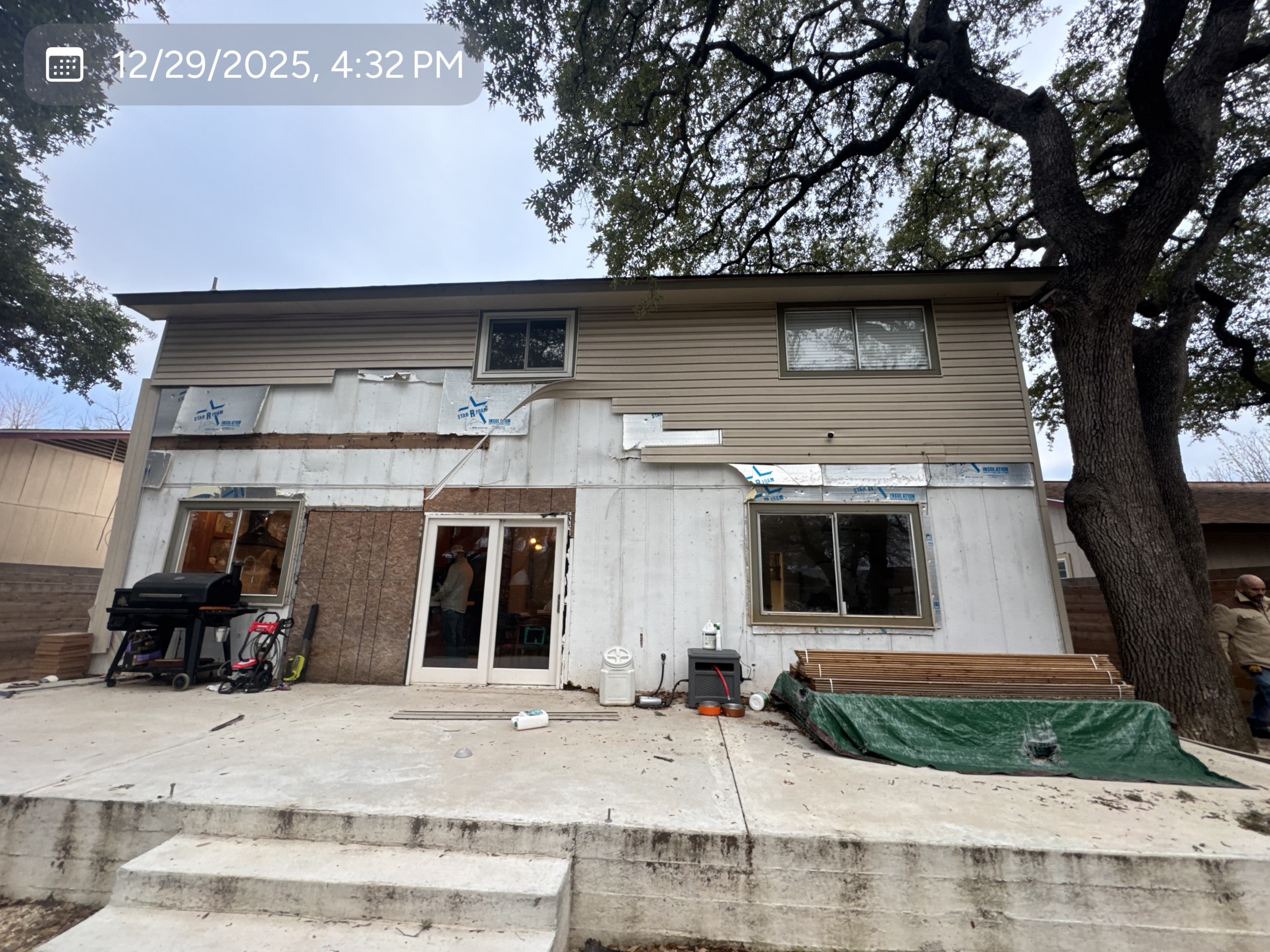
Siding Types for Austin, TX Homes — What Each Material Is and How It Performs
Choosing the right siding material for a Central Texas home starts with understanding what each option actually is, how it performs under Austin’s heat load and humidity, and what its failure modes look like in this climate. The four siding types most relevant to Austin-area homeowners — fiber cement, vinyl, Masonite hardboard, and T1-11 — represent both current replacement options and the materials already on thousands of homes in this market, often failing silently underneath newer cladding. This page is the starting point for understanding each material and making the right replacement decision for your home. For the full siding replacement overview including warning signs, water management, and the should-I-replace decision, see the siding replacement overview.
How to Evaluate Siding for Central Texas Conditions
Not all siding materials perform equally in this climate — and performance claims from manufacturers are often based on moderate conditions that don’t reflect what Austin summers actually do to exterior cladding. Before comparing specific materials, it’s worth understanding the variables that matter most in this market.
What Matters Most in This Climate
- Thermal stability under sustained 100°F+ temperatures
- UV resistance — color and surface integrity under intense sun
- Moisture resistance at edges, seams, and fastener points
- Paint adhesion and maintenance cycle length
- Fire resistance — non-combustible vs. combustible substrate
- Pest and wildlife resistance — insects, woodpeckers, rodents
- Installation quality — the variable that determines whether any material performs
📊 Realistic Lifespan by Material in Central Texas
Correct installation and maintenance assumed. OSB-substrate materials perform at the lower end of ranges shown.
10–20 yrs
15–25 yrs
20–30 yrs
30–50 yrs
Installation quality affects every material’s actual lifespan. A correctly installed mid-range product outperforms a premium product installed carelessly. What siding replacement costs in Austin →
Siding Types
James Hardie Fiber Cement Siding
The most durable readily available cladding for Central Texas conditions. Engineered for high-humidity, high-UV climates, non-combustible, dimensionally stable under heat, and field-paintable. The replacement material we recommend for the vast majority of Austin-area re-sides. Performance is determined as much by installation standard as by the product itself — we install to Hardie’s preferred standard, not the contractor minimum.
Vinyl Siding
PVC-based cladding that performs adequately in moderate climates but shows significant limitations under Austin’s heat load and UV intensity — thermal warping on south and west elevations, UV fading that can’t be corrected with paint, and expansion gaps that become air and water infiltration points over time. We don’t install vinyl in Central Texas, but we replace it regularly — and the most important part of a vinyl replacement project is assessing what’s underneath before anything new goes on.
Masonite / Hardboard Siding
Compressed wood fiber panel siding installed on millions of homes from the 1970s through the late 1990s. Highly vulnerable to moisture intrusion, swelling, delamination, and rot — particularly in humid climates — leading to a nationwide class action lawsuit against Masonite Corporation and the product’s eventual discontinuation. Extremely common on Austin’s 1980s–1990s housing stock, and frequently found hidden underneath vinyl that was installed over it without removal.
T1-11 Siding
Large-format plywood or OSB panels with routed vertical grooves, used as a combined cladding and structural sheathing product from the 1960s through the 1990s. Common on Austin homes, garages, additions, and accessory structures from that era. Fails at bottom edges, panel seams, and groove channels where moisture penetrates the substrate. T1-11 replacement always requires new sheathing as part of the scope — the only siding type where this is a universal requirement.
The Thread Running Through All Four Materials: What’s Underneath
Looking across these four materials, one pattern appears more consistently than any other on Austin-area replacement projects: the most consequential variable isn’t what’s on the wall — it’s what’s behind it.
Through the 1990s and 2000s, a widespread contractor practice was to install vinyl directly over failing hardboard or T1-11 without removing the original material. The substrate continued deteriorating behind the vinyl with no path to dry and no way for the homeowner to see what was happening. By the time the vinyl needs replacing today, the hidden material has often been failing for a decade or more — and what looked like a straightforward re-side becomes a substrate correction project once the tear-off is complete.
This is why we don’t recommend new cladding over existing vinyl without knowing what’s underneath, and why full tear-off is the right call on nearly every Austin-area replacement project regardless of how acceptable the surface looks. The substrate assessment — done before any scope is written or material ordered — is the first thing we do on every project. If your siding is already showing symptoms, the common siding problems overview is the right starting point before any material conversation.
The Other Thread: Installation Determines Outcome
Material selection matters — but installation quality determines whether a material performs at its ceiling or fails early. A correctly installed mid-range product outperforms a premium product installed carelessly in every category: paint adhesion, water management, long-term seal integrity, and warranty validity.
This is especially relevant for fiber cement, where James Hardie publishes two tiers of installation standards — “allowed” (warranty minimum) and “preferred” (performance ceiling) — and most contractors install to allowed because it’s faster. The gap between the two tiers is where most premature Hardie failures originate. How we approach the full installation sequence — from WRB through trim completion — is covered on the siding installation process page. The full comparison between fiber cement and vinyl is on the fiber cement vs. vinyl siding page.
Frequently Asked Questions
What is the best siding material for Central Texas homes?
For most Austin-area homeowners prioritizing longevity, low maintenance, and performance under this climate’s conditions, James Hardie fiber cement siding is the strongest available option. It handles the heat load, UV intensity, and moisture cycling this climate produces better than vinyl or wood-based alternatives, is non-combustible, and — when installed to preferred standard — requires only periodic repainting rather than ongoing structural maintenance. The honest caveat is that fiber cement costs more installed than vinyl and requires paint maintenance every 10–15 years. For homeowners with short-term hold situations or tight budget constraints, that trade is worth a real conversation before any recommendation is made.
How do I know what siding my home currently has?
Visual identification is usually straightforward once you know what to look for. Fiber cement has a smooth or lightly textured surface with consistent profile lines and a solid, hard feel. Vinyl flexes slightly when pressed and shows a hollow sound when tapped. Hardboard has a compressed wood fiber surface that shows characteristic swelling and paint failure at bottom edges when it’s degrading. T1-11 is recognizable by its vertical groove pattern across large panel faces. If your home has vinyl on it and was built before the mid-1990s, hardboard or T1-11 may be underneath — a professional inspection at seams and trim transitions can often confirm this without full tear-off.
Does the siding material or the installation quality matter more?
Both matter — but installation quality is the variable that determines whether a material performs at its ceiling or fails prematurely, and it’s the variable homeowners have less visibility into at the point of purchase. A correctly installed mid-range product will outperform a premium product installed to minimum standards in every performance dimension over the life of the installation. This is particularly relevant for fiber cement, where the gap between Hardie’s allowed and preferred installation standards is meaningful — and where most contractors install to the minimum because it’s faster and the homeowner typically can’t tell the difference on installation day. The difference shows up years later.
Should I replace all my siding at once or in sections?
Full replacement in one scope is almost always the better answer, for three reasons. First, if one section of siding from a given era is failing, adjacent sections are typically at the same point in their failure cycle — replacing one elevation buys a few years at most before the others need attention. Second, new cladding next to aged cladding rarely matches well enough to look intentional. Third, mobilization costs — tear-off, staging, WRB installation — are partially fixed regardless of scope size, so partial projects cost more per square foot than full ones. The exception is a genuinely isolated failure on an otherwise sound exterior, which we’ll identify honestly in the assessment rather than upselling a full re-side you don’t need.
What is usually underneath old vinyl siding on Austin homes?
On homes built or re-sided before the mid-1990s, the most common discoveries are Masonite hardboard or T1-11 that was covered over rather than removed. Both materials absorb moisture, swell, and deteriorate — and the vinyl installed over them sealed the system in a way that accelerated that deterioration. By the time the vinyl is being replaced, the substrate underneath has often been failing for ten years or more. This is the primary reason we require full tear-off on all vinyl replacement projects and do a complete substrate assessment before writing any scope.
Not Sure Which Material Is Right for Your Home?
We’ll assess what you have, tell you what’s underneath it, and give you an honest recommendation before any scope is written or material ordered. Review our siding installation checklist or what to expect on your appointment before we talk.
- Material recommendation based on your actual wall condition
- No deposit required to get started
- Written scope before any work begins
- 10-year workmanship warranty on every installation