

Vinyl Siding in Austin, TX — What It Is and Why We Replace It With Fiber Cement
Vinyl siding is a PVC-based exterior cladding that became the dominant low-cost alternative to wood siding in American residential construction from the 1980s onward — affordable, low-maintenance in moderate climates, and available in a wide range of profiles and colors. In Central Texas, the picture is more complicated: vinyl softens and warps under sustained high heat, fades under intense UV exposure, and has been installed over failing wood-based substrates on thousands of Austin-area homes without those substrates ever being removed or inspected. Cupcake Home Improvements does not install vinyl siding — but we do replace it, and this page explains what vinyl is, where it performs acceptably, where it falls short in this climate, and why the discovery of what’s underneath is often the most important part of a vinyl replacement project. For the full material comparison, see the siding types overview or the siding replacement overview.
What Is Vinyl Siding?
Vinyl siding is manufactured from polyvinyl chloride — PVC — extruded into long panels that interlock horizontally and nail to the wall sheathing through a slotted channel at the top. The panels are not structurally attached; they float on the fastener slots to allow for thermal expansion. Color is either integral to the PVC compound or applied as a surface treatment.
Its appeal has always been straightforward: it costs less than most alternatives, never needs painting, resists moisture absorption, and installs quickly. In climates with moderate summers, those advantages are real. In Central Texas, two of those advantages — the no-painting part and the thermal stability part — degrade meaningfully under actual conditions.
✓ Where Vinyl Performs Adequately
- Moderate climates with cooler summers
- Short-term hold properties where longevity isn’t the priority
- Structures where cost is the binding constraint
- Moisture resistance in the cladding itself
- No paint requirement — color is integral to the material
⚠️ Where Vinyl Falls Short in Central Texas
- Softens and distorts under sustained 100°F+ heat
- UV fading — color degrades, can’t be repainted to match
- Thermal expansion gaps at seams become air infiltration points
- Impact brittleness in cold snaps — cracks rather than dents
- Non-combustible advantage lost — melts and spreads flame
- Hides substrate failures that continue deteriorating underneath
For the full side-by-side material comparison, see fiber cement vs. vinyl siding →
How Vinyl Siding Fails in Central Texas
Vinyl failure in this climate follows a predictable pattern. Understanding it matters whether you’re deciding whether to replace or diagnosing what’s already happening on your home.
Thermal Warping
PVC softens at temperatures well within Austin’s summer range. South- and west-facing walls see sustained surface temperatures significantly above air temperature. The result is warped, wavy panels that can’t be corrected without full replacement — the material has taken a permanent set.
UV Color Degradation
Vinyl color fades unevenly under intense UV exposure. Unlike painted fiber cement — where repainting is a straightforward maintenance task — faded vinyl can’t be matched or repainted with lasting results. The only fix is replacement.
Seam and Panel Gap Expansion
Vinyl’s floating installation allows for thermal movement — but that movement creates gaps at seams and j-channels that function as air infiltration and water intrusion points over time. These gaps widen with each heat-cool cycle.
Impact Damage in Cold Snaps
Vinyl becomes brittle in freezing temperatures. Austin’s occasional hard freezes — combined with hail events — produce cracking and shattering that fiber cement and other materials resist. A hail event that dents fiber cement often shatters vinyl panels entirely.
Most of these failure modes are diagnosable. If your vinyl is already showing symptoms, the common siding problems overview walks through what the signs mean and what the correct response is for each one.
The Hidden Substrate Problem
The most important thing to understand about vinyl siding on Austin-area homes isn’t the vinyl. It’s what’s underneath it.
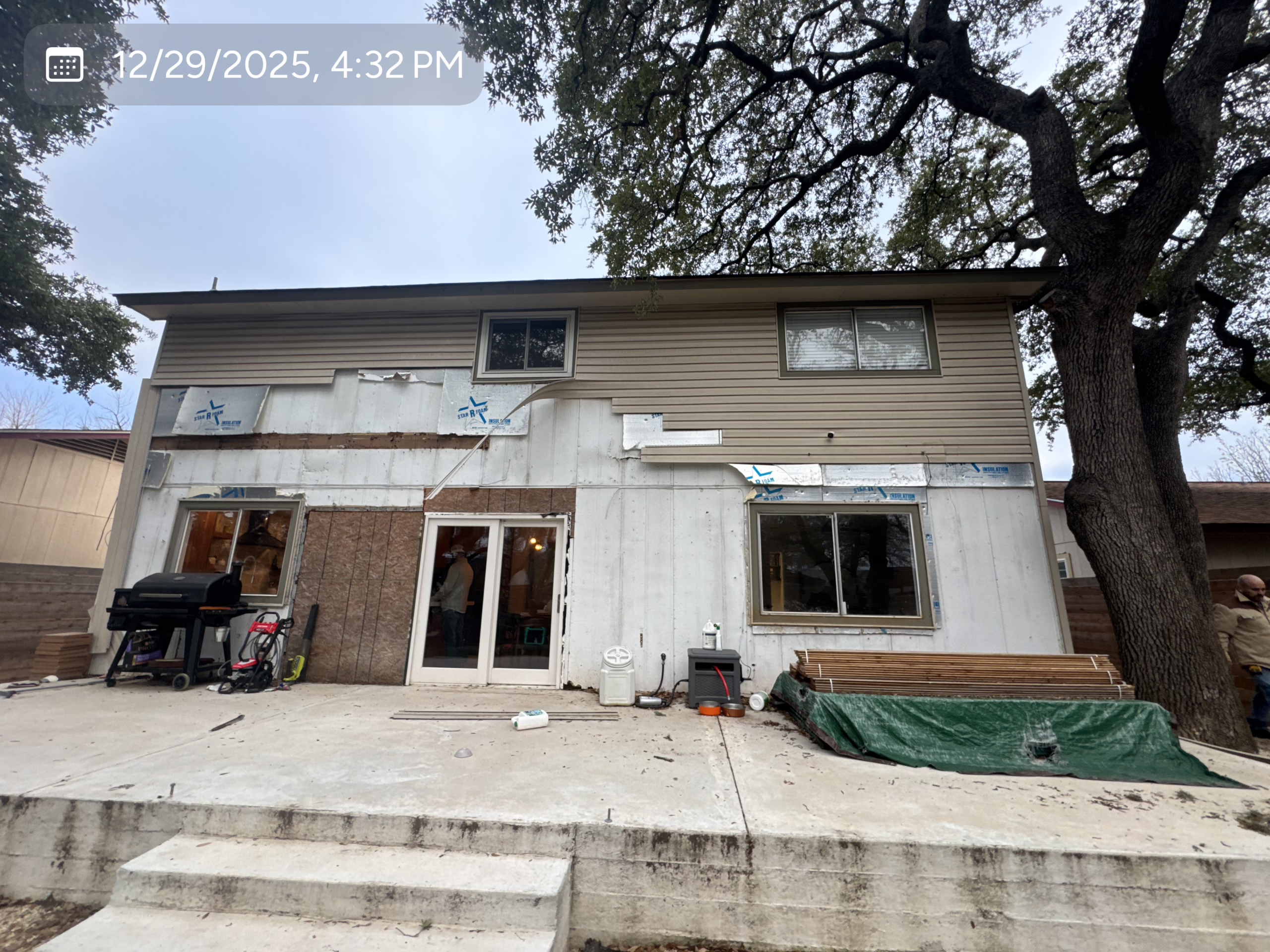
From the 1980s through the early 2000s, a common contractor practice was to install vinyl directly over existing failing siding — particularly Masonite hardboard and T1-11 plywood panel siding — without removing the original material. The logic was speed and cost: skip the tear-off, nail the vinyl over whatever was there, collect the check. The result, visible on thousands of Austin homes today, is vinyl cladding sitting over a substrate that has been swelling, rotting, and delaminating for twenty or thirty years without the homeowner ever knowing.
What We Find When We Pull Vinyl off Austin Homes
The single most common discovery on a vinyl replacement project in this market: hardboard or T1-11 underneath that was never removed, soaked through, soft in sections, and in some cases rotted through to the framing. The vinyl looked acceptable from the street. The wall system behind it had been failing for a decade.
This is why we don’t recommend installing new siding over existing vinyl, and why full tear-off — even when it adds scope and cost — is almost always the right call. You can’t assess what you can’t see, and what you can’t see is often where the real problem is. See siding rot and soft spots for what substrate failure looks like and what it takes to correct it.
The substrate assessment is the first thing we do on any vinyl replacement project — before any material is recommended, before any scope is written, before anything is priced. What the wall system looks like underneath determines the correct scope, and the correct scope determines the right material recommendation.
Why We Don’t Install Vinyl — and What We Recommend Instead
We’re transparent about this: we don’t install vinyl siding on Austin-area homes. Not because it’s never appropriate everywhere, but because in Central Texas conditions — the heat load, the UV intensity, the thermal cycling — the performance gap between vinyl and James Hardie fiber cement is large enough that we don’t think vinyl is the right recommendation for the majority of replacement projects here.
✓ Fiber Cement: What We Install
James Hardie HZ10 — engineered for this climate, non-combustible, dimensionally stable under sustained heat, field-paintable, 30-year substrate warranty. The right long-term answer for most Austin homes.
⚠ Vinyl: When It Makes Sense Elsewhere
Short-term holds, extreme budget constraints, or climates with cooler summers where the thermal degradation issue doesn’t apply. In Central Texas, those situations are the exception, not the rule.
✗ Vinyl Over Existing Siding: Never
Installing new vinyl over failing hardboard or T1-11 hides the problem without solving it. We won’t scope or price a job that leaves a compromised substrate sealed behind new cladding.
The full side-by-side performance and cost comparison — including where each material makes sense and where it doesn’t — is on the fiber cement vs. vinyl siding page. Cost context for both materials is on the siding cost page.
Replacing Vinyl Siding: What the Process Looks Like
A vinyl replacement project has a different starting point than a straightforward re-side. The substrate unknown is the variable that shapes everything — scope, cost, timeline, and material recommendation all follow from what we find when the vinyl comes off.
Free Inspection
We assess the vinyl condition, probe for soft spots at seams and bases, and give you a clear picture of what we expect to find underneath before any scope is written.
Full Tear-Off
Vinyl and any underlying failing material comes off completely. No new cladding goes over an unknown or compromised substrate.
Substrate Assessment
We inspect sheathing, framing, existing WRB, and flashing conditions before anything is ordered. Rot, damage, and missing details get corrected here.
Written Scope
Full itemized scope — substrate corrections, WRB, profiles, trim, and installation method — documented before any material is ordered or work begins.
Installation
Preferred-standard Hardie installation from WRB through trim. The full process is detailed on the siding installation process page.
Frequently Asked Questions
Does vinyl siding hold up in Texas heat?
Not as well as manufacturers suggest. PVC softens at temperatures well within Austin’s summer range, and south- and west-facing wall surfaces reach significantly higher temperatures than air temperature. The result over time is thermal warping — panels take a permanent set and the wavy appearance can’t be corrected short of replacement. Vinyl performs better in climates with cooler summers. Central Texas is not that climate. For what warping looks like and how it progresses, see siding warping and buckling.
Can vinyl siding be painted?
Technically yes, but with significant limitations. Vinyl expands and contracts more than paint films can accommodate over time, causing peeling and cracking. Color must be matched to the existing or lighter — darker paint absorbs more heat and accelerates the warping problem. The more practical answer for UV-faded vinyl in Texas is replacement rather than repainting, particularly when the material is already showing thermal distortion.
What is usually underneath old vinyl siding on Austin homes?
On homes built or re-sided in the 1980s and 1990s, the most common discoveries are Masonite hardboard or T1-11 plywood panel siding that was never removed. Both materials absorb moisture, swell, and rot — and both were commonly covered over with vinyl rather than replaced. By the time the vinyl is being replaced, the substrate underneath has often been failing for a decade or more. This is the primary reason we recommend full tear-off on every vinyl replacement project rather than installing over what’s there.
Why doesn’t Cupcake install vinyl siding?
In Central Texas conditions — the heat load, UV intensity, and thermal cycling this climate produces — the performance gap between vinyl and fiber cement is large enough that we don’t think vinyl is the right recommendation for the majority of replacement projects here. Vinyl degrades faster, can’t be repainted when it fades, warps under sustained heat, and hides substrate problems rather than solving them. We’d rather tell you that honestly than install a product we don’t believe serves you well. The full comparison is on the fiber cement vs. vinyl siding page.
How much does it cost to replace vinyl siding in Austin?
Vinyl replacement with fiber cement in the Austin metro typically runs $14 to $20+ per square foot installed, depending on home complexity, story count, what the substrate assessment reveals, and the profile and trim scope. Substrate correction — repairing or replacing rotted sheathing and framing found underneath old vinyl — adds cost that can’t be fully scoped until the tear-off is complete. A detailed cost breakdown is on the siding cost page. The accurate number for your home comes from a free on-site assessment.
Is fiber cement really better than vinyl for Texas homes?
For most Austin-area homes and most homeowners’ goals — longevity, performance in this climate, resale value, fire resistance — yes. Fiber cement doesn’t warp under heat, holds paint for 10–15 years, is non-combustible, and handles the thermal cycling this climate produces without the seam gap and expansion issues vinyl develops over time. The performance advantage is most pronounced on south- and west-facing elevations with high sun exposure — which describes most Austin homes. The full side-by-side comparison, including where vinyl can still make sense, is on the fiber cement vs. vinyl siding page.
Replacing Vinyl Siding? Start With an Honest Assessment.
We’ll tell you what’s underneath, what it means, and what the right scope actually looks like — before anything is priced or ordered. Review our siding installation checklist or what to expect on your appointment before we talk.
- Full substrate assessment included at no cost
- No deposit required to get started
- Written scope before any work begins
- 10-year workmanship warranty on every installation