

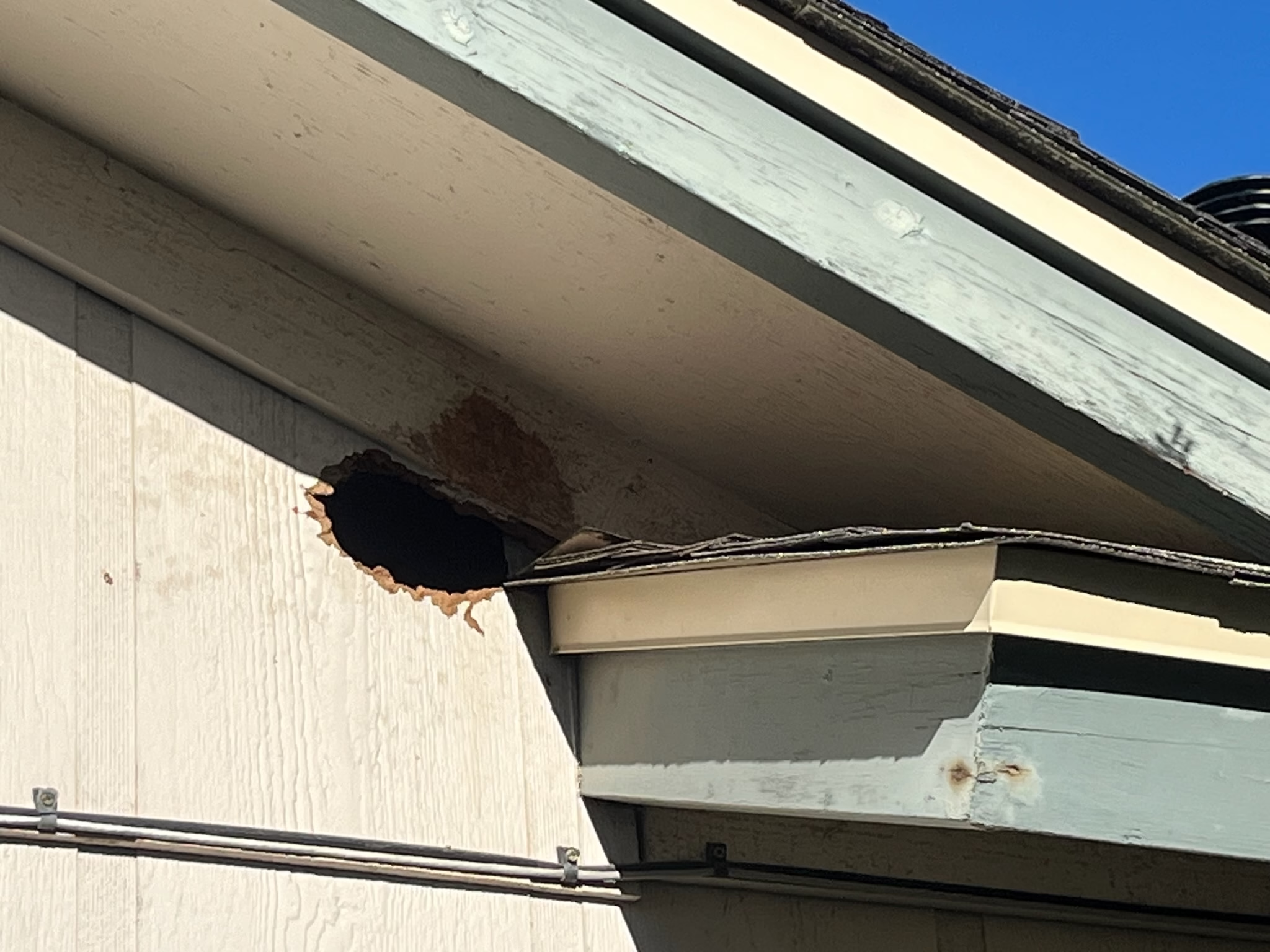
Animal Damage on Siding in Austin, TX — Woodpeckers, Rodents, and What It Means
Woodpecker holes and rodent chewing on siding get treated as a pest problem. They’re usually a substrate problem. Animals target specific sections of wall because something in that wall is attracting them — softened wood from moisture deterioration, insect activity in a compromised substrate, or material that’s simply easier to get through than the rest of the exterior. Patch the holes without addressing what’s underneath and the animals come back, often within the same season, because the condition that drew them there hasn’t changed. On hardboard and T1-11 especially, animal damage is one of the more reliable early indicators that the substrate is further along in its failure sequence than the surface suggests. This page covers what’s actually causing the damage, what it tells you about the wall behind it, and what a correct response looks like versus patching and hoping. For the full index of siding problems see the common siding problems overview.
Animals That Damage Siding in Central Texas
Austin’s suburban and semi-rural development pattern means most residential neighborhoods have significant wildlife pressure. Three animals account for the majority of siding damage on Central Texas homes.
🐦 Woodpeckers
The most common siding damage agent on Austin-area homes. Woodpeckers drill for two reasons: foraging for insects and larvae inside deteriorating wood, and territorial drumming — using resonant surfaces to establish territory. Foraging damage is the more destructive of the two and is almost always associated with substrate deterioration that has attracted insects. Drumming damage tends to be shallower and more widely distributed across a surface.
Woodpecker damage on siding that looks like a wildlife problem is very often a moisture and substrate problem that happened first.
🐿️ Squirrels and Rodents
Squirrels chew siding at corners, eave intersections, and any point where two materials meet — looking for entry into attic or wall cavity spaces. Rodents follow the same pattern at lower elevations, particularly at grade-adjacent sections where substrate softening from moisture contact has made the material easier to penetrate. Chewing damage on hardboard and T1-11 at base courses is frequently a combination of moisture-softened substrate and rodent entry-seeking behavior.
🐝 Carpenter Bees and Wasps
Carpenter bees bore perfectly circular holes — typically around half an inch in diameter — into wood-based siding, particularly at the underside of horizontal boards and trim. They’re less destructive than woodpeckers on a per-hole basis but establish galleries inside the substrate that weaken the material over time and attract woodpeckers who excavate the galleries for larvae. Wasp nesting behind siding panels is more of an access problem than a structural one but indicates gaps in the installation that also allow water entry.
🦎 Lizards and Insects Behind Siding
Less a damage cause than a diagnostic indicator — lizards, ants, termites, and other insects found behind or inside siding panels indicate moisture conditions that have made the substrate habitable. Termite activity behind siding is a serious finding that extends the damage assessment beyond the cladding into the framing and sheathing. Any evidence of insect activity inside siding panels warrants a full substrate and framing inspection.
Why Animals Target Specific Materials and Locations
Animal damage is not random. The locations targeted — and the materials involved — follow a consistent logic tied to substrate condition and structural features that attract wildlife.
🎯 High-Risk Locations
- Bottom courses at grade — moisture-softened substrate attracts rodents and foraging woodpeckers
- Routed grooves on T1-11 — natural drilling points for woodpeckers, acoustic resonance for drumming
- Horizontal seams on hardboard — swollen, delaminating edges are easy entry points
- Corners and trim intersections — structural gaps that rodents and squirrels exploit for entry
- Eave and soffit intersections — access points to attic space for squirrels
- Any section with visible paint failure or swelling — exposed, deteriorating substrate
Location pattern tells you a lot about cause. Damage concentrated at grade suggests moisture-driven substrate softening. Damage high on the wall at trim suggests entry-seeking behavior.
📦 High-Risk Materials
- Masonite hardboard — moisture-softened fiber is easy to excavate and harbors insects
- T1-11 plywood/OSB — grooves concentrate foraging activity; OSB variant degrades rapidly once surface is breached
- Wood trim and fascia — particularly at eave intersections and window surrounds
- Any wood-based material past its service life with active moisture damage
- James Hardie fiber cement — no wood fiber to excavate, no organic content to attract insects, no substrate that softens with moisture
Fiber cement eliminates the food source and the substrate conditions that attract foraging wildlife. This is one of its practical advantages over wood-based materials in Austin’s wildlife-active environment.
Animal Damage as a Substrate Diagnostic
The most useful thing animal damage tells you isn’t that you have a wildlife problem. It’s what it reveals about the substrate condition at the locations where the damage occurred.
What the Damage Pattern Tells You About the Wall Behind It
Woodpecker foraging holes clustered in specific sections — rather than distributed randomly across a wall — indicate insect activity inside the substrate at those locations. Insects inside siding substrate are almost always present because of moisture damage that has begun to decompose the organic material. The woodpecker found what the moisture started.
Rodent chewing at grade-adjacent sections where the material feels softer than surrounding areas confirms moisture-driven substrate deterioration at that elevation. The animal is finding what a screwdriver probe would also find.
In both cases, the animal damage is pointing at sections of wall that warrant a closer look — not just for the holes visible on the surface, but for what the substrate condition is behind them. Rot in the substrate and framing behind animal-damaged sections is a common finding when those walls are opened up, and the extent is almost never predictable from the surface.
The Patch-and-Return Cycle — Why It Doesn’t Work
The standard response to woodpecker or rodent damage is to fill the holes with wood filler or caulk and repaint. On structurally sound siding without underlying substrate deterioration, this can be an effective repair. On moisture-damaged wood-based siding, it produces a predictable cycle: the fill material isn’t a food source, so the immediate hole is no longer attractive — but the surrounding substrate conditions that attracted the animal haven’t changed. The animals return to adjacent sections, or return to the same section after weather cycles break down the fill material.
✓ When Patching Works
Drumming damage on structurally sound fiber cement or solid wood trim — shallow, cosmetic holes without substrate deterioration behind them. Isolated carpenter bee holes on sound wood trim where the surrounding material is intact. Squirrel chewing at a trim intersection on otherwise sound material where the entry point can be sealed and the substrate behind it is confirmed dry and solid.
⚠ When Patching Is Temporary
Woodpecker foraging holes on hardboard or T1-11 where adjacent sections show swelling or paint failure — the substrate conditions remain. Rodent damage at grade-adjacent sections with soft spots nearby. Any damage pattern that has recurred after previous repairs.
✗ When Patching Is the Wrong Answer
Multiple foraging holes clustered in sections with soft substrate behind them — rot is likely present and the scope needs to include substrate assessment. Damage on hardboard or T1-11 past its service life where the material is failing system-wide. Any situation where the patch is the fourth or fifth repair attempt at the same location.
Why Fiber Cement Eliminates the Animal Damage Problem
Replacing wood-based siding with James Hardie fiber cement doesn’t just address the current damage — it eliminates the substrate conditions that made the wall a target in the first place.
Why Animals Don’t Target Fiber Cement
Fiber cement is a composite of Portland cement, sand, and cellulose fiber — it has no organic content that insects can consume or that sustains the fungal decay that attracts foraging woodpeckers. It doesn’t soften with moisture cycling, so there are no grade-adjacent soft sections for rodents to exploit. It doesn’t have the acoustic resonance properties of deteriorating wood that make it attractive for woodpecker drumming at the same intensity.
Correctly installed fiber cement with proper grade clearance, sealed penetrations, and continuous WRB also eliminates the moisture entry points that drive the substrate deterioration cycle that attracts wildlife in the first place. The installation details that prevent rot are the same installation details that prevent the substrate conditions that attract animals.
How we install fiber cement to preferred standard — including the moisture management details that prevent the conditions attracting wildlife — is on the siding installation process page.
Frequently Asked Questions
Why do woodpeckers keep coming back to the same spots on my siding?
Woodpeckers return to the same locations because the conditions that attracted them haven’t changed. Foraging woodpeckers are finding insects and larvae inside a deteriorating substrate — filling the hole removes the access point but not the food source. The substrate is still moisture-damaged, still hosting insect activity, and still acoustically attractive. The bird returns to adjacent sections or finds a way back to the same area. The only lasting solution is addressing the substrate condition — which on hardboard and T1-11 past their service life typically means replacement rather than repair.
Do woodpeckers damage fiber cement siding?
Rarely in a meaningful way. Fiber cement has no organic content to excavate and doesn’t host the insect activity that motivates foraging behavior. Territorial drumming on fiber cement can occur — woodpeckers use resonant surfaces for this behavior and will occasionally drum on any material — but drumming damage is typically shallow and cosmetic rather than structural. Sustained foraging damage on fiber cement the way it occurs on deteriorating hardboard or T1-11 is not something we see in practice.
I have woodpecker holes in my siding — how do I know if there’s rot behind them?
Press firmly on the area around the holes. If the surrounding material feels soft, spongy, or gives more than adjacent sections, moisture damage is present and rot is likely at varying depths behind the surface. Foraging holes clustered in specific sections — rather than scattered randomly — are a stronger indicator of active insect activity inside the substrate, which requires moisture damage to be present. A professional assessment is the right next step on any home where foraging damage has appeared, because the extent of substrate damage behind the surface can’t be determined without opening up the wall.
Can I just patch woodpecker holes and repaint, or do I need to replace the siding?
If the substrate behind the holes is sound — no soft spots, no swelling, no moisture symptoms — patching and repainting is a legitimate repair. If the substrate is compromised, patching is a temporary cosmetic measure. On hardboard and T1-11 from the 1980s–1990s where foraging damage has appeared, the substrate is almost always moisture-damaged to some degree — the woodpeckers found it because of that damage, not despite it. In those situations, the honest answer is usually a substrate assessment and a replacement conversation rather than another round of filler and paint.
Are squirrels damaging my siding or my roof?
Usually both, and usually for the same reason — they’re looking for entry into the attic or wall cavity. Siding damage from squirrels concentrates at corners, eave intersections, and any point where two materials meet at an angle, because these are the structural features squirrels identify as potential entry points. Chewing at those intersections on wood-based materials is often made easier by substrate softening from moisture — the material gives more easily than it should. If squirrels are actively chewing siding, the combination of a pest control assessment for the entry point and a siding condition assessment for the substrate is the right response.
How much does it cost to fix animal-damaged siding in Austin?
For patching on structurally sound siding, damage repair is typically a minor scope — fill, prime, paint — and cost reflects a few hours of labor. For substrate-compromised siding where the animal damage is a symptom of a larger failure, the cost conversation is a replacement conversation. Installed cost for full replacement with fiber cement in the Austin metro runs $14 to $20+ per square foot depending on home size, story count, and what the substrate assessment reveals at tear-off. A full breakdown is on the siding cost page. The accurate number for your home comes from a free on-site assessment.
Seeing Animal Damage? Find Out What It’s Telling You About the Wall Behind It.
We’ll assess the substrate condition behind the damage, tell you honestly what we find, and give you a clear picture of whether you’re looking at a patch or a replacement — before any scope is written or work begins. Review our siding installation checklist or what to expect on your appointment before we talk.
- Substrate condition assessed behind damage locations
- No deposit required to get started
- Written scope before any work begins
- 10-year workmanship warranty on every installation