

Siding Replacement Cost in Austin, TX — What’s Included and Why Quotes Vary
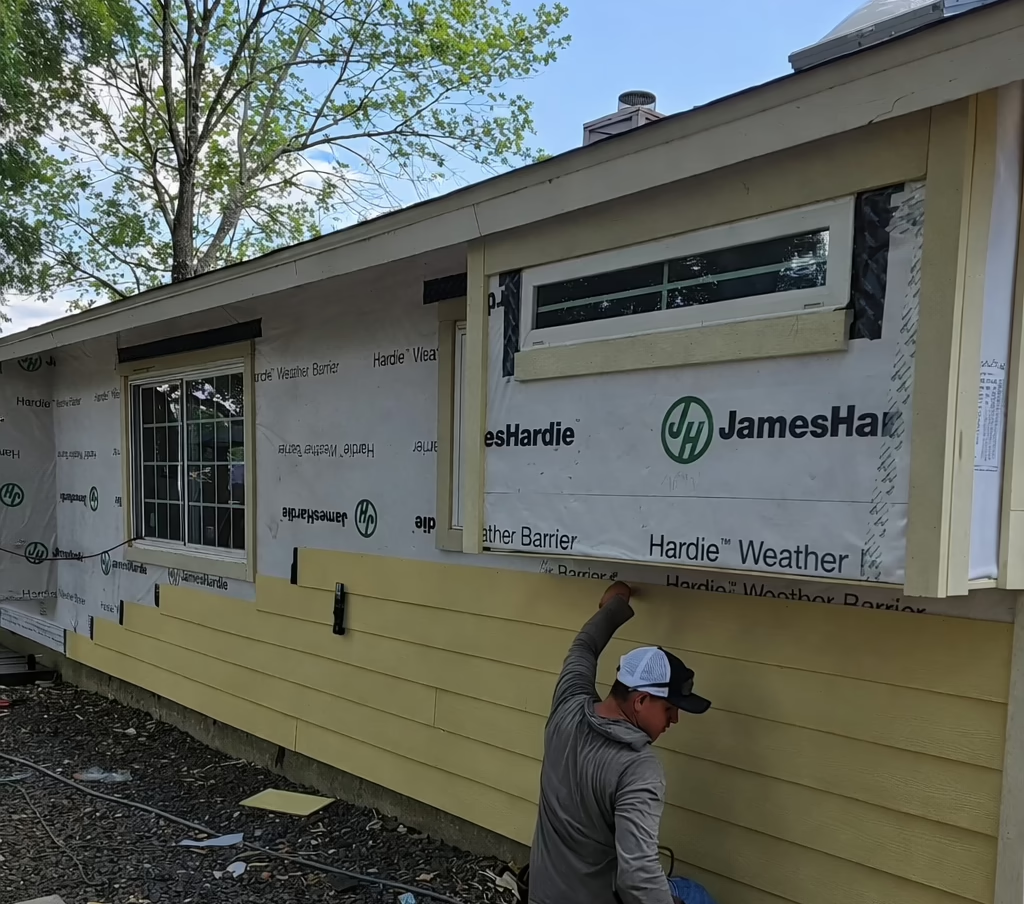
Siding replacement with James Hardie fiber cement typically runs $1,500 to $2,500 per square (one square = 100 sq ft) installed — a range that reflects real project variation, not arbitrary pricing. A complete scope includes tear-off, new sheathing, Hardie Wrap WRB, preferred-standard fiber cement installation, painting, and all trim. A cheaper quote almost always means something in that list is missing — and what’s missing is what determines whether the system performs for 30 years or fails in eight. This page explains what drives siding cost in this market, what a complete scope includes versus what gets cut, and how to read a quote before signing anything. For the full siding overview see the siding replacement overview.
Siding Replacement Cost in Austin — By Project Type
These ranges reflect complete, correctly scoped projects with James Hardie fiber cement installed to preferred standard. Substrate correction costs are included in these ranges — the variation within each range reflects home complexity, story count, profile selection, and extent of substrate damage found at tear-off.
* These are local Austin-area estimates for complete, correctly scoped projects. The accurate number for your home comes from a free on-site assessment.
Want real contracted job values from completed Greater Austin siding projects — what homeowners actually paid, matched to property records? We published the data.
Why the Range Is So Wide — And What It Actually Means
A $1,500/square quote and a $2,500/square quote are not the same job. The difference isn’t contractor profit margin — it’s what’s in the scope. Every line item below that gets cut produces a cheaper quote. Each one also produces a system that performs worse, fails sooner, or creates problems that cost more to fix later than the savings were worth.
✓ What a Complete Scope Includes
- Full tear-off — all existing cladding removed, substrate assessed
- Framing and substrate corrections where needed
- New OSB or plywood sheathing installed over the framing
- Hardie Wrap WRB — not generic housewrap and tape
- Kickout and step flashing at all roof-to-wall transitions
- Head flashing above all windows and doors
- Preferred-standard James Hardie fiber cement installation
- HardieTrim at all corners, windows, doors, and transitions
- Sealed cut edges and fastener points throughout
- Full exterior paint — primer and finish coat
This is what a 30-year system looks like.
✗ What Gets Cut on Cheaper Quotes
- No full tear-off — new cladding over existing substrate, condition unknown
- No new sheathing — boards nailed to whatever was there before
- Generic housewrap instead of Hardie Wrap — cheaper, less compatible
- Flashing skipped or simplified at transitions and openings
- Allowed-standard installation instead of preferred — minimum warranty compliance only
- Painting quoted separately or not included — added cost later
- Lower-skilled labor — faster install, more shortcuts, less accountability
- Substrate corrections excluded from scope — priced as surprises after work begins
Each cut produces a system that performs worse and fails sooner. See common siding problems for what premature installation failures look like.
The Scope Items That Drive Cost — and Why Each One Matters
Understanding what each scope item does and why it’s in a correct installation makes it easier to evaluate what a cheaper quote is actually trading away.
Full Tear-Off
Removing all existing cladding exposes the substrate and framing for inspection and correction before new material goes on. Installing over existing siding skips this step — and skips the substrate assessment that determines whether the new system is going onto a sound wall or a failing one. On Austin homes from the 1980s–1990s, what’s underneath is frequently hardboard or T1-11 in various stages of deterioration. No tear-off means no way to know.
New Sheathing
New OSB or plywood sheathing gives the fiber cement a flat, sound, continuous nailing surface — the prerequisite for a straight, stable installation that holds fasteners correctly and doesn’t produce the wavy appearance that results from boards spanning inconsistent or degraded substrate. On T1-11 replacements, new sheathing is always required because T1-11 itself served as the sheathing. On other replacements, its inclusion depends on existing sheathing condition — but if a quote excludes it categorically, ask why.
Hardie Wrap WRB
Hardie’s proprietary weather-resistant barrier is engineered for compatibility with fiber cement — better dimensional stability, better moisture management performance behind the cladding than generic housewrap. Generic housewrap and tape is cheaper and faster. It’s also less compatible with the system it’s supposed to protect. The WRB is the last line of defense if the cladding system is ever breached — degrading that line of defense to save $200 on a $40,000 project is a poor trade.
Preferred-Standard Installation
James Hardie publishes two installation tiers — allowed (warranty minimum) and preferred (performance ceiling). The difference is in the details: butt-to joints at trim, grade clearance, correct fastener depth, sealed cut edges, back-priming. Preferred-standard installation takes longer and costs more in labor. It’s also what separates a system that holds paint for 15 years from one that’s peeling in four. See the siding installation process page for what preferred standard involves.
Painting Included
A complete fiber cement installation includes painting — primer and finish coat, with sealed cut edges and penetrations before any paint is applied. Quotes that exclude painting are lower on paper but require a second mobilization, a second contractor relationship, and the risk that painting is done before all installation details are correctly completed. On correctly installed fiber cement with a quality paint job, the finish should hold 10–15 years in Central Texas conditions before needing attention.
Flashing at All Transitions
Kickout flashing at roof-to-wall transitions, step flashing up rakes, head flashing above windows and doors — these are the water management details that prevent moisture from entering the wall assembly at the intersections where it most wants to. Flashing is unglamorous scope that doesn’t show in the finished product and is therefore the first thing cut on a rushed or low-bid install. It’s also where most serious water intrusion failures originate.
Fascia and Soffit — Why Most Re-Sides Include It
Fascia and soffit replacement runs $15–$25 per linear foot each and is a common add-on scope on full re-sides — not because we’re looking for additional work, but because it makes practical sense to address them at the same time.
Why Address Fascia and Soffit on the Same Project
Fascia and soffit on Austin homes from the same era as the siding are typically wood or hardboard — the same materials failing on the walls. If they’re already showing deterioration, replacing them while the crew and scaffolding are on-site eliminates a second mobilization and produces a consistent finished system. If they’re sound, we’ll tell you and they can wait.
More practically: a new fiber cement re-side with original deteriorating wood fascia is an incomplete system. Water management at the eave depends on the fascia condition, and a failing wood fascia adjacent to new fiber cement creates a maintenance mismatch that shows up within a few years. Going all the way on a re-side — siding, fascia, and soffit in one scope — is the correct approach when the conditions warrant it.
The Substrate Variable — Why Final Cost Can Shift at Tear-Off
The ranges above include substrate corrections — but the extent of those corrections can’t be fully determined until the cladding is removed. On projects where vinyl was installed over hardboard or T1-11 without tear-off, the substrate condition behind the vinyl is an unknown until it’s exposed. We write scope in two phases on projects where substrate uncertainty is present:
Pre-Tear-Off Estimate
Based on visual inspection, probing, and what we can assess at trim and seam edges. Gives you a working range before any work begins.
Tear-Off Assessment
Cladding removed, substrate and framing condition documented with photos. You see exactly what we found.
Confirmed Scope
Updated scope reflecting actual substrate condition. You approve this before any corrections begin — no surprises after work starts.
Corrections and Installation
Substrate corrections completed, then full preferred-standard Hardie installation on a confirmed sound wall system.
On projects where the substrate is found to be worse than anticipated at tear-off — active rot into the framing, widespread sheathing failure — the confirmed scope will reflect that. We document what we find, explain what it means, and give you a clear picture before any additional work proceeds. What the assessment process looks like from first call through completion is on the siding appointment page.
How to Read a Siding Quote
The most useful thing you can do with competing siding quotes is read the scope of work — not the total number. A lower number with a thinner scope is not a better deal. It’s a different project.
✓ Questions to Ask
Is full tear-off included? Is new sheathing included or excluded? What WRB product is being used? Is painting included? What installation standard — allowed or preferred? How are substrate corrections scoped and priced? What is the warranty on workmanship?
✗ Red Flags in a Quote
Installation over existing siding without tear-off. No mention of sheathing. Generic housewrap or no WRB specified. Painting quoted separately after install. No workmanship warranty. Substrate corrections described as “if needed” without a clear pricing mechanism. Total price significantly below $1,500 per square for a complete re-side.
Our siding installation checklist documents every item that belongs in a correctly scoped project. You can use it as a reference when reviewing any quote — ours or a competitor’s.
Frequently Asked Questions
Why is siding replacement so expensive in Austin?
A complete siding replacement is a full wall system project — not a cosmetic swap. It involves removing everything down to the framing, installing new sheathing, a weather-resistant barrier, flashing at every transition point, fiber cement cladding and trim to preferred standard, and painting. Each of those layers has a material cost and a skilled labor cost. The projects that appear significantly cheaper are almost always missing one or more of those layers — which is why they’re cheaper, and why they perform worse over time. The $1,500–$2,500 per square range reflects what it actually costs to do the job correctly in this market.
Why do I need new sheathing if my existing sheathing seems fine?
On most projects, new sheathing is part of the scope because the existing sheathing condition can only be reliably assessed after tear-off — and because installing new fiber cement over sheathing of uncertain age and condition is a risk that affects the performance and longevity of the new system. On T1-11 replacements, new sheathing is always required because T1-11 was the sheathing. On other projects, if existing sheathing is found to be sound after tear-off, we’ll tell you and scope accordingly. Sheathing that’s excluded from a quote upfront, categorically, before tear-off, is a scope cut — not a finding.
Is painting included in your siding replacement quotes?
Yes. Painting is included in our siding replacement scope — primer and finish coat, applied after all installation details are correctly completed including sealed cut edges, back-primed exposed ends, and sealed penetrations. Painting is not a separate mobilization or a separate contractor. A correctly painted fiber cement installation in Central Texas should hold 10–15 years before needing a repaint. Quotes that exclude painting are lower on paper but require a separate engagement and introduce the risk of painting before all installation details are verified complete.
What’s the difference between James Hardie’s allowed and preferred installation standard — and does it affect cost?
Allowed is the minimum installation standard that keeps Hardie’s warranty technically intact. Preferred is what Hardie recommends for maximum system performance — tighter details, better water management, more time per linear foot of installation. Preferred-standard installation costs more in labor. It’s also what determines whether the system holds paint for 15 years, manages water correctly at every transition, and performs at the ceiling of what fiber cement can do in this climate. We install to preferred standard on every project. Most contractors install to allowed because it’s faster. That gap in standard is one reason two quotes for the same home can differ by hundreds of dollars per square. See the siding installation process page for what preferred standard covers.
Should I replace my fascia and soffit at the same time as my siding?
On most Austin homes from the 1980s–1990s, yes — for two reasons. First, the fascia and soffit are typically the same age and material as the siding. If the siding is past its service life, so are they, and addressing them now avoids a second mobilization in a few years. Second, a new fiber cement re-side with deteriorating wood fascia is an incomplete system — the eave water management depends on fascia condition, and a mismatch between new cladding and aging fascia creates a maintenance problem that shows up within a few years. At $15–$25 per linear foot, addressing fascia and soffit on the same project is almost always the right call when the conditions warrant it.
How do I get an accurate price for my specific home?
An accurate number requires an on-site assessment — story count, linear footage, profile selection, substrate condition, and fascia and soffit condition all affect the final scope. For projects where vinyl is present over an unknown substrate, the pre-tear-off estimate will be a range that gets confirmed after tear-off. We don’t charge for the assessment, we don’t require a deposit to get started, and we provide a written scope before any work begins. The siding appointment page explains how the process works from first call through completed scope.
Get an Accurate Number for Your Home — Not a Range From the Internet.
We’ll assess your home, tell you what we find, and give you a written scope with a real number before anything is ordered or started. Review what to expect on your appointment before we talk.
- Written scope and price before any work begins
- No deposit required to get started
- Substrate corrections included — no surprises after tear-off
- 10-year workmanship warranty on every installation