

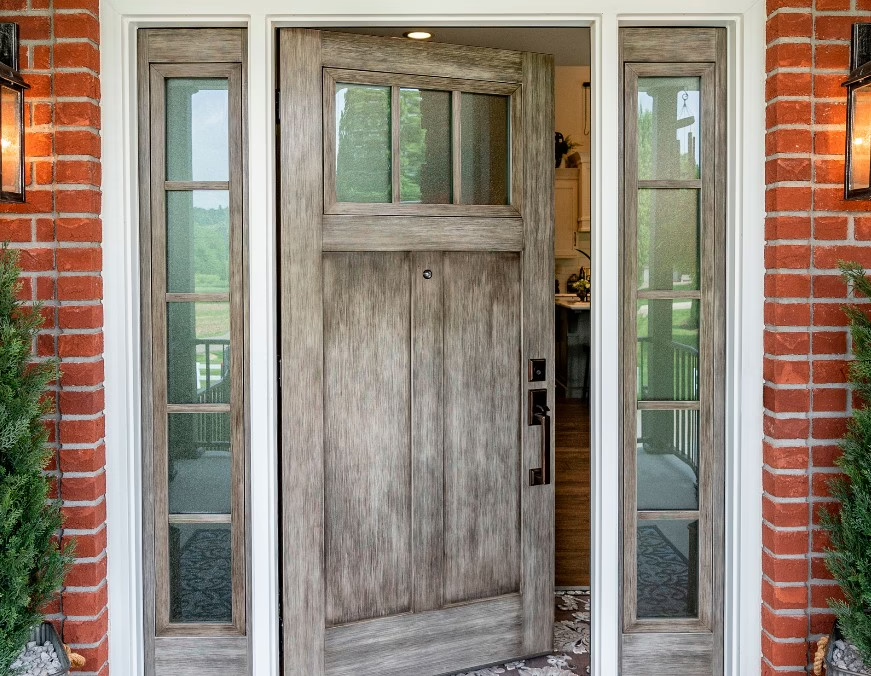
Fiberglass Entry and Patio Doors — ProVia Signet, Ascent, and Pella Impervia
Fiberglass is the dominant material for entry and patio doors in Central Texas for reasons that hold up under scrutiny — not marketing. It doesn’t rust, warp, rot, or take a permanent set under sustained heat. The woodgrain texture on a premium fiberglass door is created from an actual wood template, which is why it can be stained to look indistinguishable from real wood at a fraction of the weight and maintenance. The foam-injected core and wood-reinforced stile construction give it structural integrity that outlasts steel finishes and vinyl dimensional stability over the temperature cycling this climate produces. It costs more upfront than steel or vinyl. For most Central Texas homes it’s worth it — particularly on south- and west-facing exposures where sustained UV and heat put steel and vinyl under conditions they weren’t designed to handle indefinitely. For the full material comparison see the door materials overview, or for the full door overview see the door replacement overview.
How Fiberglass Doors Are Made — Why the Manufacturing Process Matters
The performance characteristics of a fiberglass door trace directly to how it’s manufactured — and the process is more involved than most homeowners realize. Understanding it explains why premium fiberglass looks and performs the way it does, and why not all fiberglass doors are equivalent.
The Wood Template
The process begins with building the intended door out of actual wood — with the exact woodgrain, panel profiles, and surface texture desired for the finished product. This isn’t a design sketch or a digital rendering. It’s a physical wood door built to the precise specifications of the final product.
The Silicone Mould
Silicone is applied to the wood template, creating a perfect replica of the woodgrain texture and panel design — capturing every grain line, knot, and surface detail at full resolution. The silicone mould is essentially a negative impression of the wood surface, preserving everything the real wood door had.
The Metal Mould
The silicone mould is then used to create the metal production mould — the tool that stamps every finished fiberglass skin. Every door that comes out of that mould carries the exact woodgrain of the original wood template. This is why a premium fiberglass door stained in the field can look genuinely indistinguishable from real wood — the texture came from real wood in the first place.
Skin-to-Frame Bonding and Foam Injection
The fiberglass skins are permanently bonded to the internal wood frame — not just fitted over it. Computer-controlled polyurethane foam is then injected into the door cavity, filling the entire interior and bonding the assembly into a single rigid unit. The result is a door that is simultaneously lighter than a solid wood door, better insulated than a steel door, and dimensionally stable in ways neither material achieves.
ProVia Fiberglass Entry Doors — Signet and Ascent
ProVia builds two fiberglass entry door lines — Signet and Ascent — that apply the manufacturing process above to different aesthetic and structural specifications. The internal construction differences between them are substantive.
Signet® — The Wood Construction Fiberglass Door
- 2⅝” finger-jointed 3-ply hardwood hinge stile — the structural backbone of the door
- 4¼” finger-jointed 4-ply hardwood strike stile — solid lock block for hardware longevity
- Dovetailed stiles and rails — mechanical joint integrity under daily use
- Fiberglass skins permanently glued to frame — no separation over time
- Computer-controlled polyurethane foam core — U-factor as low as 0.16
- Nickel Vapor Deposition woodgrain — Mahogany, Cherry, Oak, Knotty Alder, Fir, or Smooth
- DuraFuse™ finish system with P3 Fusion — 15-year finish warranty
- Auto-adjusting Z-AC threshold
- ENERGY STAR capable
The answer when wood aesthetics, structural integrity, and the longest finish warranty are the priority. Full details at ProVia doors →
Ascent™ — The Contemporary Fiberglass Door
- 2⅝” wood stiles with dowel-pinned rod-reinforced corners
- Thicker fiberglass skin than standard fiberglass doors
- Lock block reinforcement at all hardware points
- Computer foam fill throughout
- White Oak woodgrain via premium laser/acid etching — wide or traditional embossing
- Smooth contemporary texture option
- Custom sizes in ⅛” increments
- Z-AI adjustable threshold
- 10-year finish warranty
The answer when contemporary design and White Oak aesthetics are the target look. Full details at ProVia doors →
Pella Impervia — Fiberglass for Sliding Patio Doors
Pella’s Impervia line applies fiberglass to sliding patio doors with a construction approach specifically engineered for the thermal and mechanical demands of a track-mounted door system. The material and performance characteristics address the specific failure modes that wood, vinyl, and aluminum are susceptible to in this climate.
What Makes Impervia Fiberglass Different
- Thermoset fiberglass — won’t melt or break down under environmental temperature swings, unlike thermoplastic materials including vinyl
- Five-layer fiberglass construction — stronger than standard fiberglass, stronger than vinyl, engineered for lasting durability in patio door applications
- Tested from -40°F to 180°F — handles extreme heat and cold without warping or becoming brittle
- Won’t rot, corrode, or warp under any normal operating condition
- Naturally water resistant — the material itself resists moisture rather than relying solely on sealant
- Durable powder-coat finish — resists chalking, fading, and scratching even in dark colors
Full Pella Impervia details at Pella doors page →
Why Thermoset Matters for a Patio Door Track System
A sliding door’s performance over time depends on the frame and track holding their dimensions consistently. Vinyl expands and contracts with temperature — which affects track fit, roller clearance, and meeting rail alignment in ways that accumulate over years of Central Texas thermal cycling.
Pella’s thermoset fiberglass doesn’t behave this way. The material doesn’t melt, soften, or take a permanent set under heat. At Austin’s summer temperatures — doors in direct west sun can see surface temperatures well above ambient air temperature — that stability is the difference between a door that slides easily and seals correctly at year ten versus one that binds, gaps at the meeting rail, and drafts.
Full sliding patio door details — including Anlin and ProVia options — at sliding patio doors →
Why Fiberglass Performs Differently in Central Texas
Material performance is climate-dependent. A steel door that holds its finish for 20 years in a Pacific Northwest climate may show rust and finish degradation significantly faster on a west-facing Austin entry. The variables that matter in Central Texas are UV intensity, sustained heat, and the thermal cycling between summer highs and winter lows — all of which stress door materials in specific ways.
| Factor | Fiberglass | Steel | Vinyl | Wood |
|---|---|---|---|---|
| Heat Stability | Excellent — thermoset fiberglass won’t soften, warp, or take a permanent set | Good — steel holds shape but surface finish degrades under sustained UV | Poor — PVC softens under sustained heat, can warp on south/west exposures | Moderate — swells and contracts with humidity but can be managed |
| UV Resistance | Excellent — quality finish systems hold color a decade or longer | Moderate — finish degrades faster than fiberglass under sustained UV, rust risk if compromised | Poor — UV fading on vinyl can’t be corrected with paint | Poor without regular maintenance — UV degrades unprotected wood rapidly |
| Moisture | Excellent — won’t rot, corrode, or absorb moisture | Moderate — rusts if finish is compromised | Good — won’t rot or corrode | Poor — absorbs moisture, swells, and rots without consistent maintenance |
| Dimensional Stability | Excellent — holds frame dimensions through thermal cycling | Good — minimal thermal expansion | Poor — expands and contracts significantly with temperature | Poor — swells in humidity, shrinks in dry conditions |
| Finish Longevity | 15 years on ProVia Signet — longest available on any door material | 10 years — shorter in high UV exposure | Color is integral to material — fades permanently, can’t be repainted | Requires repainting every 3–7 years to maintain appearance and protection |
| Cost | Highest upfront — best long-term value in this climate | Lower upfront — see steel door page | Mid-range — see vinyl door page | Variable — see wood door page |
When Fiberglass Is the Right Choice — and When It Isn’t
Fiberglass is the right call when:
- The entry faces south or west and takes sustained direct sun
- Long-term ownership — you’re planning to be in the home for 15+ years
- Wood aesthetics are important — fiberglass can be stained to match real wood
- You want the longest available finish warranty
- Patio door application — thermoset fiberglass handles track stress better than any alternative
- You want a door that requires essentially zero maintenance beyond periodic cleaning
Steel may be the better answer when:
- Budget is the primary driver — steel delivers strong performance at a lower price point
- The entry faces north and doesn’t get significant direct sun exposure
- Security is the top priority over aesthetics — steel is inherently the stronger material
- Shorter ownership horizon — the long-term value argument for fiberglass diminishes on a 5-year timeline
For front entry doors, fiberglass is the right answer for most Central Texas homeowners planning to stay long term. For french doors, fiberglass is the default — the glass area and weather exposure at the center seam make material stability more critical than on a single-panel door. For sliding patio doors, Pella Impervia’s thermoset fiberglass is the most durable track-mounted door available in this climate.
Recent Fiberglass Door Projects Across the Austin Area
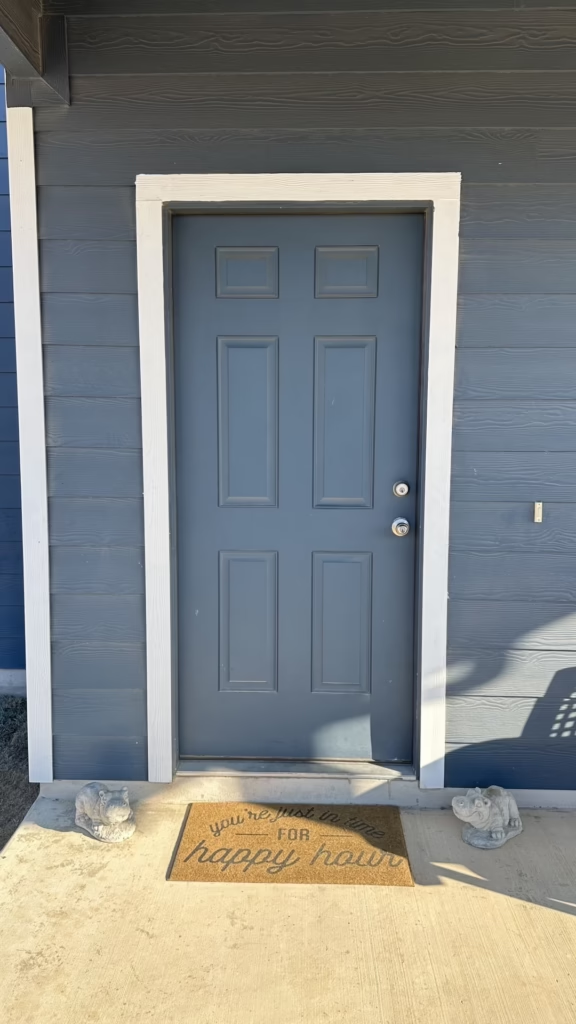
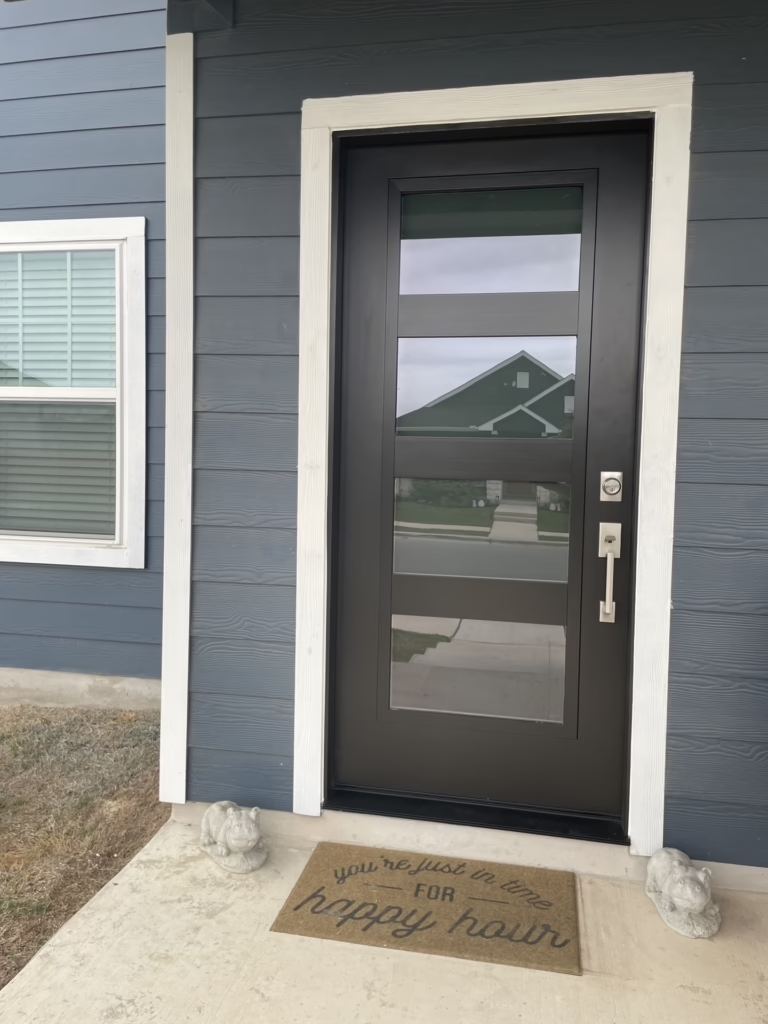
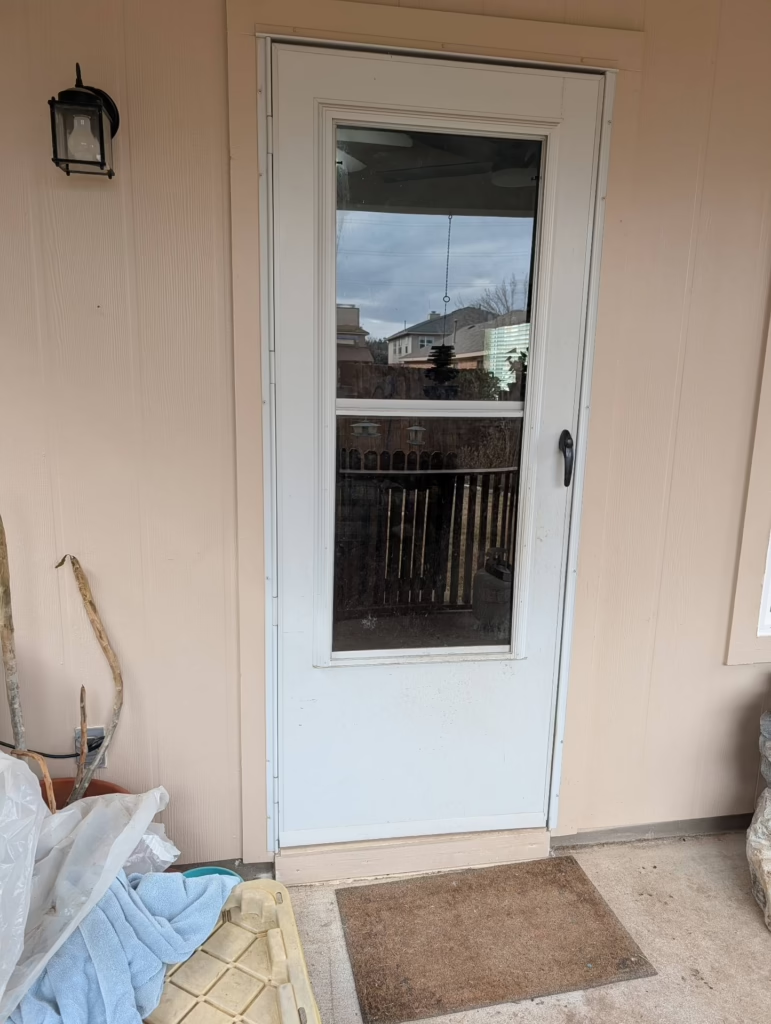
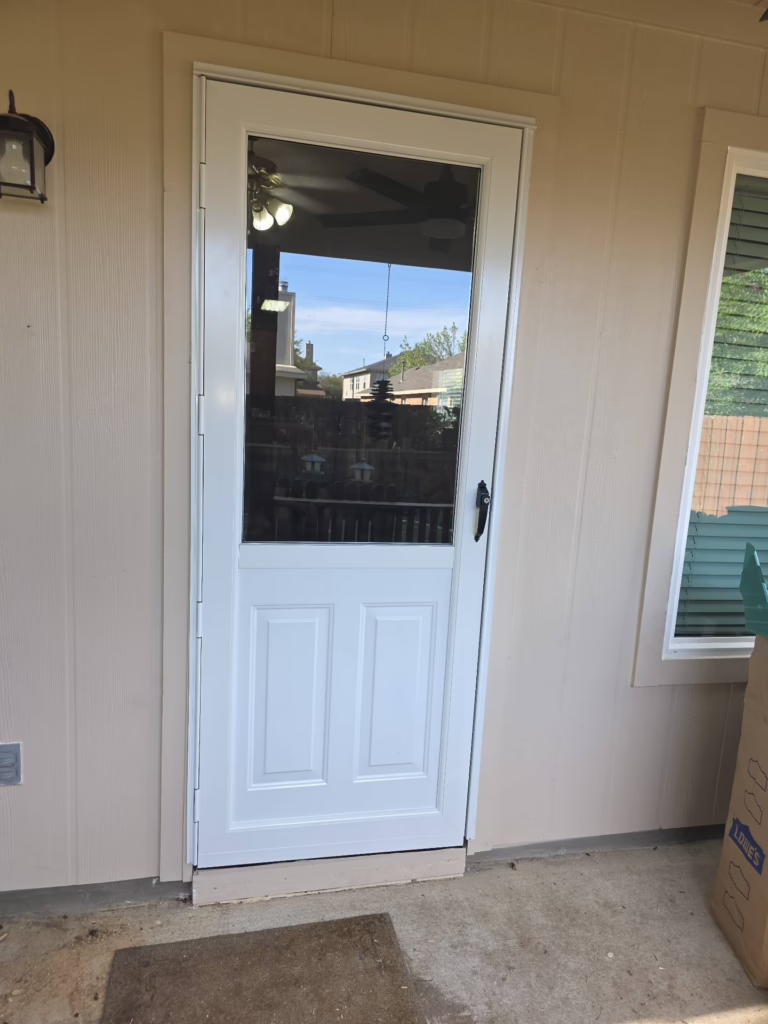
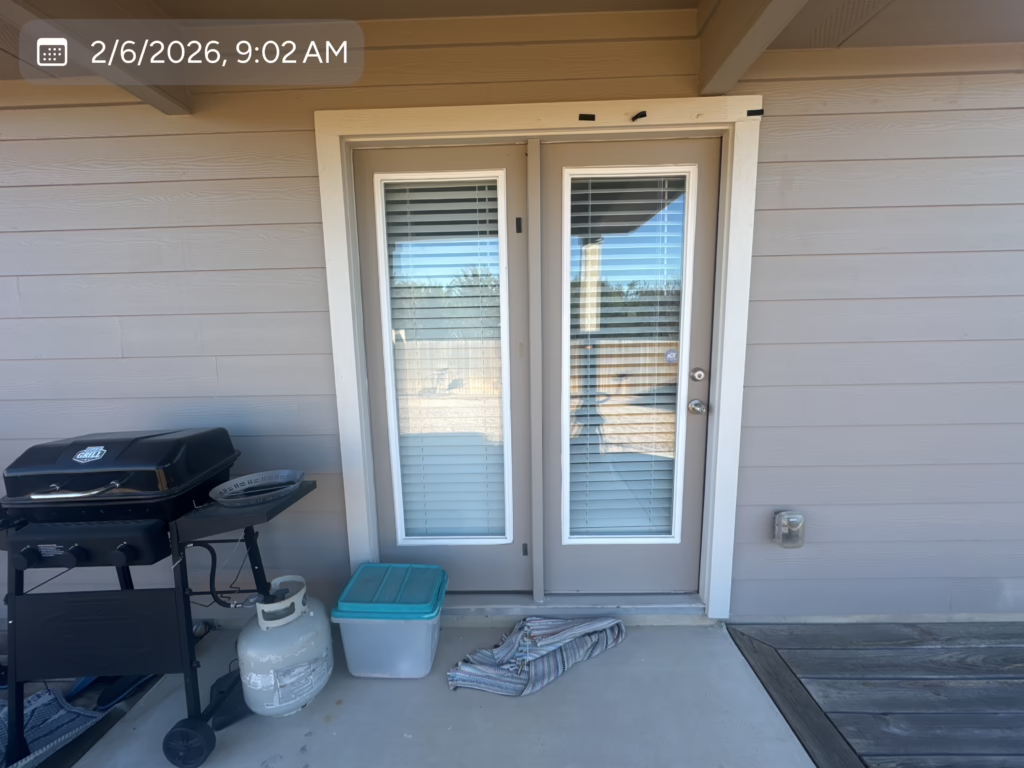
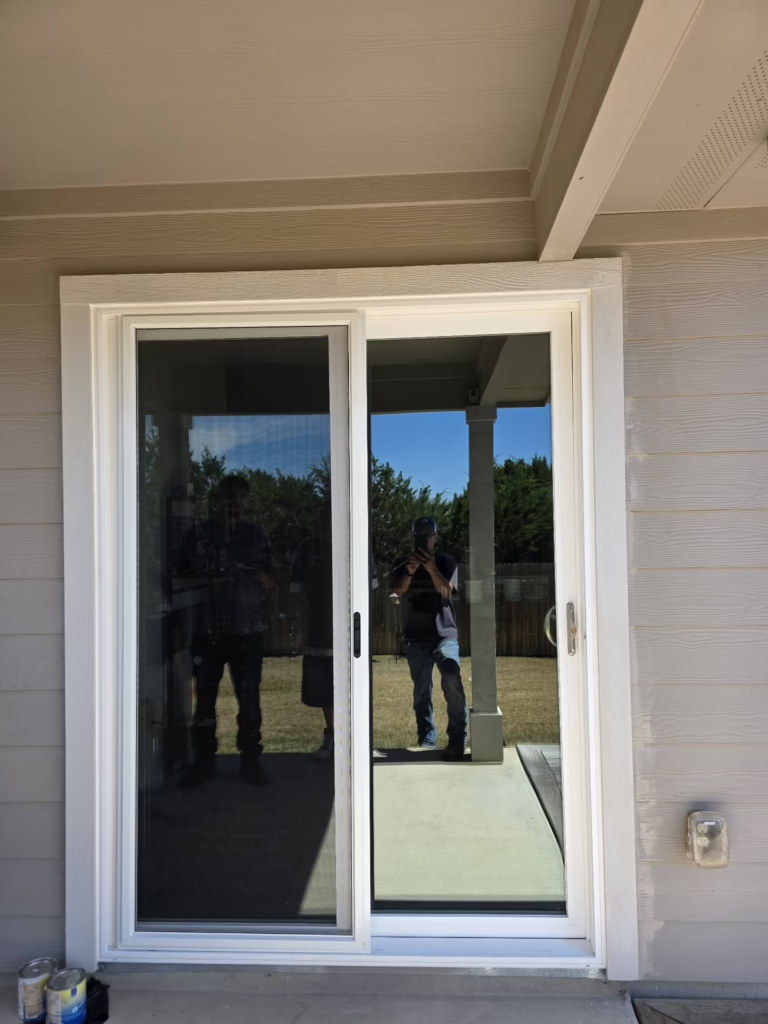
Real fiberglass door installations completed for Austin-area homeowners — before and after, different styles, different conditions. This is what a properly installed fiberglass door looks like when the framing, weatherstripping, and finish details are handled correctly.




Frequently Asked Questions
Can a fiberglass door really look like real wood?
Yes — and the reason is in the manufacturing process. ProVia builds the door first out of actual wood, applies silicone to create a perfect texture mould, and uses that mould to stamp every fiberglass skin. The woodgrain on a ProVia Signet door came from a real wood door. When stained in the field with the right products and technique, the result is indistinguishable from real wood to anyone who isn’t examining it closely — and unlike real wood, it won’t rot, swell, or require repainting every few years to maintain that appearance.
What is the difference between thermoset and thermoplastic fiberglass?
Thermoplastic materials — including most vinyl — soften and become pliable when heated, and harden again when cooled. This is why vinyl expands and contracts significantly with temperature, which affects track alignment and dimensional stability on doors and windows over time. Thermoset materials — including Pella Impervia fiberglass — undergo a chemical change during manufacturing that makes them permanently rigid. They don’t soften under heat, which means they maintain their dimensions at 180°F surface temperatures the same way they do at 40°F. For a patio door track system in Central Texas, that difference is meaningful over a decade of thermal cycling.
Why does fiberglass cost more than steel?
The manufacturing process is more involved — building the wood template, creating the silicone mould, stamping the fiberglass skins, bonding them to a wood-reinforced internal frame, and injecting foam under computer control takes more materials and more steps than stamping steel skins over a foam core. The result is a more complex, more durable product that outperforms steel in UV resistance, finish longevity, and dimensional stability. Whether the premium is worth it depends on how long you’re in the home, which direction the door faces, and how much the finished appearance matters. For most Central Texas homeowners on south- or west-facing entries planning to stay long term, it is.
How long does a fiberglass door finish last?
On ProVia Signet, the DuraFuse™ finish system with P3 Fusion carries a 15-year finish warranty — the longest available on any entry door material. ProVia Ascent and Pella Impervia both carry 10-year finish warranties. These warranty periods reflect real-world performance in normal conditions. In Central Texas’s heat and UV environment, a correctly installed and maintained fiberglass door finish outlasts a comparable steel door finish on south- and west-facing exposures by a meaningful margin — typically several years under sustained direct sun.
Is fiberglass stronger than steel for security?
Steel is inherently the stronger material against forced entry — 20-gauge steel is physically harder to breach than fiberglass. What fiberglass offers on the security front is structural integrity at the lock points over time. ProVia Signet’s 4.25-inch 4-ply hardwood strike stile gives the multipoint hardware a solid anchor that doesn’t degrade the way a thinner stile can. The lock block and stile construction on a premium fiberglass door provides excellent long-term hardware performance — but if security against forced entry is the absolute top priority, steel is the honest answer.
Not Sure Which Door Material Is Right for Your Home?
We’ll assess the existing opening, factor in orientation and exposure, and walk you through ProVia and Pella options that fit your situation and budget — before anything is ordered.
- Free assessment with photo documentation
- No deposit required to get started
- Written scope before any work begins
- 10-year workmanship warranty on every installation