

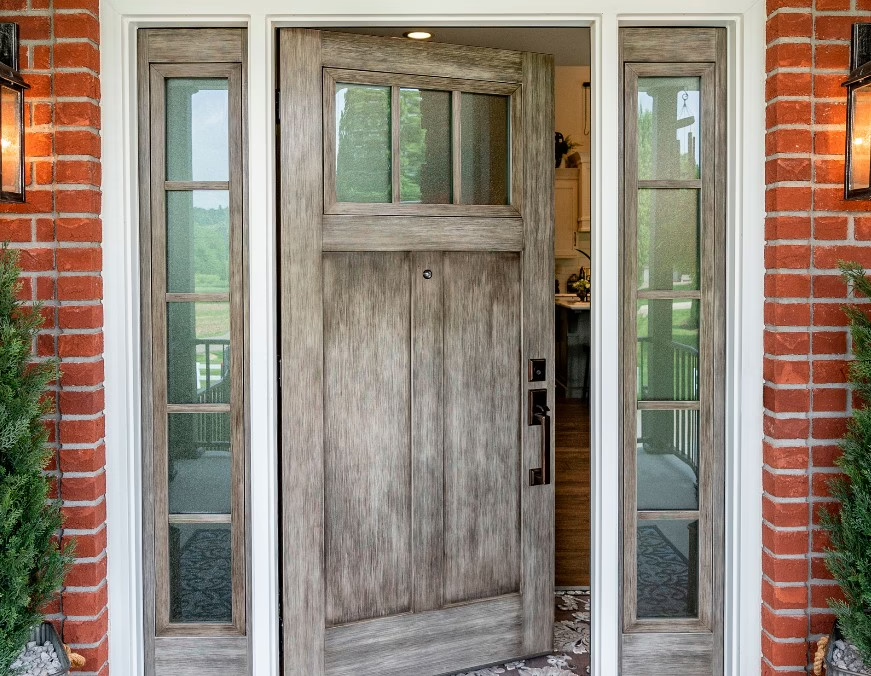
Wood Entry Doors — The Appearance Case, the Maintenance Reality, and the Fiberglass Alternative
Wood entry doors are the standard against which every other door material is measured for appearance — the grain, the depth, the warmth of a real wood door is something no other material fully replicates. The tradeoff is maintenance: wood requires periodic refinishing, is susceptible to moisture absorption and swelling, and in Central Texas conditions deteriorates faster without consistent upkeep than in moderate climates. When wood is genuinely the right answer, we install Pella Reserve and Lifestyle wood entry doors — both available with aluminum cladding on the exterior that takes the direct weather exposure and meaningfully reduces the refinishing cycle. When a wood aesthetic is the goal but the maintenance commitment isn’t, we install ProVia fiberglass manufactured from a real wood template — the woodgrain was stamped from an actual wood door and holds for decades without refinishing. For the full material comparison see the door materials overview, or for the full door overview see the door replacement overview.
What Makes Wood Doors Different — and Why Homeowners Still Want Them
Wood has genuine qualities that explain its continued appeal despite being the highest-maintenance door material available. These aren’t marketing claims — they’re characteristics that other materials approximate but don’t fully match.
Appearance
A real wood door has depth, variation, and warmth that manufactured materials approach but don’t fully replicate. The grain runs through the material, catches light differently at different angles, and has natural character that comes from the tree it was cut from. On high-end homes where the entry door is a prominent architectural element, a well-maintained wood door has an appearance premium that fiberglass and steel don’t fully match.
Repairability
Wood can be repaired in ways other materials can’t. Surface scratches, dents, and finish wear can be sanded out and refinished. A damaged section of wood trim or frame can be patched and blended. This repairability is part of what makes wood the traditional choice on historic homes and high-end custom properties where the character of the material matters and the maintenance commitment is accepted.
Customization
Wood can be cut, shaped, carved, and finished in ways that no manufactured material matches. Custom millwork, carved panels, unique profiles, and any stain color imaginable are all possible with wood. For truly custom entry door applications — architecturally significant homes, historic renovations, or specific design visions — wood is sometimes the only material that delivers what’s required.
Thermal Performance
Solid wood is a reasonable insulator — not as efficient as a foam-core door by U-factor, but meaningful compared to single-pane glass or uninsulated aluminum. Wood’s thermal performance is adequate for most residential applications, though modern foam-core fiberglass and steel doors with low U-factors outperform solid wood on energy metrics.
The Maintenance Reality in Central Texas
Wood’s maintenance requirements are real in any climate. In Central Texas, the combination of UV intensity, heat, humidity swings, and occasional hard rains compresses the refinishing cycle and accelerates deterioration on neglected doors faster than in moderate climates.
Refinishing Cycle — Every 2 to 5 Years
A wood door in good condition on a covered, shaded entry might go five years between refinishing. A south- or west-facing wood door in full sun in Central Texas may need attention every two to three years. The finish — whether paint, stain, or varnish — is what protects the wood from moisture absorption. When it degrades, moisture gets in, and wood deterioration follows.
Swelling and Seasonal Movement
Wood absorbs moisture and expands — this is an inherent property of the material. In Central Texas where humidity swings between dry winters and humid summers, seasonal movement in a wood door is expected. A door that seals correctly in January may drag on the threshold in August. Hardware alignment can shift. The movement is manageable with the right installation and hardware, but it’s a real characteristic that fiberglass and steel don’t share.
Rot Risk at Vulnerable Points
The bottom rail, threshold contact point, and any area where water can pool or sit against the wood are potential rot initiation points. A well-maintained wood door with intact finish and correct threshold sealing manages this risk. A door where the finish has worn at the bottom and the threshold seal has degraded can develop rot within a single wet season. The risk is manageable — but it requires consistent attention that other materials don’t demand.
UV Degradation
UV breaks down the finish on a wood door faster than on most other surfaces because the wood substrate is organic and UV-sensitive in ways that PVC and fiberglass are not. On south- and west-facing entries in full sun, finish degradation is faster and more consequential than on protected entries. A wood door on an exposed south-facing entry without a roof overhang in Central Texas is the highest-maintenance door configuration possible.
The Fiberglass Alternative — Why Most Homeowners Choose It Over Wood
The reason most homeowners who want a wood-look door end up with fiberglass isn’t that fiberglass looks as good as wood — it’s that for most entry door applications, fiberglass looks close enough to wood that the difference isn’t visible from the street, and the maintenance differential over 15 to 20 years is substantial.
| Factor | Wood | Fiberglass (ProVia Signet) |
|---|---|---|
| Appearance | Real wood grain, depth, and warmth — the benchmark | Woodgrain stamped from real wood template — stainable, indistinguishable at normal viewing distance |
| Refinishing | Every 2–5 years depending on exposure — non-negotiable maintenance requirement | Not required — 15-year finish warranty on DuraFuse system |
| Moisture | Absorbs moisture, swells seasonally, rots if finish fails | Won’t absorb moisture, rot, or swell under any normal condition |
| UV Resistance | Finish degrades under UV — faster on south/west exposures | DuraFuse finish engineered for UV resistance — holds significantly longer |
| Thermal Performance | Adequate — solid wood is a reasonable insulator | Better — foam core with U-factor as low as 0.16 |
| Repairability | Scratchable and repairable — sand and refinish | Won’t dent — surface damage requires panel replacement rather than refinishing |
| Cost Over Time | Lower upfront on some products — higher total cost with refinishing cycles | Higher upfront — lower total cost over 15–20 years without refinishing |
| Wood Species Options | Any species available — genuine variation in grain and character | Mahogany, Cherry, Oak, Knotty Alder, Fir, or Smooth — all from real wood moulds |
For front entry door and french door applications where a wood aesthetic is the goal, ProVia Signet fiberglass is what we recommend. The woodgrain was created from a real wood template — the appearance at the door is accurate, the staining process is the same, and the result holds without the refinishing cycle that a real wood door requires in this climate. Full details on the fiberglass manufacturing process and product specifications are on the fiberglass door materials page.
When Wood Is Still the Right Answer
There are situations where wood is genuinely the correct material and fiberglass is a compromise rather than a substitute. These situations exist — they’re just less common than the wood door market suggests.
Wood makes sense when:
- The home is a historic property where material authenticity is required — fiberglass may not satisfy historic preservation standards
- Truly custom millwork, carved panels, or unique profiles are required that no manufactured door can replicate
- The homeowner has a specific wood species and grain character in mind that doesn’t exist in fiberglass
- The entry is fully covered and shaded — maintenance cycle is much longer on a protected door
- The maintenance commitment is accepted and preferred — some homeowners genuinely enjoy the care of a wood door as part of home ownership
When wood is the right answer, we install Pella’s two wood entry door lines — Reserve for premium custom applications, Lifestyle for high-performance wood at a more accessible price point. Both are available with aluminum cladding on the exterior.
Pella Reserve
- Pella’s top-of-line wood door — historical authenticity, no-compromises detailing
- Near-limitless customization — custom sizes, shapes, and historical profiles
- Traditional and Contemporary design options
- Hidden roll screen — a standout feature
- Premium specialized wood types and extensive color choices
- Aluminum cladding available — exterior aluminum takes direct weather exposure, interior remains real wood
Right for historic renovations, architecturally significant homes, and homeowners who want premium real wood with no compromises.
Pella Lifestyle
- High-performance wood at a more accessible price than Reserve
- Strong energy efficiency ratings
- Noise reduction — up to 52% more than single-pane configurations
- Clean transitional design — versatile for modern homes
- Aluminum cladding available — meaningful maintenance reduction on exposed entries
Right for standard or modern homes where wood is the goal and Reserve’s premium isn’t warranted. Full details at Pella doors page →
On aluminum cladding: both Reserve and Lifestyle are available with an aluminum skin on the exterior that takes the direct weather and UV exposure instead of the wood surface. The interior remains real wood. On south- and west-facing entries in Central Texas, aluminum cladding meaningfully reduces the refinishing cycle — the primary maintenance driver on a wood door is exterior finish degradation, and cladding eliminates most of it. It’s worth discussing before ordering on any high-exposure entry.
Frequently Asked Questions
Can fiberglass really look like real wood?
At normal viewing distances — yes, on quality product. ProVia’s process begins by building the door in actual wood, applying silicone to create a mould from the surface, and using that mould to stamp fiberglass skins. Every grain line and panel profile came from a real wood door. When stained with the correct products and technique, the result reads as wood to anyone who isn’t examining it closely. Up close and in hand, a trained eye can tell the difference — the depth and variation of real wood is genuinely unique. For most entry door applications, the appearance at the door is close enough that fiberglass is the right answer.
How often does a wood door need to be refinished in Central Texas?
It depends heavily on exposure. A wood door on a covered, north-facing entry might go four to five years between refinishing. A south- or west-facing door in full sun may need attention every two to three years. The refinishing cycle isn’t just aesthetic — it’s structural. When the finish fails, moisture gets into the wood, swelling, cracking, and rot follow. On a neglected wood door in Central Texas conditions, the deterioration sequence from finish failure to structural rot can happen within a single wet season.
Do you install wood doors?
Yes — we install Pella Reserve and Lifestyle wood entry doors, both available with aluminum cladding on the exterior. Reserve is Pella’s premium designer line for historic renovations and custom architectural applications. Lifestyle is the high-performance wood option for standard and modern homes that want real wood at a more accessible price point. For most entry and french door projects where the goal is a wood aesthetic without the maintenance obligation, ProVia Signet fiberglass delivers the look accurately and holds it for decades. We’ll give you an honest assessment of which is the right answer for your specific situation.
What wood species does ProVia fiberglass replicate?
ProVia Signet is available in Mahogany, Cherry, Oak, Knotty Alder, Fir, and Smooth — each created from a real wood door template using Nickel Vapor Deposition technology. ProVia Ascent offers White Oak in wide or traditional embossing, created via laser and acid etching. The species selection covers the most common wood door aesthetics — if a specific species that isn’t in that list is the goal, that’s one of the situations where real wood may be the right answer.
Is a wood door worth it on a high-end home?
It can be — on a truly high-end home where the entry door is a prominent architectural statement and the maintenance commitment is accepted, a real wood door has an appearance premium that fiberglass doesn’t fully replicate. The question is whether that premium is worth the refinishing cycle, the moisture management requirements, and the faster deterioration under neglect that Central Texas conditions produce. For most high-end homes in this market, ProVia Signet fiberglass delivers a wood aesthetic that satisfies the design requirement without the maintenance obligation. For the rare project where only real wood will do, we’ll tell you that.
Wood Door or Fiberglass Alternative — We’ll Tell You Which One Fits
We install Pella Reserve and Lifestyle wood doors with aluminum cladding when wood is the right answer. We install ProVia Signet fiberglass when the goal is the wood aesthetic without the maintenance cycle. Free assessment, no deposit required.
- Free rough opening assessment included
- No deposit required to get started
- Written scope before any work begins
- 10-year workmanship warranty on every installation