

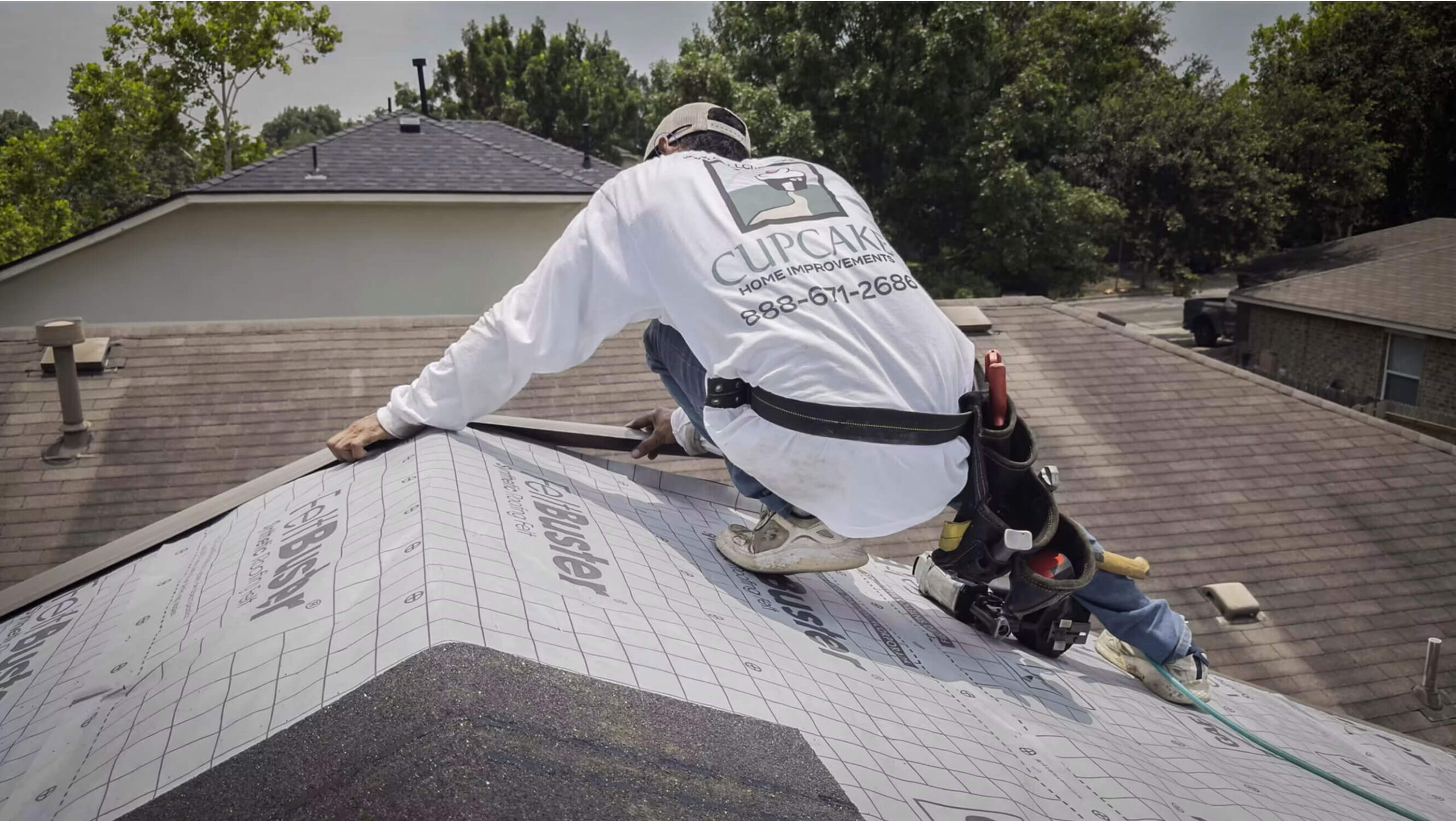
Roof Installation Process: How a Roof Is Properly Replaced in Central Texas
A proper asphalt shingle roof replacement in Central Texas follows eight steps. Each builds on the one before it — skipping or rushing any of them is where most roofing problems originate.
- Jobsite protection and pre-install setup — property protected, scope and materials confirmed before work begins
- Tear-off and removal — existing shingles and underlayment fully removed to expose the deck
- Roof deck inspection and repair — rot, delamination, and water damage identified and replaced before anything goes down
- Underlayment and water protection — ice and water barrier and synthetic underlayment installed across the full deck
- Flashing and penetration detailing — step flashing, pipe boots, valleys, and chimney details installed correctly
- Ventilation design and installation — intake and exhaust balanced, airflow path confirmed through the attic
- Shingle installation and fastening — installed to manufacturer specifications for nail placement, exposure, and alignment
- Final inspection, cleanup, and walkthrough — magnetic sweep, quality check, homeowner documentation, warranty begins
This page covers the installation process for asphalt shingle roofing. Metal roofing follows a different process and will be covered separately. For an overview of both systems, see the roofing overview.
Why Installation Quality Matters More Than the Shingles You Choose
Most roofing problems don’t start with the shingles. They start with shortcuts taken during installation. Leaks, premature aging, ventilation failures, nail pops, and warranty disputes are usually the result of how the roof was built — not the brand printed on the wrapper.
This page explains how a proper roof replacement is installed in Central Texas, step by step, so you understand what should happen on your home and what questions to ask before work begins. If you’re still deciding whether repair or replacement makes sense, start with roof repair vs. replacement. If you’re comparing pricing factors, see roofing costs in Austin.
What “Installed Correctly” Actually Means
A roof is not a single product — it’s a layered system designed to manage water, heat, airflow, and structural load. When any part of that system is rushed or skipped, problems surface years earlier than expected.
💧 Water Management
- Proper underlayment and drainage paths so water sheds off — not into — the roof
- Correctly integrated flashing at every transition and penetration
- Ice and water barrier in all vulnerable areas
🏗️ Structural Integrity
- Solid, inspected decking before any material goes down
- Correct fastener placement and nail penetration depth
- System components selected to work together — not mixed arbitrarily
🌬️ Ventilation Balance
- Intake and exhaust designed together — not just vent count
- Airflow path confirmed through the attic space
- Ventilation sized to the roof geometry, not a generic spec
⚠️ What Happens Without It
- Leaks and nail pops that trace back to day-one shortcuts
- Heat buildup that compresses shingle lifespan from below
- Warranty disputes when installation doesn’t meet manufacturer standards
Many of the issues covered in our common roofing problems guide trace back to installation details that were invisible on day one.
Step-by-Step: The Roof Replacement Process
Jobsite Protection & Pre-Install Setup
Before a shingle comes off, the property is protected and the installation plan is confirmed so the project runs efficiently and safely.
- Protect landscaping, siding, windows, and walk paths
- Stage materials for efficient workflow
- Confirm scope, materials, and ventilation plan
Tear-Off & Removal of Existing Roofing
Existing materials are fully removed so the structure underneath can be evaluated — not covered over. Roofing over an existing layer skips this step and skips the deck inspection that follows.
- Remove shingles, underlayment, and accessories
- Safe debris disposal and site management
- Expose the full deck for inspection
Roof Deck Inspection & Repairs
The deck is the foundation everything else is built on. Compromised areas are identified and replaced before installation continues — not discovered later as a callback.
- Inspect for rot, delamination, or water damage
- Replace damaged decking as needed
- Confirm a solid, consistent nailing surface
Underlayment & Water Protection Layers
Protective layers are installed across the deck before shingles go down. This is the roof’s secondary defense when the primary surface is compromised.
- Ice and water barrier in vulnerable areas — eaves, valleys, penetrations
- High-quality underlayment across the full deck
- Correct overlap and fastening for wind resistance
Flashing & Penetration Detailing
Most roof leaks originate around penetrations — not across open-field shingles. Flashing details at chimneys, walls, valleys, and pipe boots are where installation quality shows up most in long-term performance.
- Step flashing at walls and roof intersections
- Pipe boots and penetration seals
- Chimney and valley detailing
Ventilation Design & Installation
Ventilation is planned, not guessed. Intake and exhaust must be balanced to function — adding ridge vents without confirming adequate soffit intake is a common error that creates more problems than it solves.
- Evaluate existing intake ventilation
- Install ridge vents or exhaust solutions as designed
- Confirm airflow path through the attic
Poor ventilation is one of the most common contributors to premature roof aging. The most common mistakes are covered in our attic ventilation guide.
Shingle Installation & Fastening
Shingles are installed to manufacturer specifications — nail placement, exposure, alignment, and sequencing all affect wind resistance and long-term performance. This is the most visible step and often the least diagnostic of overall quality.
- Correct nail placement and penetration depth
- Consistent layout and exposure for wind resistance
- All system components installed together as designed
Final Inspection, Cleanup & Walkthrough
The project isn’t complete when the last shingle goes down. Final inspection, debris removal, and a homeowner walkthrough close out the job with documentation — and the warranty starts here.
- Magnetic sweep and full debris removal
- Final quality check of all installation details
- Homeowner walkthrough and written documentation
Why Credentials Matter — When They’re Tied to Process
Credentials only mean something when the work follows documented standards. Cupcake Home Improvements is a GAF Master Elite® contractor, which allows qualifying projects to access enhanced warranty options including the GAF Golden Pledge® Limited Warranty. These warranties require full system installation and verified practices — not just new shingles on top of skipped steps.
Our qualifications are detailed on the certifications and partners page. How warranty coverage works — and what the workmanship warranty actually covers — is on the warranty page.
How This Process Protects Roof Lifespan
A roof installed as a complete system — deck to ridge — performs closer to its realistic lifespan in Central Texas conditions. Most premature failures trace to one or two steps that were skipped or rushed, not to material quality. For context on how long different systems actually last in this climate, see how long a roof lasts in Texas.
What to Expect on Your Appointment
If you’re earlier in the process and want to understand what an inspection and estimate look like before installation is discussed, this is the right starting point.
What Does It Cost?
Installation quality is one of the main things that separates roofing quotes. Understanding what actually drives pricing in Austin helps you evaluate what you’re comparing.
Frequently Asked Questions: Roof Installation
How long does a roof replacement take in Austin?
Most standard residential replacements in the Austin metro are completed in one day. Larger homes, complex rooflines, steep pitches, or significant deck damage discovered during tear-off can extend the timeline to two days. The variables that most commonly push a job past one day are decking repairs — which can’t be fully scoped until the old roof is removed — and weather delays. A well-organized crew with properly staged materials completes the majority of Austin-area replacements start to finish before end of day.
Is it okay to roof over existing shingles instead of tearing off?
It’s permitted in some situations but rarely the right call. Roofing over an existing layer skips the deck inspection entirely — any rot, delamination, or water damage underneath stays hidden and continues to worsen. It also adds weight, reduces the effectiveness of the new system, and can void manufacturer warranty coverage. The cost savings are real but short-term. Most homeowners who save money by skipping tear-off end up spending more when the underlying issues surface a few years later.
What is underlayment and why does it matter?
Underlayment is the protective layer installed directly on the roof deck before shingles go down. It’s the roof’s secondary line of defense — when shingles are compromised by wind, impact, or age, underlayment is what prevents water from reaching the deck. High-quality synthetic underlayment is more durable, more slip-resistant for installers, and better at resisting moisture than traditional felt. Ice and water barrier — a self-adhering membrane — is installed in the most vulnerable areas: eaves, valleys, and around penetrations. Skipping or downgrading these layers is one of the most common ways contractors reduce bid prices invisibly.
How do I know if my roof deck needs to be replaced?
You usually can’t tell until tear-off. Once the old shingles and underlayment are removed, the deck is inspected for soft spots, delamination, rot, and water staining. Areas that flex underfoot, show dark discoloration, or have visible separation between plywood layers are replaced before installation continues. Reputable contractors identify and price deck repairs transparently once they’re visible — not as a surprise upcharge mid-job. If a contractor gives you a firm deck repair price before tear-off, they’re either guessing or planning to skip the inspection.
What is flashing and why is it responsible for so many leaks?
Flashing is the metal installed at every point where the roof meets something else — chimneys, walls, skylights, valleys, and pipe penetrations. These transitions are where water naturally concentrates and where shingles alone can’t seal the joint. When flashing is missing, improperly installed, or skipped in favor of caulk, leaks at those joints are eventually inevitable. Flashing failures are the most misdiagnosed source of roof leaks — the water entry point is often several feet away from where the leak appears inside. Correct flashing integration is one of the clearest indicators of installation quality on any roof.
Does a new roof come with a warranty, and what does it actually cover?
There are two separate warranties on a properly installed roof. The manufacturer’s warranty covers material defects — it applies to the shingles, underlayment, and other system components, and its terms depend on which products are installed and whether the system qualifies for enhanced coverage. The workmanship warranty covers installation quality — it’s provided by the contractor and applies to how the system was built, not the materials themselves. As a GAF Master Elite® contractor, qualifying projects can access the GAF Golden Pledge® Limited Warranty, which covers both materials and workmanship. Details on what Cupcake’s workmanship warranty covers are on the warranty page.
See the Process in Person
A free inspection gives you a documented picture of your roof’s current condition and a scope discussion before any work is planned. We explain what we find — no pressure, no obligation.
- Full inspection with photo documentation
- No deposit required to get started
- No pressure, no urgency tactics — just facts
- We Break It, We Buy It guarantee on every visit