

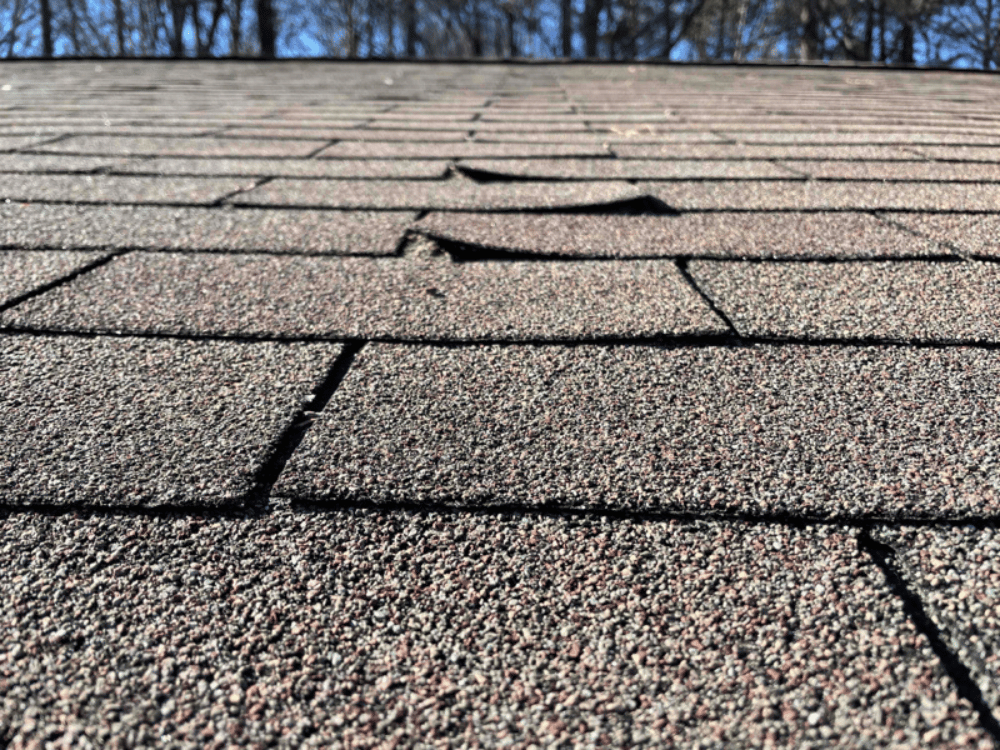
Nail Pops on Roof: Causes, Risks, and How to Fix Them
Nail pops occur when roofing nails back out of the roof deck and push upward against the shingle above them, breaking the adhesive seal that shingles rely on to shed water. Each one is a direct entry point for moisture. The most common causes are installation errors, thermal movement in the decking, moisture from poor attic ventilation, and age-related material fatigue. This page covers how nail pops happen, what they mean for your roof, and how they’re properly addressed. For the full list of roofing problems common to Central Texas homes, see the common roofing problems overview or the roofing overview.
What a Nail Pop Is — and How It Happens
A roofing nail is supposed to sit flush beneath the shingle, driven into the deck below at the correct depth, angle, and location. When a nail backs out — partially or fully — it pushes the shingle above it upward. The shingle lifts, its adhesive seal breaks, and water has a direct path into the decking during rain.
Nail pops have four primary causes. Which one applies usually determines whether the problem is isolated or part of a larger pattern across the roof.
Installation Error
Nails driven at the wrong angle, in the wrong location on the shingle, or with incorrect nail gun pressure — overdriven through the shingle mat or underdriven so they never fully seat — are far more likely to back out over time. This is the most common cause of nail pops on roofs less than ten years old.
Thermal Movement
In Central Texas, roof decking expands in summer heat and contracts in cooler months. This repeated cycle gradually works nails loose, particularly where fastener placement wasn’t precise enough to account for normal movement. Older roofs experience this progressively.
Moisture and Poor Attic Ventilation
When attic humidity is high from inadequate ventilation, the decking absorbs moisture, swells, and then dries. This cycle reduces the deck’s grip on nails over time. Nail pops driven by moisture almost always appear alongside other symptoms of a ventilation imbalance — addressing the nails without correcting the ventilation leaves the underlying condition in place.
Age and Material Fatigue
Decking that has been through decades of thermal and moisture cycling holds fasteners less reliably. Nail pops on roofs at or past end of service life are common and typically indicate the system as a whole warrants evaluation — not just the visible pop locations.
Why Nail Pops Are More Serious Than They Look
From the ground, nail pops look minor — a small raised bump under a shingle. That appearance is misleading. Each nail pop breaks the water-shedding seal that shingles depend on, and the consequences compound if left unaddressed. The lifted shingle creates a gap where wind-driven rain tracks under and reaches the deck, often producing a roof leak that appears well away from the actual entry point. The shingle above can crack or dislodge entirely under wind load. And water that reaches the underlayment and decking often does so without visible interior signs until the damage is well advanced.
The compounding effect is what makes them worth addressing promptly. Water intrusion at the deck level encourages rot and mold growth, which accelerates further nail movement in surrounding areas. A lifted shingle bakes in Texas heat with a broken seal, becoming increasingly brittle. And where moisture or ventilation is the root cause, the same condition continues producing new pops in surrounding deck areas until it’s corrected.
How to Identify Nail Pops
Most nail pops aren’t identifiable from the ground with confidence — a proper inspection requires getting on or above the roof surface. But there are ground-level indicators worth knowing.
Small raised bumps visible on the roof surface
From the yard or a ladder at eave height, nail pops appear as small, regular bumps — often in rows corresponding to nail lines — rather than random shingle damage. They’re easiest to spot on low-slope sections in raking light.
Nails or fasteners found on the ground or in gutters
A nail found near a downspout or along the roofline isn’t always from recent work — it may have backed out of the deck entirely and worked its way off the roof. Finding one or two after a storm is notable; finding several warrants an inspection.
Interior water stains without an obvious cause
Nail pops that have allowed water intrusion over time may produce ceiling stains that don’t correspond to a known storm or failure event. If an interior stain can’t be tied to a specific failure point, nail pops near that roof section are worth ruling out.
Shingles appearing lifted or misaligned in rows
Because nails are spaced at regular intervals across a course, multiple pops in the same row can produce a visible ripple along a shingle course. This is distinguishable from wind damage, which typically affects random sections rather than regular nail-line intervals.
Because nail pops require close inspection to confirm and count accurately, a professional evaluation is the right step before drawing conclusions about scope. What a roof inspection covers and how findings are documented is explained on the roofing appointment overview.
How Nail Pops Are Properly Repaired
A nail pop repair is not a matter of hammering the nail back flush. Re-driving a fastener that has already backed out into wood that may be swollen or degraded doesn’t restore holding strength — it creates a second failure point at the same location. Proper repair involves removing the failed fastener, evaluating the deck at that location, and resecuring the shingle with correctly placed new fasteners.
Remove, Don’t Re-Drive
The lifted nail is removed entirely rather than hammered back. Re-driving into wood that has already lost its grip doesn’t restore holding strength and typically accelerates the next failure at the same location.
Evaluate the Deck
Before placing new fasteners, the deck is checked for softness, rot, or structural compromise. If the decking no longer holds fasteners reliably, the repair extends to the deck itself — not just the surface shingle.
Resecure with Correct Placement
New fasteners are placed at the correct location on the shingle — offset from the original nail position — and driven to proper depth. Overdriving punctures the shingle mat; underdriving leaves a raised fastener head that repeats the problem.
Address the Shingle
If the shingle above the nail pop is cracked, no longer sealing, or has lost its tab adhesion from being lifted in heat, it’s replaced. A properly seated fastener under a compromised shingle doesn’t restore water protection.
Isolated nail pops on an otherwise sound roof typically qualify as targeted roof repair. A pattern across multiple sections is a different situation — covered below.
Isolated vs. Systemic: What the Pattern Tells You
One or two nail pops on an aging roof are not unusual. A consistent pattern across multiple slopes — or nail pops on a roof only a few years old — typically points to something more systemic. The distinction matters because it changes the appropriate response.
Isolated nail pops — a handful found during inspection on a 15+ year old roof, at specific locations without a consistent spacing pattern — are a repair item. Systemic nail pops tell a different story. Pops distributed in regular intervals across nail lines suggest the fastening was incorrect during the original installation — a nail gun pressure problem or missed placements that may exist across the entire roof, not just the visible spots. Nail pops on a roof under ten years old point toward installation defects rather than age. Pops appearing alongside hot attic symptoms point toward a ventilation problem that must be corrected or the nail movement will continue. Pops appearing alongside granule loss often share the same thermal and moisture root cause.
How installation quality affects long-term roof performance is covered on the roof installation process page. Whether the overall picture points toward repair or replacement is covered on the repair vs. replacement page.
Frequently Asked Questions: Roof Nail Pops
Can nail pops cause mold or structural damage if ignored?
Yes — and this is the most common reason nail pops go from a minor repair to a significant problem. Water that enters at a lifted shingle doesn’t always show up immediately as an interior stain. It can track horizontally across the deck, saturate insulation, and sit in contact with structural framing for weeks before becoming visible inside the home. Prolonged moisture exposure at the deck level creates conditions for mold growth and wood rot — both of which compromise the deck’s ability to hold fasteners and support the roof system above it. The longer nail pops go unaddressed, the more the scope of repair expands beyond the fasteners themselves.
Can I fix nail pops myself?
The repair itself isn’t technically complex, but it requires safe roof access, the ability to evaluate deck condition at each location, and correct fastener placement — overdriving or underdriving a replacement fastener creates a new failure point. More importantly, spotting nail pops from the ground typically means finding a fraction of what’s actually present. A professional inspection identifies the full count, assesses the pattern, and determines whether the cause is isolated or systemic — which changes whether targeted repair or a broader evaluation is the right next step.
How many nail pops are too many?
There’s no universal threshold, but pattern matters more than count. A handful of pops on a 20-year-old roof at specific locations is different from a dozen pops distributed evenly across nail lines on a 6-year-old roof. The latter suggests an installation error that may be present across the whole roof. What an inspection determines is whether the pops are random and incidental or consistent with a condition affecting the whole system.
Do nail pops mean I need a new roof?
Not necessarily — but they warrant an inspection rather than a wait-and-see approach. Isolated nail pops on an otherwise sound roof are a repair item. A pattern of nail pops on an aging roof that also shows granule loss, shingle brittleness, and deck wear may be one of several indicators that the system is approaching end of life. The nail pops themselves don’t make that case — the full inspection picture does.
Why are nail pops more common after summer in Texas?
Texas summers put sustained thermal stress on roof decking that most other markets don’t see. Attic temperatures can reach 150–160°F, causing significant expansion in wood decking. As temperatures fall into fall and winter, that wood contracts. Over years of this cycle, fasteners work progressively loose — particularly in roofs with ventilation imbalances that trap heat rather than exhaust it. This is why fall inspections in Central Texas frequently surface nail pops that weren’t visible the previous spring.
What does a nail pop repair actually involve on the day?
Most nail pop repairs are completed in a single visit of one to two hours depending on how many are present and whether any shingles need replacement. The process involves accessing the roof, locating all visible pops, removing the failed fasteners, checking the deck condition at each location, resecuring with correctly placed new fasteners, and replacing any shingles that are cracked or no longer sealing. You’ll receive documentation of what was found and what was repaired. For isolated nail pops on an otherwise sound roof, it’s a straightforward repair scope — no deposit required, and the visit starts with an honest assessment of what’s actually there.
Noticed Bumps on Your Roof or Nails on the Ground?
A free inspection gives you a documented count and pattern assessment — not a guess from the driveway. We’ll tell you whether what you’re seeing is an isolated repair or something worth understanding more broadly before deciding anything.
- Full inspection with photo documentation
- Clear explanation of findings before any decision
- No deposit required to get started
- No pressure — honest assessment first