

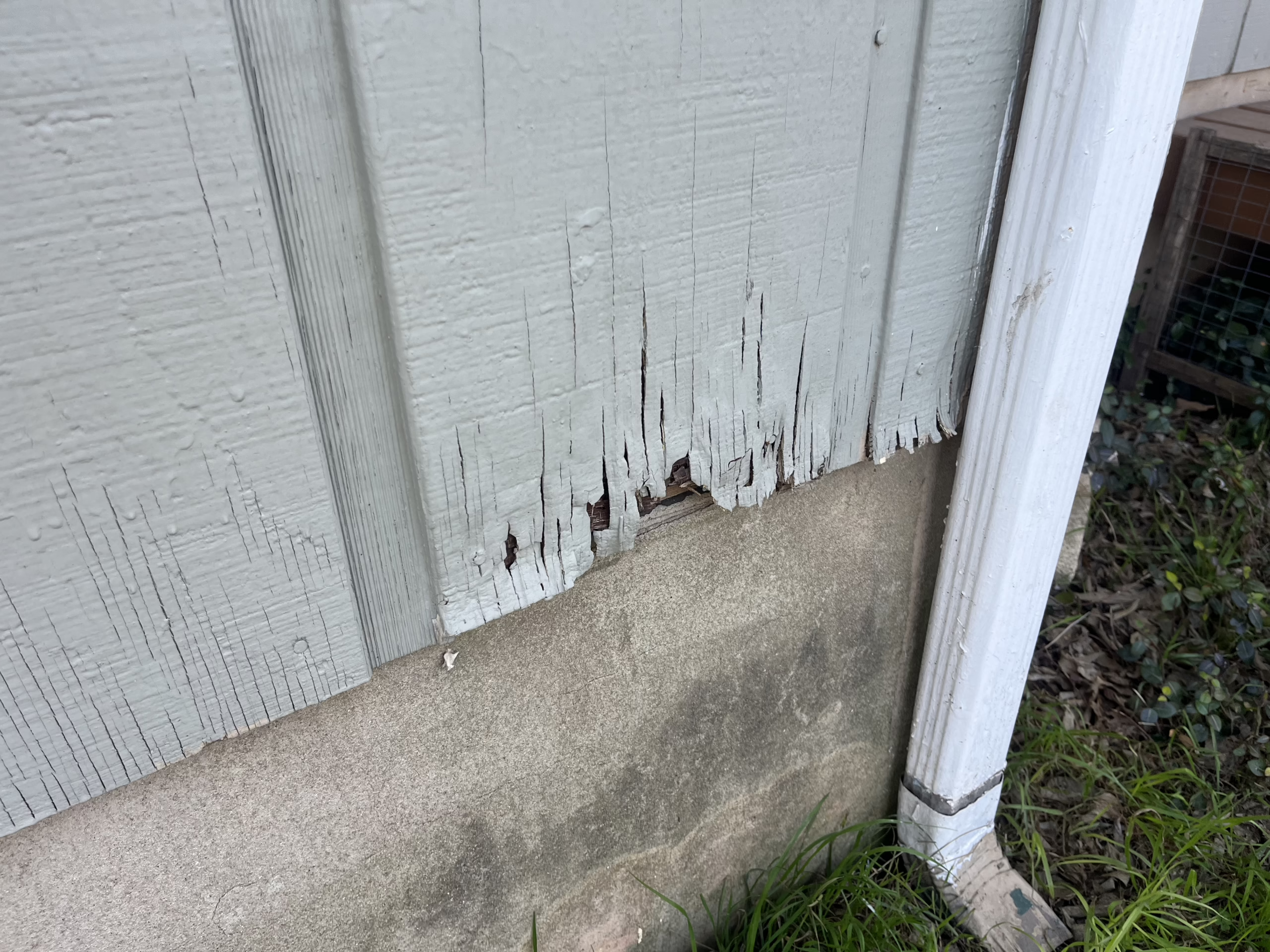
Common Siding Problems in Austin, TX — Causes, Symptoms, and What to Do
Siding problems announce themselves in a few specific ways — paint that won’t hold, boards that are soft when you press them, surfaces that look wavy, holes that keep coming back. Each symptom points to something specific happening in the wall assembly, and the correct response depends on identifying which one you’re dealing with. Treating them the same way produces the same result on a shorter cycle. The four pages below cover the most common siding problems on Central Texas homes — what causes each one, what it means for the substrate behind it, and what the right response is versus the common wrong one. For the full siding overview see the siding replacement overview.
How to Read a Siding Problem
Siding problems are frequently misdiagnosed because the visible symptom appears somewhere different from where the failure originated. Paint peeling at the base of a wall looks like a painting problem but is usually a moisture entry problem. Animal damage looks like a wildlife problem but is usually a substrate deterioration problem. Warping on fiber cement looks like a material failure but is almost always an installation failure. Before deciding what to do about a siding problem, it’s worth understanding what it’s actually telling you about the wall system behind it.
⚠️ Signs Worth Having Assessed
- Paint peeling repeatedly in the same locations despite repainting
- Soft or spongy sections when pressed firmly — particularly at base courses
- Wavy, buckled, or irregular surface that wasn’t there originally
- Woodpecker holes or rodent chewing — especially clustered in specific sections
- Visible discoloration, dark staining, or fungal growth at seams or edges
- Water staining on interior walls adjacent to exterior sections
- Sections that have pulled away from the wall or dropped from position
None of these automatically means full replacement — the cause and extent determine the correct response. A professional assessment is the right starting point before any scope decision.
What the Symptom Usually Indicates
- Paint peeling at edges and seams → moisture in the substrate, not a painting problem
- Soft spots at base courses → moisture wicking from grade contact
- Wavy surface on south/west elevations → vinyl thermal warping
- Wavy surface on fiber cement → installation problem, not material failure
- Woodpecker foraging holes clustered in sections → insect activity inside deteriorating substrate
- Swelling at horizontal seams → Z-flashing failure or missing
- Dark staining with soft spots → active rot, substrate assessment needed immediately
Symptom location tells you where to look. Cause tells you what to do about it.
Common Siding Problems
Siding Warping and Buckling
Three distinct causes produce wavy, buckled, or irregular siding — and each requires a different response. Vinyl siding warps thermally under Austin’s sustained heat and takes a permanent set. Wood-based materials like hardboard and T1-11 buckle from moisture-driven swelling at edges and seams. And fiber cement can appear wavy not from material failure but from installation shortcuts — overdriven fasteners, out-of-plumb framing, or missing sheathing. Identifying which applies to your home determines whether the correct response is replacement, partial correction, or an installation quality conversation.
Siding Rot and Soft Spots
Rot is the terminal stage of moisture failure in wood-based siding — the point where substrate deterioration has progressed into structural territory. The critical diagnostic is whether the rot is confined to the cladding or has reached the sheathing and framing behind it. That distinction determines the scope and cost of correction, and it can only be confirmed by removing the cladding. On Austin homes from the 1980s–1990s, rot behind vinyl cladding installed over hardboard or T1-11 without removal is a common finding — and the extent is rarely predictable from the surface.
Siding Paint Peeling
Peeling paint on siding is rarely a painting problem. On wood-based materials, it’s the first visible sign of substrate moisture cycling — the paint film breaks bond as the surface fibers break down underneath it. On fiber cement, early paint failure is almost always an installation shortcut: unsealed cut edges, overdriven fasteners, missing back-prime on exposed ends. Repainting over either condition produces the same result on a shorter cycle. The right starting question is whether the substrate is sound — and the answer to that determines whether the correct response is a new paint job or a replacement conversation.
Animal Damage
Woodpecker holes, rodent chewing, and squirrel entry points on siding are almost always symptoms of underlying substrate deterioration rather than standalone wildlife problems. Foraging woodpeckers are finding insects inside a substrate that moisture has already begun to break down. Rodents exploit moisture-softened base courses. Patching the holes without correcting the substrate condition produces predictable results: the animals return. The damage pattern and location tell you a great deal about what’s happening behind the surface — and whether a patch is the right answer or a substrate assessment is needed first.
The Thread Running Through Most Siding Problems: Moisture and Substrate
Looking across the four problem categories above, one variable appears in almost every failure scenario: moisture finding its way into a wood-based substrate and the deterioration that follows. Paint failure, warping, rot, and animal damage are all downstream of the same root condition — a wall system where water management details failed, were skipped at installation, or have degraded over decades without correction.
This is especially relevant on Austin homes built between the 1970s and mid-1990s, where Masonite hardboard and T1-11 plywood panel siding were the standard cladding materials — both highly vulnerable to moisture intrusion, both now past their service life on any home that hasn’t had siding replaced. The complication is that both materials were frequently covered over with vinyl siding during the re-siding wave of the 1990s and 2000s, leaving the original substrate deteriorating silently behind the new cladding for years. On those homes, the problems visible today on the vinyl surface are typically a fraction of what’s happening behind it.
The Other Thread: Installation Quality
The second variable that appears across multiple problem categories is installation quality — specifically, whether the water management details that prevent moisture from reaching the substrate were correctly installed in the first place. Grade clearance, kickout flashing at roof-to-wall transitions, head flashing above windows, continuous WRB without gaps, sealed penetrations and cut edges — these are the details that determine whether a wall system manages water correctly for decades or creates the moisture entry points that drive every failure on this page.
This matters in two directions. For homeowners diagnosing a current problem on aging siding: if the original installation skipped these details, the problem you’re seeing is downstream of that. For homeowners choosing a replacement: the installation standard applied to the new cladding determines whether you’re solving the problem or delaying it. How we approach the full installation sequence — from substrate assessment through preferred-standard Hardie installation — is covered on the siding installation process page. The material that handles this climate best when installed correctly is James Hardie fiber cement — and correctly is the operative word.
Frequently Asked Questions
How do I know if my siding problem requires replacement or just a repair?
The answer depends on the substrate condition behind the visible symptom. Surface problems on structurally sound siding — uniform paint fading, minor cosmetic damage, isolated small repairs — can often be addressed without full replacement. Problems that indicate substrate moisture damage — soft spots, recurring paint failure in the same locations, swelling at edges and seams, animal damage clustered in specific sections — typically mean the substrate is compromised and repair is a temporary measure. The substrate condition is what drives the replacement decision, and it can only be properly assessed by a professional who can probe and inspect the wall system rather than evaluate from the surface only.
Can one siding problem cause others?
Yes — and it’s common. Paint failure at edges exposes substrate fiber that absorbs moisture and begins to swell, which leads to warping, which creates larger gaps for moisture entry, which accelerates rot, which attracts foraging woodpeckers. The problems cluster and compound because they share the same root cause — moisture in a substrate that can’t handle it — and because each stage of failure creates conditions that accelerate the next. A home showing one visible problem from this list is frequently in early stages of others that aren’t yet visible on the surface.
My siding looks fine from the street — should I still be concerned?
On Austin homes from the 1980s–1990s with original hardboard, T1-11, or vinyl-covered substrate, acceptable surface appearance doesn’t confirm sound substrate condition. Vinyl siding in particular can look acceptable from the street while concealing significant substrate deterioration behind it — this is the most common discovery pattern on vinyl replacement projects in this market. If your home was built before the mid-1990s and has never had siding replaced or a professional substrate assessment, the visual appearance from the street is not a reliable indicator of wall system condition.
What siding problems are most urgent to address?
Rot with soft spots — particularly if the soft spots extend beyond the cladding surface into the wall when probed — is the most urgent finding because structural involvement is either present or imminent, and the scope and cost grow with every month of delay. Active moisture intrusion visible as interior staining adjacent to exterior wall sections is equally urgent. Animal damage with soft substrate behind it is urgent for the same reason — the woodpecker found rot that you haven’t fully assessed yet. Paint failure and warping without soft spots are serious but not immediately urgent — they indicate a deterioration sequence that needs to be addressed before it progresses to the more costly stages.
What should I expect from a siding assessment?
A thorough siding assessment covers the visible condition of the cladding across all elevations, probing at base courses and problem sections to assess substrate condition, inspection at seams, trim transitions, and flashing points where moisture entry is most likely, and a clear explanation of what was found before any scope recommendation is made. On homes where vinyl is present, a partial inspection at trim edges and seams can give a reasonable indication of what’s likely underneath without full tear-off. What a Cupcake assessment covers and how the process works is explained on the siding appointment page.
Not Sure What Your Siding Is Telling You?
We’ll assess the wall condition, identify the cause, and give you a clear picture of what you’re dealing with before any scope is written or work begins. Review our siding installation checklist or what to expect on your appointment before we talk.
- Cause identified before any scope is recommended
- No deposit required to get started
- Written scope before any work begins
- 10-year workmanship warranty on every installation