

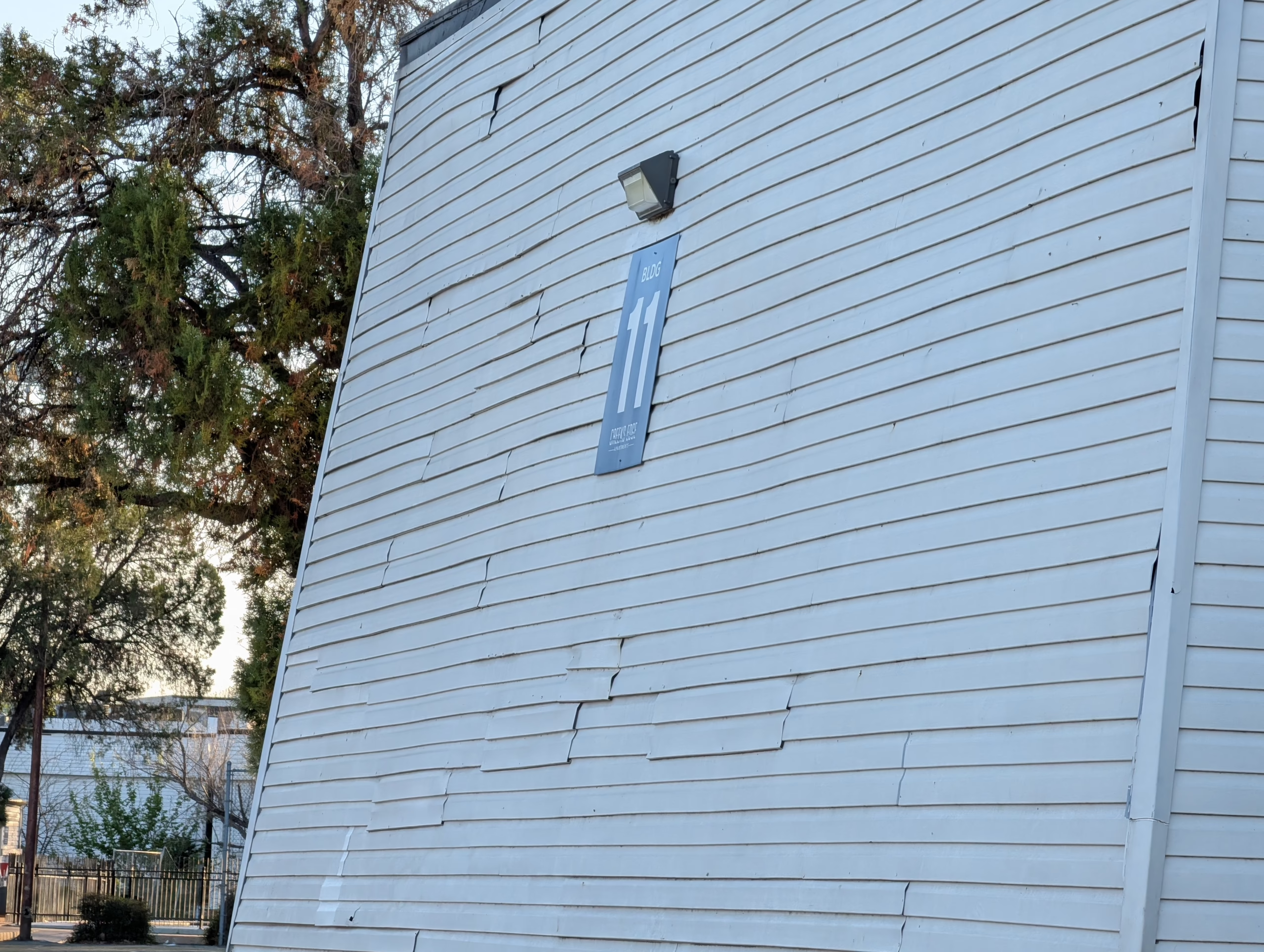
Siding Warping and Buckling in Austin, TX — Causes and What to Do
Warped, wavy, or buckled siding has three distinct causes — and the right response depends entirely on which one you’re dealing with. Vinyl warps because PVC softens and takes a permanent set under sustained heat, which happens reliably on south and west elevations in Austin summers. Wood-based materials like hardboard and T1-11 buckle because moisture gets into the substrate and the material swells from the inside out. Fiber cement can look wavy even when the material itself is fine — overdriven fasteners, out-of-plumb framing, or missing sheathing all produce a wall surface that telegraphs the framing behind it. Same symptom, three different problems, three different responses. This page covers how to tell which one you’re looking at and what the correct response involves for each. For the full index of siding problems see the common siding problems overview.
How to Read a Warping Problem
Before any repair or replacement decision, the first step is identifying what’s actually happening and which material is involved. The appearance of warping varies by cause — and the cause is what determines the correct response.
⚠️ Signs Worth Having Assessed
- Panels or boards that bow outward from the wall surface
- Wavy, irregular appearance that wasn’t there when the siding was new
- Seams or edges that have lifted away from adjacent boards
- Swollen, raised bottom edges or horizontal seam edges
- Buckled sections that worsen in summer heat and partially recover in cooler months
- Wavy appearance across a full elevation despite no visible moisture damage
Warping that cycles seasonally — worse in summer, better in winter — is almost always thermal rather than moisture-driven. Warping that stays consistent year-round is typically moisture or installation-related.
What the Pattern Tells You
- Full-panel bowing on south or west elevations only → vinyl thermal warping
- Swelling at bottom edges and seams → moisture-driven substrate failure
- Wavy appearance consistent across an elevation, no soft spots → installation problem
- Isolated sections with soft spots behind them → moisture with substrate damage
- Wavy appearance on new or recent Hardie installation → framing or fastener issue
- Warping at grooves or panel joints → T1-11 or hardboard moisture entry points
None of these automatically means full replacement — the cause and extent determine the response. A professional assessment is the right starting point before any scope decision.
Cause 1: Vinyl Thermal Warping
Vinyl siding is manufactured from PVC — a thermoplastic that softens at temperatures well within Austin’s summer range. South- and west-facing wall surfaces reach significantly higher temperatures than ambient air temperature under sustained direct sun exposure. When PVC reaches its softening point repeatedly over multiple summer seasons, it takes a permanent set — the panels bow outward and don’t recover when temperatures drop. This is thermal warping, and it’s the most common warping scenario on Austin-area homes.
Why It Happens on Austin Homes
South- and west-facing elevations receive the longest and most intense sun exposure in this climate. Surface temperatures on dark vinyl panels can exceed 160°F in peak summer conditions — well above the threshold where PVC begins to soften and deform. Austin’s cooling season is long enough that this cycle repeats dozens of times before any single panel fully stabilizes in a warped position.
Why It Can’t Be Corrected
Once vinyl has thermally warped, the deformation is permanent. The material has taken a set at the molecular level — it won’t return to its original profile when temperatures drop, and there’s no repair that restores the original appearance. The only correction is replacement. This is one of the primary reasons we don’t install vinyl siding on Austin-area homes.
What Replacement Looks Like
A vinyl replacement project in Austin always involves full tear-off — both because thermally warped vinyl is past its service life and because what’s underneath it needs to be assessed before new cladding goes on. Hardboard or T1-11 installed beneath the vinyl without removal is extremely common on homes from this era and changes the scope significantly.
The Right Material Going Forward
James Hardie fiber cement is dimensionally stable under sustained heat — it doesn’t soften, bow, or take a permanent thermal set. On south- and west-facing elevations where vinyl consistently fails in this climate, fiber cement is the material that solves the problem rather than delaying it.
Cause 2: Moisture-Driven Swelling and Buckling
On wood-based siding materials — Masonite hardboard and T1-11 plywood panel siding — what looks like warping is almost always moisture-driven swelling. The mechanism is different from thermal warping: water enters the substrate at compromised edges, seams, grooves, and fastener holes, and the wood fiber or OSB strands absorb it and expand. The expansion has nowhere to go except outward — producing the bowed, buckled, irregular appearance that’s often mistaken for thermal warping on these materials.
Swelling Precedes Rot — Don’t Wait
Moisture-driven swelling on hardboard or T1-11 is not a cosmetic problem. It’s an early indicator of substrate failure that, if left unaddressed, progresses to delamination and then to rot in the sheathing and framing behind the cladding. Homeowners who repaint over swelling boards or caulk swollen edges typically buy 12–24 months before the same sections need attention again — and each cycle allows moisture to penetrate further into the wall assembly. The correct response to visible swelling on hardboard or T1-11 is a professional assessment of the substrate condition, not a surface repair.
The diagnostic distinction between thermal and moisture-driven warping matters for scope: thermal warping on vinyl is a material replacement decision. Moisture swelling on hardboard or T1-11 may involve substrate correction — sheathing and framing repair — before any new cladding can go on. Detailed coverage of each material’s failure sequence is on the hardboard siding page and the T1-11 siding page.
Cause 3: Fiber Cement That Looks Wavy — Installation, Not Material
This is the warping scenario that surprises most homeowners: James Hardie fiber cement that appears wavy or uneven across an elevation, even though the material itself has not warped, softened, or absorbed moisture. Fiber cement is dimensionally stable — it doesn’t thermally warp or moisture-swell the way vinyl and wood-based materials do. When it looks wavy, the problem is almost always in the installation, not the product.
✗ Out-of-Plumb Framing
If wall studs are bowed, twisted, or not plumb before siding goes on, the installed boards follow the framing contour — producing a wavy appearance across the elevation that’s visible immediately and permanent. Correcting it requires pulling the siding and addressing the framing. This is why we assess and correct framing condition before any cladding is installed.
✗ Missing or Inadequate Sheathing
Fiber cement installed over missing, damaged, or inadequate sheathing has no consistent flat plane to follow. The boards span framing gaps or follow the irregular surface of degraded sheathing — producing an uneven, wavy appearance that reflects the substrate condition rather than the cladding. New sheathing must be installed before new cladding goes on any substrate with this problem.
✗ Overdriven Fasteners
Fiber cement boards fastened with overdriven finish nails — nails driven too deep, pulling the board face inward at the fastener point — produce a dimpled, irregular surface that reads as wavy from a distance. Hardie’s preferred install standard specifies correct fastener depth precisely because overdriven fasteners both affect appearance and compromise the surface seal that protects the board face from moisture. This is a common shortcut on rushed installs.
✗ Incorrect Fastener Type
Finish nailing fiber cement instead of using the correct corrosion-resistant siding nails or screws — or nailing at incorrect intervals — allows boards to flex slightly between fastener points. Over time, or under temperature changes, this produces a rippled appearance along board runs that should be flat. Hardie’s installation specifications exist precisely to prevent this, which is why installation standard matters as much as material selection.
The important diagnostic here: if fiber cement on your home looks wavy but you have no soft spots, no paint failure, and no moisture symptoms, you likely have an installation quality problem rather than a material failure. That’s a different conversation than a replacement conversation — and it’s one worth having before anyone proposes pulling the siding. How Cupcake approaches the full installation sequence to prevent these outcomes is covered on the siding installation process page.
What to Do If Your Siding Is Warping
The response depends entirely on which cause applies — which is why a professional assessment before any scope decision is the right sequence.
Identify the Material
Vinyl, hardboard, T1-11, or fiber cement — each has a different cause and a different response. Don’t assume replacement is the answer before identifying what’s warping and why.
Check for Soft Spots
Press firmly on affected sections. Soft spots indicate moisture damage in the substrate. No soft spots on fiber cement likely means an installation problem rather than material failure.
Note the Pattern
South and west elevations only suggests thermal. Consistent across all elevations with soft spots suggests moisture. Wavy appearance on recent fiber cement installation suggests framing or fasteners.
Get a Professional Assessment
The correct scope — repair, partial replacement, or full re-side — follows from what the assessment finds. Scoping before assessing produces the wrong answer more often than not.
Address the Cause
Thermal vinyl warping → replacement with fiber cement. Moisture swelling → substrate assessment and correction first. Installation problem → scope depends on extent and what correcting it requires.
Cost for a warping-related replacement project depends on what the assessment reveals — material type, substrate condition, and whether framing corrections are needed. A full breakdown by project type is on the siding cost page.
Frequently Asked Questions
Can warped siding be fixed without replacing it?
It depends on the cause. Thermally warped vinyl cannot be corrected — the material has taken a permanent set and replacement is the only option. Moisture-swollen hardboard or T1-11 cannot be restored once the substrate fiber has broken down — replacement is required, and the substrate behind it needs assessment before new cladding goes on. Fiber cement with an installation-driven wavy appearance may be correctable depending on the cause: fastener issues on isolated sections can sometimes be addressed without full replacement, but framing problems typically require pulling the siding to correct the framing before reinstalling.
Why does my vinyl siding warp on one side of the house but not the other?
Thermal warping on vinyl is elevation-specific — it concentrates on south- and west-facing walls where sun exposure is longest and most intense. North- and east-facing elevations on the same home often show no warping at all because they don’t reach the surface temperatures that cause PVC to soften. If your warping is consistently on one or two exposures only and cycles with the seasons, thermal warping is almost certainly the cause.
My James Hardie siding looks wavy — is the product defective?
Almost certainly not. Fiber cement doesn’t thermally warp or moisture-swell — if it looks wavy, the cause is almost always in the installation rather than the material. The three most common installation causes are out-of-plumb framing that the boards are following, missing or inadequate sheathing creating an uneven substrate, and overdriven fasteners pulling board faces inward at nail points. A professional assessment can identify which applies and what correction involves. If the installation was recent, this is a conversation to have with whoever did the work before considering any scope.
How does incorrect installation cause fiber cement to look warped?
Three mechanisms. First, framing — if studs are bowed or not plumb, boards installed over them follow the framing contour rather than creating a flat plane. Second, sheathing — boards span framing gaps or follow irregular substrate surfaces when sheathing is missing or damaged, producing visible undulation. Third, fasteners — overdriven finish nails pull the board face inward at each fastener point, creating a dimpled, rippled surface that reads as wavy from a distance. Hardie’s preferred install standard addresses all three: plumb the framing, install correct sheathing, and drive fasteners to specified depth. This is why we assess and correct substrate and framing conditions before any cladding goes on.
Will warped siding cause water damage if I don’t replace it soon?
For vinyl thermal warping — the panels are distorted but the wall system behind them may still be reasonably protected depending on how severe the warping is. Gaps at seams and panel edges that open as vinyl warps do create water intrusion points over time. For moisture-driven swelling on hardboard or T1-11 — yes, the problem is actively progressing. Swelling indicates moisture is already in the substrate, and rot in the sheathing and framing is the next stage if it goes unaddressed. Delaying assessment and correction on these materials consistently results in a more expensive repair scope.
Seeing Warping or Buckling? Find Out What’s Actually Causing It.
We’ll identify the cause, assess the substrate, and tell you honestly whether the right response is repair, partial replacement, or a full re-side — before any scope is written or material ordered. Review our siding installation checklist or what to expect on your appointment before we talk.
- Cause identified before any scope is recommended
- No deposit required to get started
- Written scope before any work begins
- 10-year workmanship warranty on every installation