

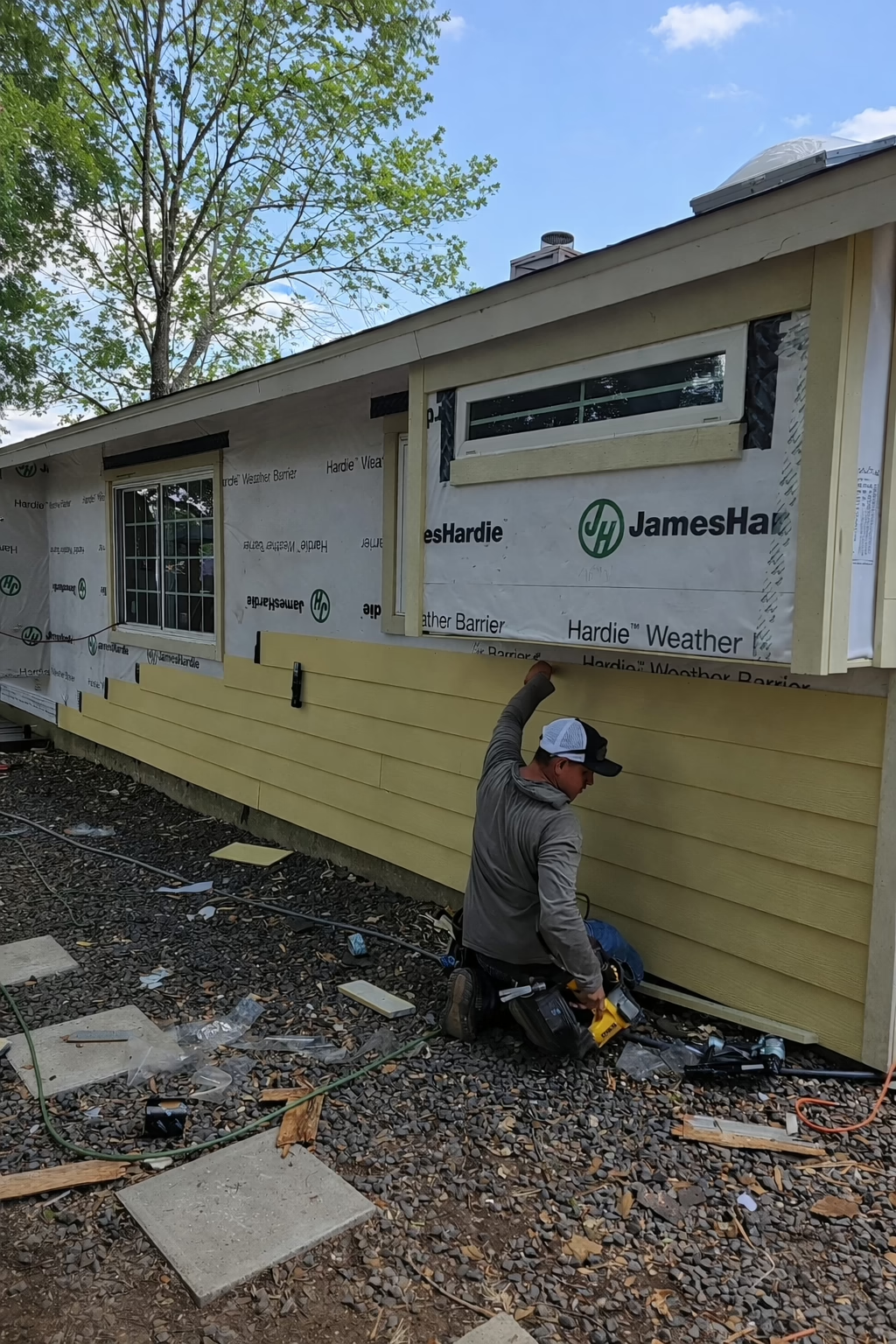
Expert James Hardie Fiber Cement Siding in Austin
James Hardie fiber cement siding is a composite exterior cladding made from Portland cement, sand, and cellulose wood fiber — engineered to resist the moisture intrusion, UV degradation, thermal expansion, and pest damage that cause most siding failures in Central Texas. It’s the most common replacement material we install at Cupcake Home Improvements because no other readily available cladding handles Austin’s climate as consistently: fiber cement doesn’t rot, swell, warp under heat, or give insects and woodpeckers anything to work with. This page covers what the material is, why the Hardie brand specifically, the profiles available for Austin-area homes, and what separates a preferred-standard installation from a shortcut — the variable that determines whether the system performs for 30 years or fails in five. For the full replacement decision and material comparison, see the siding types overview or the siding replacement overview.
What Is Fiber Cement Siding?
Fiber cement is a pressure-formed composite of Portland cement, sand, and cellulose wood fiber. The cement and sand give it weather resistance, dimensional stability, and non-combustibility. The cellulose fiber adds workability and reduces weight compared to solid concrete. The result is a material that behaves like wood for cutting, nailing, and finishing — without wood’s core failure modes.
✓ What Fiber Cement Resists
- Moisture absorption and swelling
- Rot and fungal decay
- UV degradation and color fade
- Thermal warping under sustained heat
- Insect damage — no wood fiber to excavate
- Woodpecker and wildlife damage
- Fire — non-combustible substrate
📊 Realistic Lifespan by Siding Material in Texas
Central Texas heat, UV, and humidity shorten real-world performance vs. manufacturer claims. Installation quality is a separate variable that affects every material.
10–20 yrs
15–25 yrs
20–30 yrs
30–50 yrs
Lifespan assumes correct installation and routine paint maintenance every 10–15 years. What siding replacement costs in Austin →
Why James Hardie Specifically
James Hardie is the dominant fiber cement manufacturer in the U.S. for reason: consistent product quality, broad profile availability, and a warranty structure tied to installation compliance. Other fiber cement brands exist, but Hardie has the deepest track record in Texas climates and the most clearly defined installation standards — which matter because they give homeowners something to hold contractors accountable to.
HardieZone Climate Engineering
HZ10 is formulated specifically for humid, high-UV environments like Central Texas — not a generic product rebranded for the region. The formulation accounts for the moisture cycling and UV intensity this climate produces.
Dimensional Stability
Fiber cement holds its shape through extreme temperature swings. Where wood-based substrates warp and buckle under sustained Texas heat, Hardie maintains consistent profile lines and paint adhesion over decades.
Pest and Wildlife Resistance
Fiber cement gives woodpeckers and carpenter insects nothing to work with — no wood fiber to excavate, no substrate that softens with moisture. On older Austin homes where animal damage has compromised wood-based siding, Hardie eliminates the food source entirely.
Fire Resistance
Non-combustible substrate — a meaningful protection advantage over vinyl and wood-based products, particularly relevant in Austin’s expanding wildland-interface development zones.
Published Preferred Install Standard
Hardie distinguishes “allowed” (warranty minimum) from “preferred” (performance ceiling). Most contractors install to allowed because it’s faster. We install to preferred. That gap is where most long-term failures originate.
Complete System Integration
HardieTrim, soffits, and corner boards are purpose-made to work together — not a mix of incompatible components. Trim integration is structural to how the system manages water at every edge and transition point.
Hardie Profiles We Install
James Hardie manufactures enough profile variety to suit most Austin-area architectural styles — 1980s ranch homes, newer farmhouse designs, transitional elevations, and everything in between. Profile selection affects curb appeal, water management behavior, and paint longevity. We help you choose based on exposure, existing elevation geometry, and where visual emphasis actually earns its cost.
HardiePlank Lap Siding
Most Common
Horizontal lapped boards in widths from 4″ to 12″. Clean, timeless, works on nearly every Austin-area residential style. The default profile for full re-sides in this market.
HardiePanel Board-and-Batten
Accent / Modern
Large-format vertical panels with batten strips over seams. Common on farmhouse and transitional designs, garage faces, and gable accent sections.
HardieShingle / HardieShake
Accent Only
Staggered or straight-cut panels that mimic cedar shingle texture. Used primarily in gables, dormers, and accent zones — rarely full elevations.
HardieTrim
Required System
Fascia, corner boards, window and door surrounds, band boards. Not cosmetic — the trim is structural to how the system manages water at every edge and transition point.
HardieSoffit
Eave Closure
Vented and non-vented soffit panels for eave closure. Installed as part of the complete exterior system on full re-sides where applicable.
Most full re-sides on Austin homes combine profiles — lap on the main field, board-and-batten or shingle accents on gables, and full HardieTrim throughout. The integration between profiles matters as much as the profiles themselves, and it’s part of what we scope before any material is ordered.
Painted Fiber Cement in Texas
In Central Texas, James Hardie is almost always field-painted rather than prefinished — and paint performance varies dramatically depending on how the installation was handled before the first brush touched the board. The siding is only part of the system. Paint longevity is downstream of installation quality.
✓ What Makes Paint Last on Hardie
- Correct fastener depth — flush, not overdriven
- Sealed cut edges before installation
- Proper board spacing — no tight face contact
- Sealed penetrations at windows, outlets, fixtures
- Controlled moisture paths behind the cladding
- Clean primer coat on all raw cuts and edges
⚠️ What Causes Early Paint Failure on Hardie
- Overdriven fasteners that crack the surface
- Unsealed cut edges absorbing moisture
- Boards too close to grade — capillary wicking
- Missing perimeter seals at openings
- WRB gaps allowing moisture behind boards
- Skipped back-priming in humid climates
Early paint failure is almost always an installation failure, not a product failure. See paint peeling on siding for the full diagnostic.
Prefinished Hardie ColorPlus is available and carries a 15-year finish warranty — but it limits color flexibility and can be difficult to match on repairs. Most Austin homeowners choose field-paint for full color control and easier repainting down the road. A correct field paint job on properly installed Hardie should hold 10–15 years before needing attention.
Preferred Install vs. Allowed Install
James Hardie publishes two tiers of installation requirements. “Allowed” is the minimum that keeps the warranty technically intact. “Preferred” is what Hardie recommends for maximum system performance — tighter details, better water management, and practices that add time and care. Most contractors install to allowed because it’s faster and the homeowner often can’t tell the difference on install day. The difference shows up in year eight.
Butt-to Joints at Trim
Boards terminate against trim — no caulked butt joints that crack and allow water entry over time.
Grade Clearance
Correct minimum clearance from bottom board to finished grade — prevents capillary moisture wicking into the substrate.
Kickout & Step Flashing
Properly installed at every roof-to-wall transition — redirects water away from the wall assembly rather than behind it.
Hardie Wrap WRB
Hardie’s proprietary weather-resistant barrier — better compatibility behind the cladding than generic housewrap.
New Sheathing Where Needed
Plumb, flat substrate prevents the wavy appearance that results from installing over compromised sheathing — visible immediately and permanent.
How these practices sequence across the full wall system — from WRB installation through trim completion — is covered in detail on the siding installation process page.
When Fiber Cement Isn’t the Right Call
Hardie is the right material for most Austin-area siding replacements. It isn’t the right answer for every situation — and we’ll tell you when that’s the case before anything is scoped or priced.
✓ Right Call: Full Re-Side on Aging Home
Replacing failed or failing wood-based siding — hardboard, T1-11, original wood — with a complete Hardie system. Most common scenario we handle in Austin’s 1980s–1990s housing stock.
✓ Right Call: Vinyl Replacement
Replacing vinyl — especially where hardboard is underneath it and was never removed. Fiber cement solves both the surface and the hidden substrate problem in one scope.
⚠ Consider Carefully: Budget-Primary Projects
Fiber cement costs more installed than vinyl. If the home is a short-term hold and longevity isn’t the priority, that’s a real trade worth discussing honestly before recommending a scope.
✗ Wrong Call: Active Structural Damage
If there’s active rot in framing or sheathing, new siding doesn’t solve it — it hides it. We assess the substrate condition before any material recommendation.
If your siding is already showing symptoms — warping, soft spots, peeling, or signs of wildlife activity — the common siding problems overview is the better starting point before any material conversation.
Frequently Asked Questions
What is James Hardie fiber cement siding actually made of?
Fiber cement is a pressure-formed composite of Portland cement, sand, and cellulose wood fiber. The cement and sand give it weather resistance, fire resistance, and dimensional stability. The cellulose fiber adds workability. James Hardie manufactures its HZ10 product line specifically for high-humidity, high-UV climates like Central Texas — a regional formulation, not a generic product.
How long does James Hardie siding last in Texas?
Hardie carries a 30-year limited substrate warranty. Realistic lifespan with correct preferred-standard installation and routine paint maintenance — repainting every 10–15 years depending on exposure — is well beyond that. Most failures we see on Hardie installations are installation failures: bad flashing, skipped clearances, poor sealing at penetrations. When the system is installed correctly, it outlasts most of the other components it’s attached to.
Does James Hardie siding need to be painted in Central Texas?
Yes. Field-painted fiber cement is the standard in this market. Prefinished Hardie ColorPlus is available and carries a 15-year finish warranty, but it limits color flexibility and is harder to match on repairs. Most Austin homeowners choose field-paint for full color control and easier repainting. A correct field paint job on properly installed Hardie holds 10–15 years before needing attention.
What’s the difference between HardiePlank, HardiePanel, and HardieShingle?
All three are fiber cement — different form factors for different architectural looks. HardiePlank is horizontal lap siding, the most common profile on Austin homes. HardiePanel is a large-format vertical panel used with battens for board-and-batten designs. HardieShingle panels mimic cedar shingle texture and are used primarily in gables and accent zones, not full elevations. Most re-sides combine a primary lap profile with accent profiles at gables or garage faces, plus HardieTrim throughout.
Can James Hardie be installed over existing siding?
Technically yes — but we recommend against it in most cases. Existing siding commonly conceals rot, failed flashing, and framing damage that needs to be corrected before new material goes on. Installing over an unknown substrate forfeits most of the performance and warranty benefit of the new system. This is especially relevant in Austin where vinyl siding was frequently installed over Masonite hardboard or T1-11 that was never removed — substrates that have often been deteriorating silently for years.
How much does James Hardie fiber cement siding cost to install in Austin?
Installed cost in the Austin metro typically runs $12 to $20+ per square foot depending on home complexity, story count, substrate condition, profile mix, and trim scope. A full re-side on a typical two-story Austin home often runs $25,000–$50,000 or more. Material cost is only part of the number — labor, flashing, WRB, and trim details are where a correct installation earns its price premium over a shortcut one. A full breakdown by project type is on the siding cost page. The accurate number for your home comes from a free on-site assessment.
Get James Hardie Installed the Right Way in Austin
Fiber cement is a long-term investment. The installation determines whether it performs at its ceiling or fails early. Review our siding installation checklist or what to expect on your appointment before we talk. Here’s what every Cupcake siding project includes:
- Preferred-standard James Hardie installation — not contractor minimum
- No deposit required to get started
- Written scope before any work begins
- 10-year workmanship warranty on every installation