

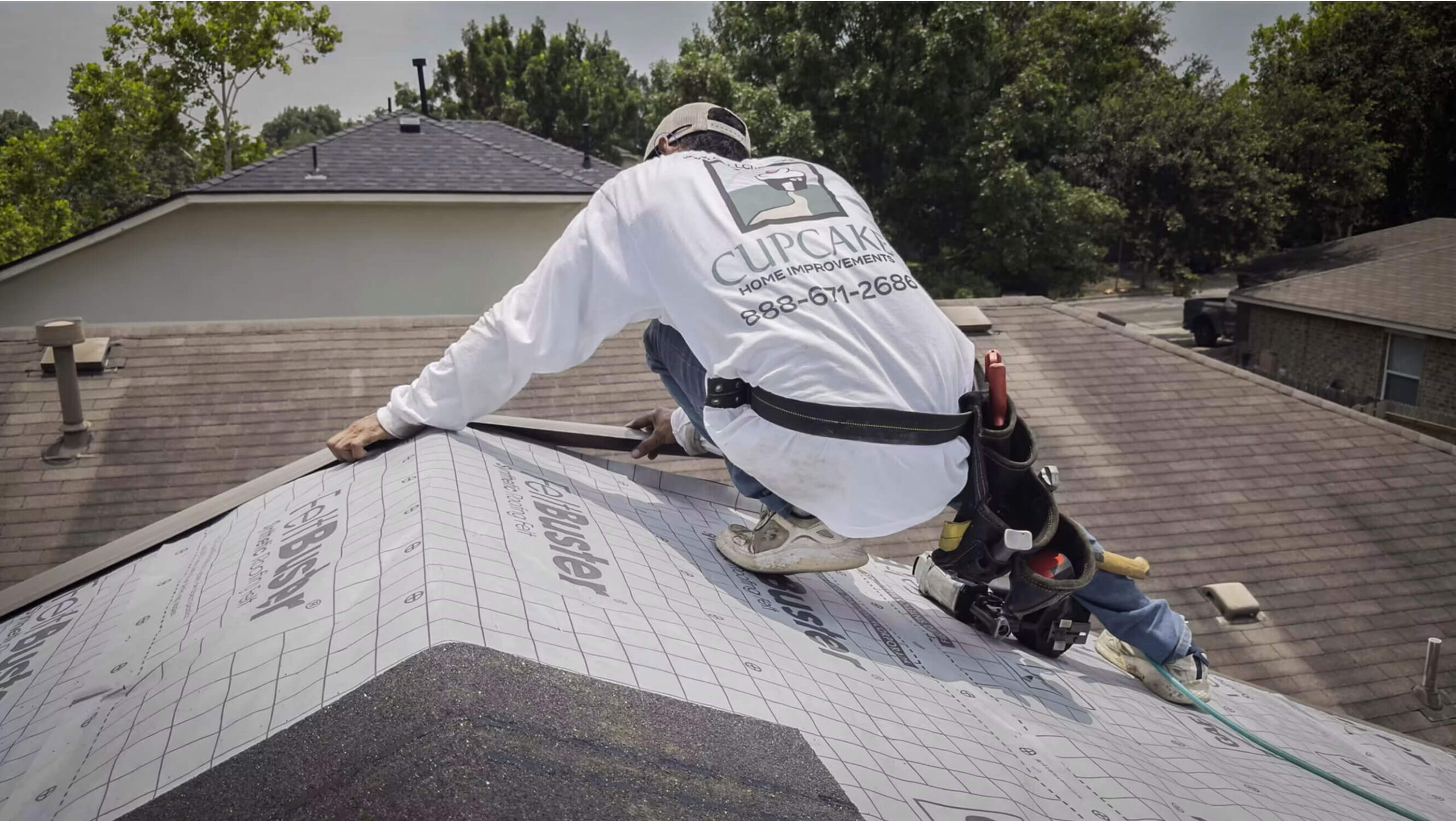
Hail Damage and Your Roof: What It Does, How to Recognize It, and How Claims Work in Texas
Hail damage is the leading cause of roof insurance claims in Central Texas — and one of the most misunderstood. A hail event doesn’t have to leave obvious holes or missing shingles to cause serious damage. What it does consistently is knock granules off asphalt shingles, leaving the asphalt beneath exposed to the UV radiation, heat, and intense rain that define this climate. That exposure compounds every season until the roof fails faster than it should have. This page explains how to recognize hail damage, what it means for your roof’s remaining lifespan, and how the insurance process works when hail is involved. For the full list of roofing problems common to Central Texas homes, see the common roofing problems overview or the roofing overview.
Why Hail Damage Is a Bigger Deal Than It Looks
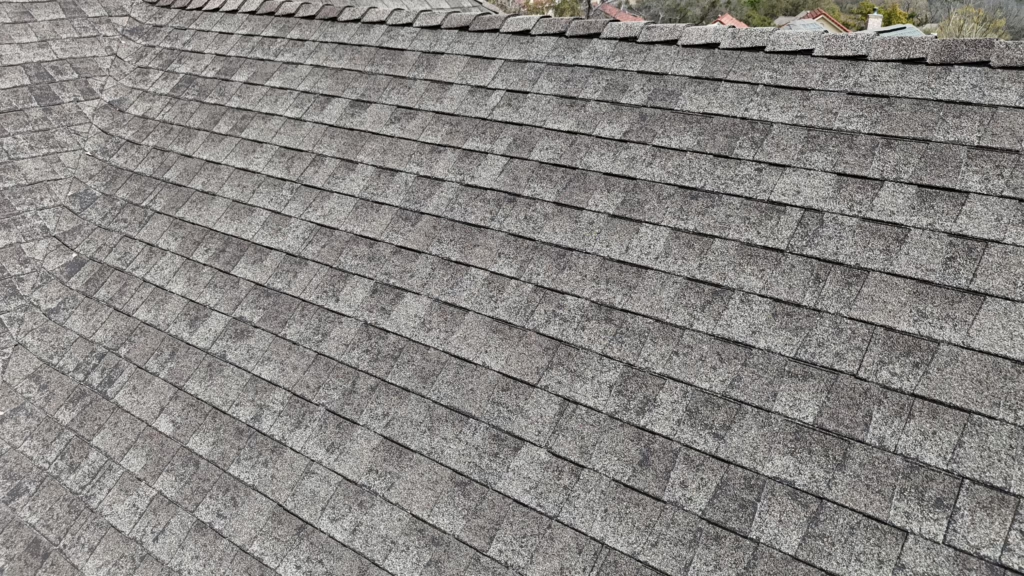
After a hail storm, most homeowners look at their roof from the driveway, see shingles still in place, and assume the roof is fine. That’s the wrong assessment — and it’s one that costs homeowners significantly when the damage that wasn’t caught early compounds into something that is. Hail damage to asphalt shingles is primarily a granule problem, not a hole problem. Each impact knocks granules off the shingle surface, exposing the asphalt mat beneath. That exposed asphalt then takes the full force of every subsequent Central Texas summer — surface temperatures above 150°F, intense UV radiation, and driving rain. The shingle ages years faster than it would have without the hail event, and it does so invisibly until it fails.
The compounding effect is what makes hail damage worth taking seriously even on a roof that looks intact. A shingle that lost significant granules in a storm two years ago is not the same shingle it was before that storm. Its UV protection is reduced, its heat management is compromised, and its remaining lifespan is shorter — regardless of what it looks like from the ground. Mixed with Central Texas heat and rainfall intensity, that accelerated aging turns a 25-year shingle into something closer to a 15-year shingle, or less. Understanding this is why professional inspection after any significant hail event is the right step, not a wait-and-see approach.
How to Recognize Hail Damage
You don’t need to get on your roof to find the first signs of a hail event. Hail leaves evidence throughout the property — and knowing what to look for on the ground gives you a basis for deciding whether a professional inspection is warranted before you ever call your insurance company.
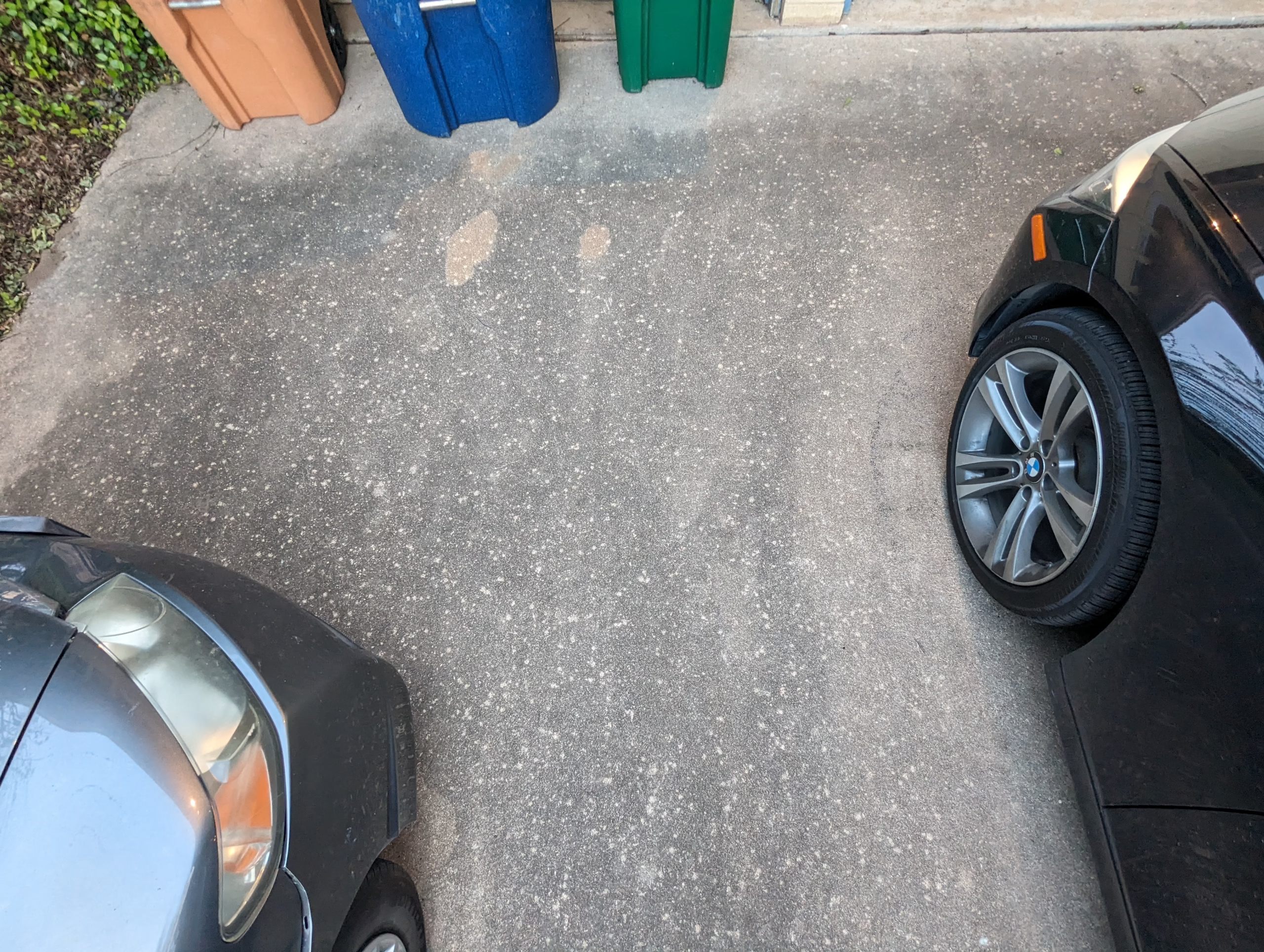
Spatter Marks on Hard Surfaces
Fresh hail leaves distinctive spatter marks on concrete driveways, sidewalks, and electrical boxes or AC units. These marks are visible for days after a storm before weathering. If you see them, the same storm hit your roof — and the size and density of those marks gives you a rough sense of hail size and intensity.
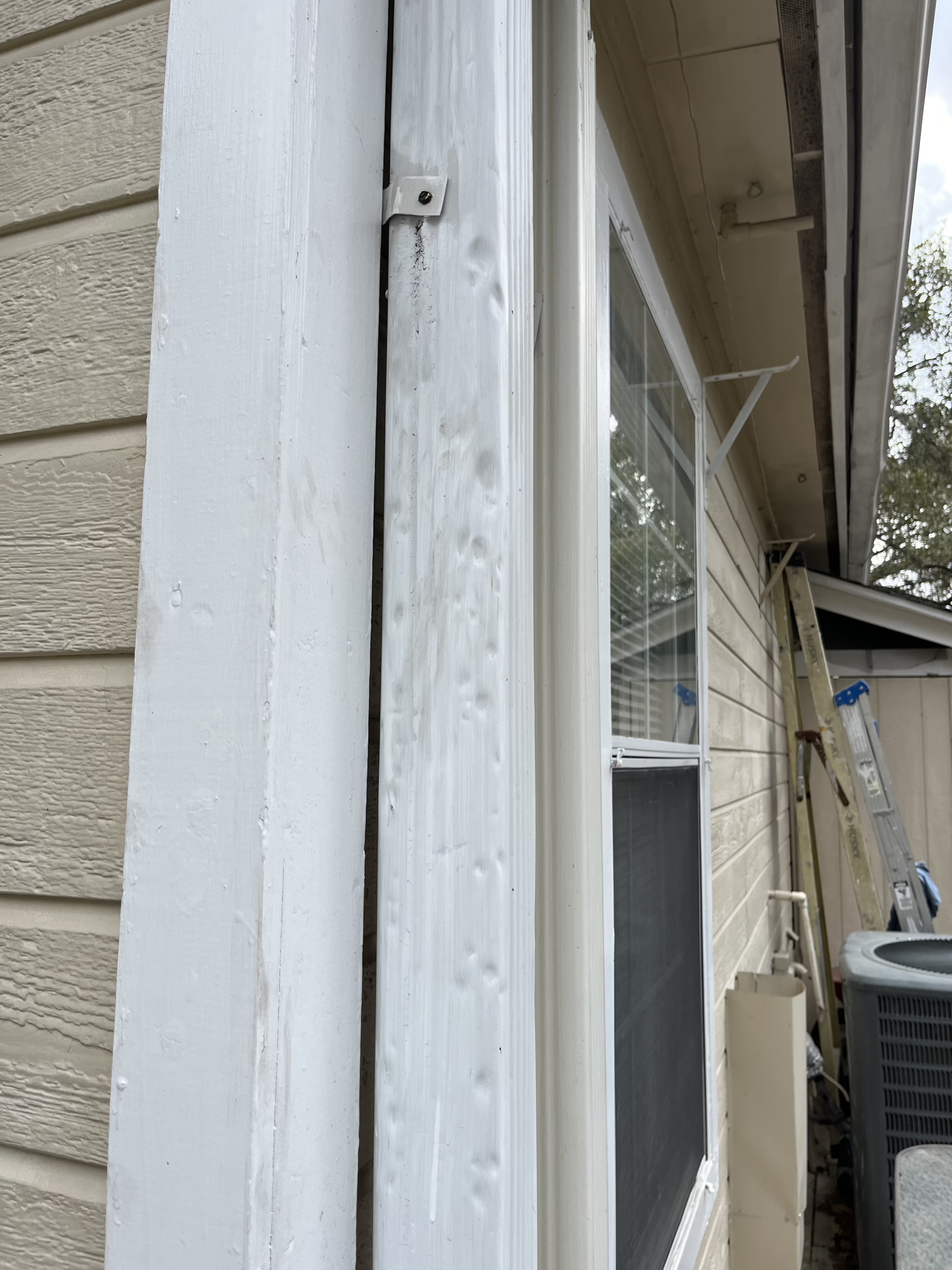
Dents in Gutters and Downspouts
Aluminum gutters dent visibly in significant hail events. Run your hand along the face of your gutters after a storm — consistent denting across multiple sections is a reliable indicator of hail size. Gutters are one of the most useful calibration tools for assessing storm severity before getting on the roof.
Damage to Fence Boards or Wood Surfaces
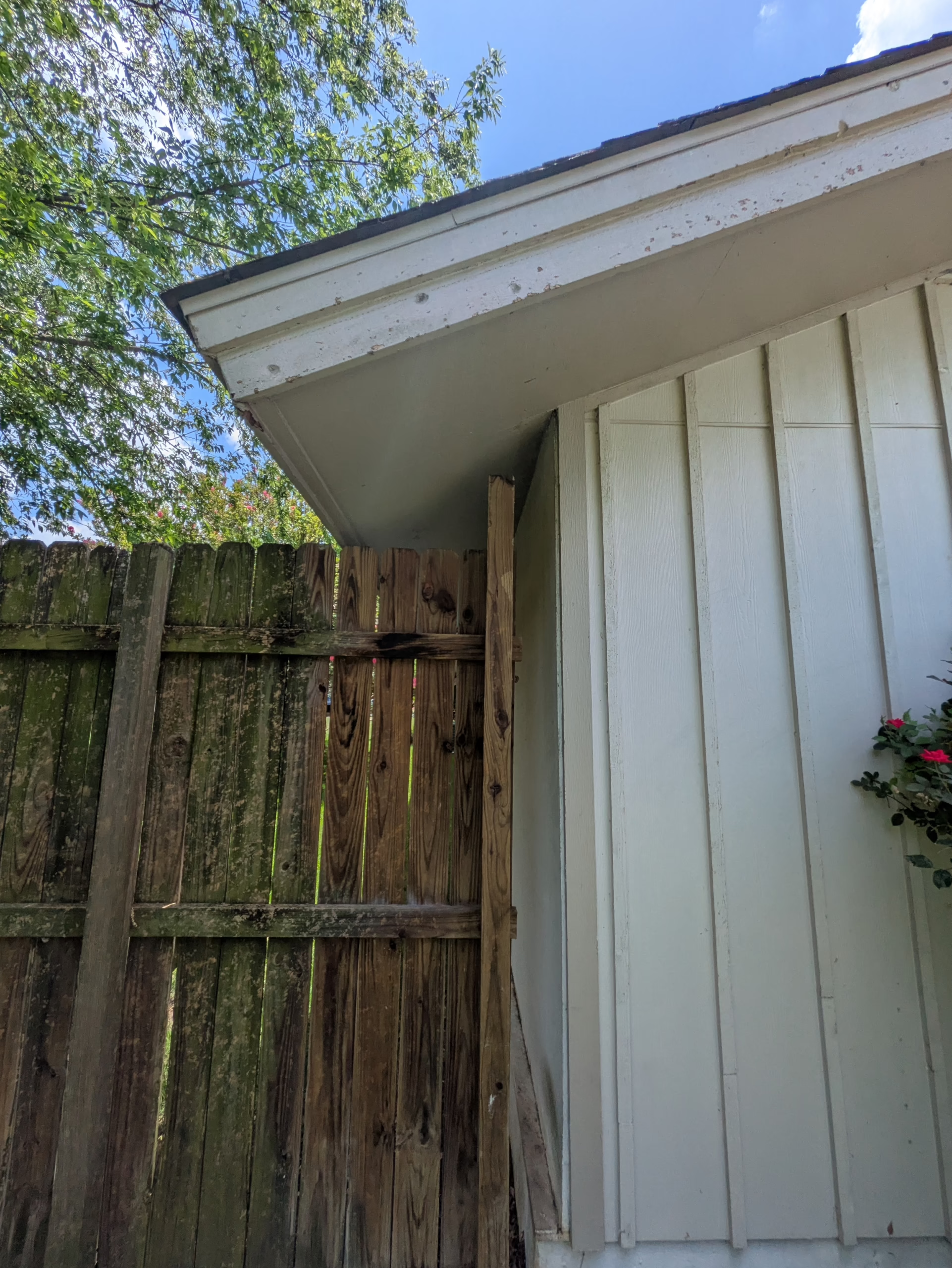
Hail leaves circular impact marks on bare wood — fence boards, deck rails, wood siding. These marks are especially useful because wood doesn’t dent or bounce like metal, so the impact impression is clear and measurable. Adjusters often use fence impact marks alongside roof findings when documenting a claim.
Dented Soft Metals on the Roof
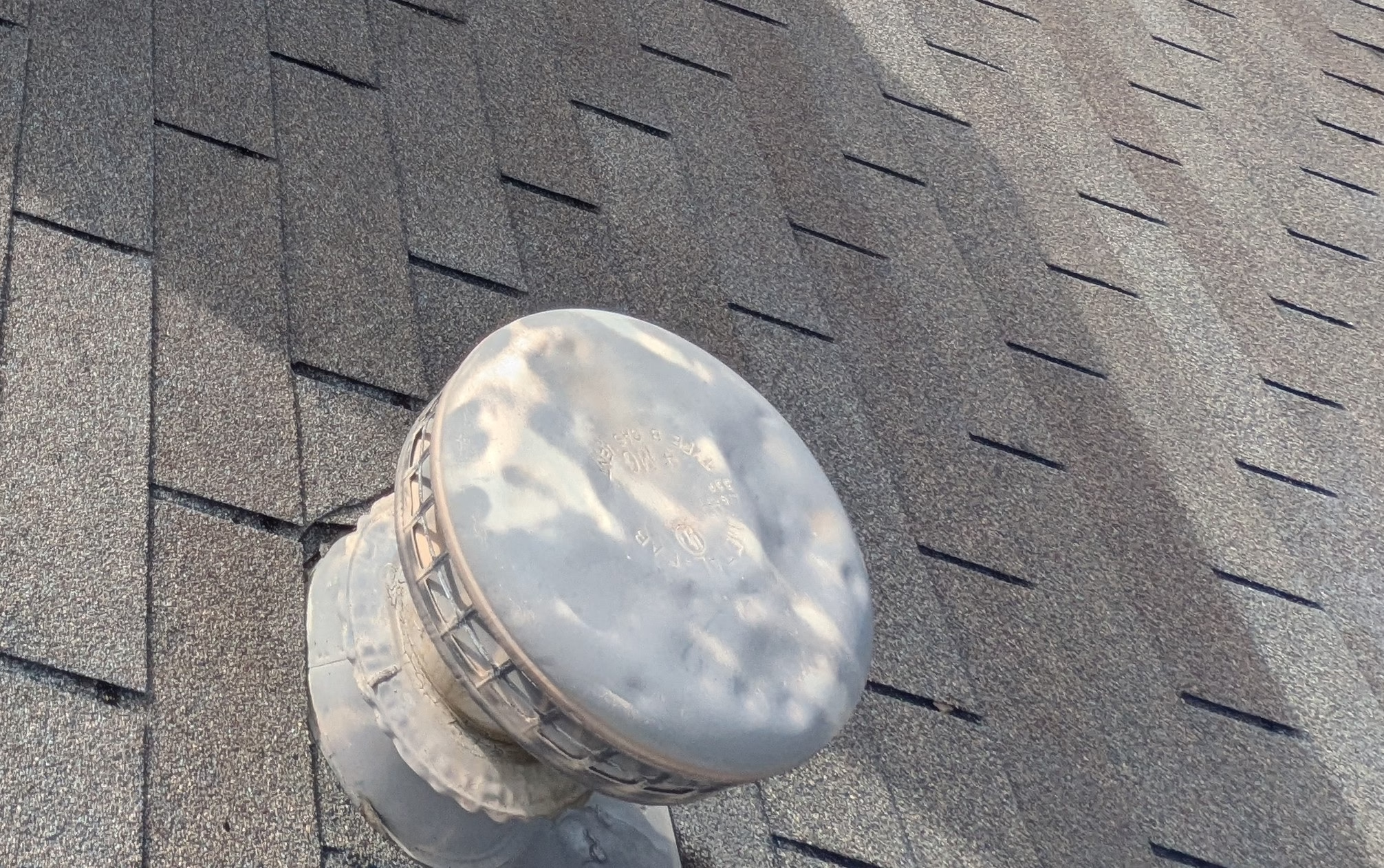
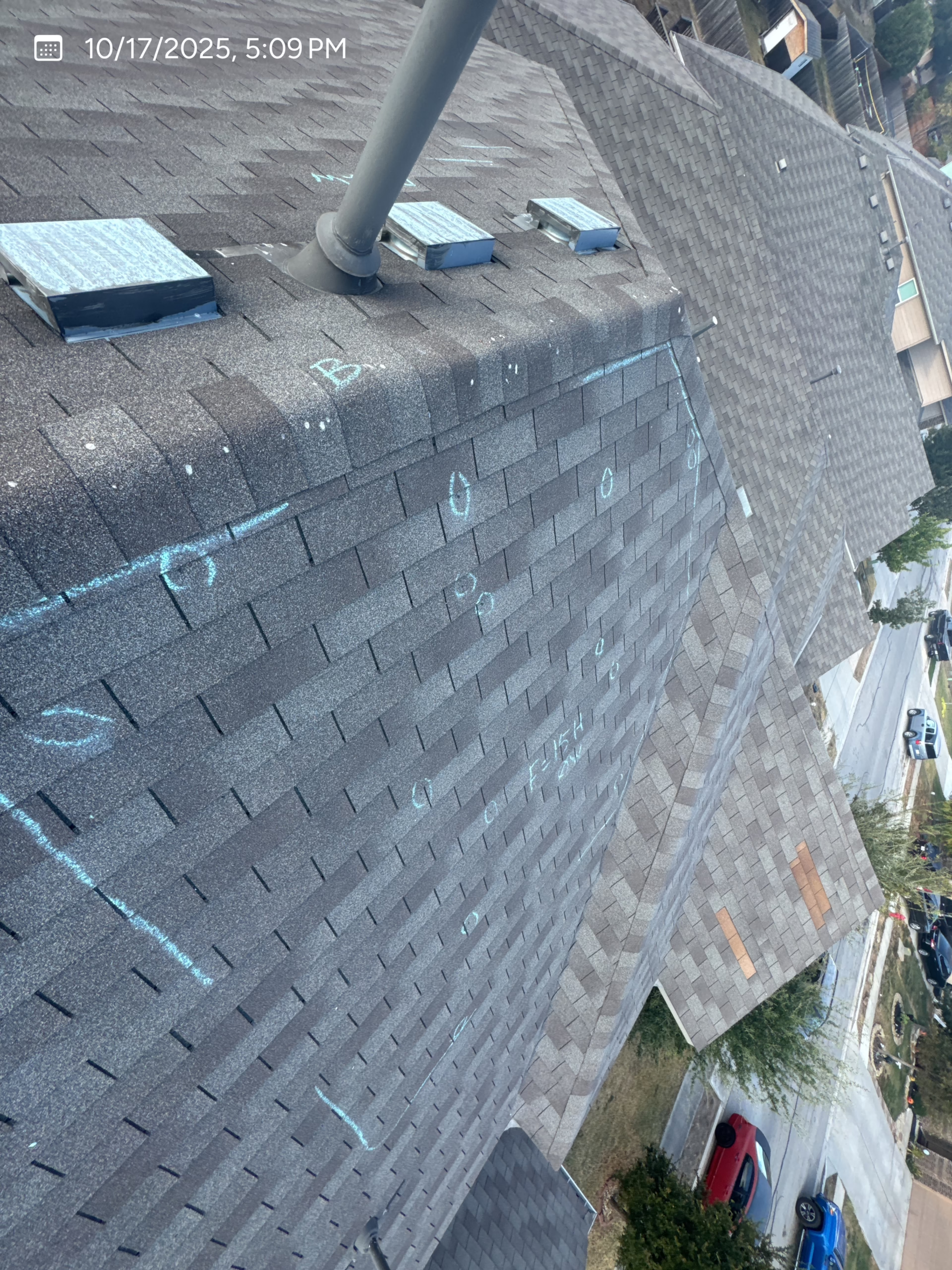
Pipe boot caps, ridge vent covers, flashing, and HVAC curbs are soft metal surfaces that dent on hail impact. These are often the clearest photographic evidence of hail size and frequency — an adjuster looking at a pipe boot with 15 impact dents is looking at measurable, documented damage that corresponds directly to shingle impact patterns.
What Hail Actually Does to an Asphalt Shingle
Hail impact on an asphalt shingle leaves a specific mark — a circular or oblong area where granules have been knocked off and the asphalt mat beneath is exposed. On a fresh impact this area is darker than the surrounding shingle and may feel slightly soft or indented. Over time, as the exposed asphalt oxidizes in Texas heat, these areas become brittle. This is where granule loss transitions from a hail event into an ongoing aging problem — the storm starts the clock, and every subsequent season runs it faster.
The pattern of damage across the roof matters as much as any individual impact. A professional inspection documents damage by slope — which slopes show consistent impact patterns, how many impacts per test square, and whether the damage is uniform enough across a slope to support a full slope replacement. This documentation is what drives the insurance outcome. A marked-up inspection photo showing test squares, impact counts, and slope designations is the core of any successful hail claim.
Hail Damage, Insurance, and Partial vs. Full Replacement
Not every hail event damages all four slopes equally. Storm direction, slope orientation, and tree coverage all affect which sections of a roof take the most impact. When only one or two slopes show damage meeting the threshold, insurance may approve a partial replacement — covering those slopes rather than the full roof. This is a legitimate outcome and worth understanding before you assume a hail claim means a full new roof or nothing.
The threshold that matters most in this market is impact density — most carriers require a minimum number of hits per test square, typically ten or more, to approve replacement of that slope. That’s why the inspection documentation matters so much. An adjuster who counts eight hits per square on one slope and fourteen on another will treat those slopes differently. Having a contractor present during the adjuster inspection — or having a contractor-prepared inspection report in hand before the adjuster arrives — significantly affects how that count is documented and interpreted. How that process works is covered on the adjuster inspection page.
The full picture of how hail claims move through the insurance process — from filing through supplement and settlement — is covered in the roofing insurance overview. If a claim has already been denied, the most common reasons hail claims are rejected and how to respond are covered on the claim denials page.
What to Do After a Hail Event
The window between a hail event and a claim filing matters. Insurance policies typically require claims to be filed within a specific period of the storm date — in Texas that’s generally one year, though policy language varies. Waiting too long risks a denial on timeliness grounds regardless of the extent of damage. The right sequence after a significant hail event is: document what you see on the ground, get a professional inspection before contacting your insurer, and file with that inspection documentation in hand.
On the question of what goes on next: if the damage scope and insurance settlement support a full replacement, it’s worth considering whether an upgrade makes sense. Class 4 impact-resistant shingles are engineered to withstand hail impact significantly better than standard architectural shingles and qualify for insurance discounts with most major carriers in Texas. For homeowners who have been through a hail claim and want a roof that performs better in the next event, that upgrade conversation is worth having. Alternatively, 24-gauge metal roofing is the most hail-resistant option available — it won’t dent in most hail events and carries a lifespan that standard asphalt shingles can’t match in this climate.
Whether hail damage points toward repair of affected slopes or full replacement depends on how many slopes were damaged, the age and overall condition of the existing roof, and what the insurance settlement covers. That decision framework is covered on the repair vs. replacement page. If you’re not sure what you’re looking at after a storm, the roofing appointment overview explains what a professional inspection covers and how findings are documented before any decision is made.
Frequently Asked Questions: Hail Damage
Will filing a hail claim raise my homeowner’s insurance rates?
In Texas, hail is classified as an act of God — a weather event outside your control. Filing a claim for hail damage is treated differently by most carriers than filing a claim for something like a plumbing failure or liability event. Texas law provides additional consumer protections around weather-related claims, and most major carriers do not surcharge premiums for a single hail claim. That said, policy language varies — the right step before filing is to call your agent and ask specifically whether a hail claim in your situation would affect your rate. Get that answer in writing if you can. What you should not do is avoid filing a legitimate claim out of fear of a rate increase you haven’t confirmed is actually coming.
My roof is only a year old. Can I still get it replaced if hail damaged it?
Yes — and this surprises a lot of homeowners. Hail damage is not excluded based on roof age. If a qualifying hail event caused documented damage meeting your carrier’s threshold, you are entitled to a claim regardless of whether the roof is one year old or fifteen. The age of the roof affects the settlement calculation — specifically whether your policy pays actual cash value (depreciated) or replacement cost value — but it does not disqualify you from filing. A one-year-old roof that took a significant hail event deserves the same inspection and documentation process as any other roof.
How much hail does it take to actually damage a roof?
Hail size and density both matter. Generally, hail three-quarters of an inch in diameter or larger is the threshold at which meaningful granule displacement begins on standard asphalt shingles. But size alone doesn’t determine damage — a dense storm of smaller hail can cause more cumulative granule loss than sparse large hail. What adjusters ultimately evaluate is the impact density on the shingle surface: how many hits per test square, how significant the granule displacement at each impact point, and whether that pattern is consistent across the slope. That determination requires getting on the roof — ground-level observations are a starting point, not a conclusion.
What is a test square and why does it matter?
A test square is a ten-by-ten foot section of roof that an inspector or adjuster marks off and counts impact hits within. It’s the standard unit of measurement for hail damage documentation. Most carriers require a minimum number of hits per test square — typically ten or more — to approve replacement of that slope. The test square count is what separates a documented hail claim from an anecdotal one. It’s also why having a contractor present during or before the adjuster inspection matters — two people counting the same test square don’t always reach the same number, and the number that gets written down is the one that drives the claim outcome.
How long do I have to file a hail claim in Texas?
Texas law generally allows one year from the date of the storm to file a claim for hail damage, though your specific policy may have different language. Read your policy or call your agent to confirm the deadline — don’t assume. The practical implication is that even if you’re uncertain whether you have damage, getting an inspection done within a few months of a significant storm is worth doing. If damage exists and is documented, you have the information you need to make a filing decision before the window closes. If no significant damage is found, you’ve ruled it out.
Can hail damage be repaired, or does it require full replacement?
It depends on how many slopes were damaged and the condition of the rest of the roof. When damage is concentrated on one or two slopes and the remaining slopes are sound, insurance may approve replacement of only the affected slopes — a partial replacement. When damage is present across all slopes, or when the existing roof has underlying wear that makes partial replacement impractical, full replacement is the appropriate scope. The insurance settlement typically drives this decision — the adjuster’s findings by slope determine what’s approved. Understanding how that scope gets determined, and how to respond if the initial assessment seems incomplete, is covered on the adjuster inspection and claim denials pages.
Think Hail Hit Your Roof? Let’s Find Out Before You Call Your Insurer.
A free inspection gives you documented findings by slope — impact counts, photo evidence, and a clear explanation of what you have — before you file anything. That documentation is what makes a claim defensible.
- Full inspection with photo documentation by slope
- Impact count per test square documented
- No deposit required to get started
- No pressure — findings explained before any decision