

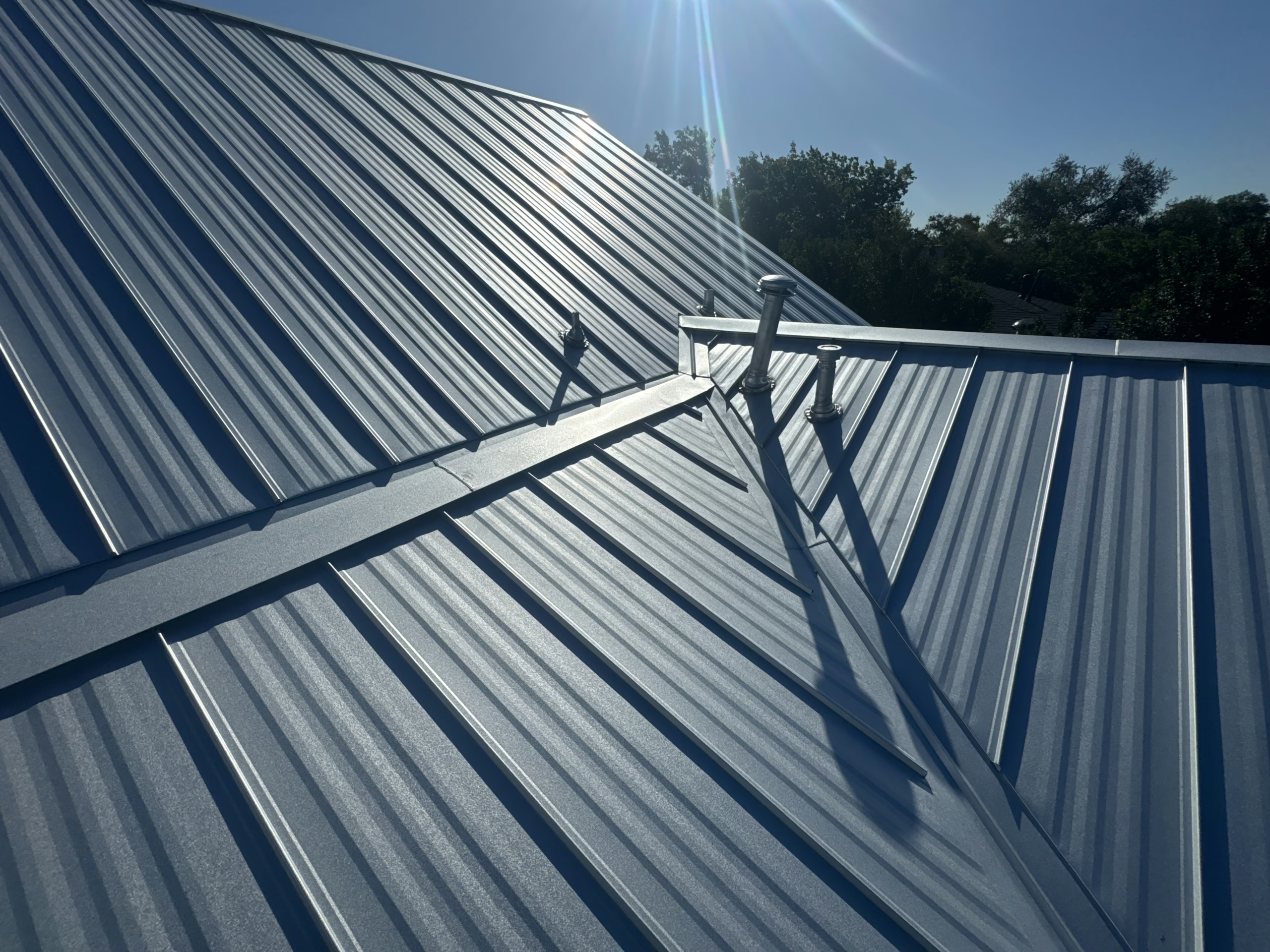
Metal Roofing
Standing seam metal roofing is a long-term residential roofing system with a realistic lifespan of 50–80 years in Central Texas conditions. It reflects solar heat rather than absorbing it, weighs less than asphalt, and holds up to hail and wind significantly better than shingle systems. The upfront cost is higher than asphalt — typically $18,000–$35,000 installed for an average Austin home — but it eliminates the replacement cycle that asphalt requires every 15–25 years.
Cupcake Home Improvements installs standing seam metal roofing in the Austin metro with the same documented process and installation standards we apply to every project. This page is part of the residential roofing overview, which covers metal, asphalt, repair, and insurance together.
Standing Seam Metal Roofing: How the System Works
Standing seam is the standard for residential metal roofing — and for good reason. Vertical panels run continuously from ridge to eave, with seams that interlock and raise above the panel surface. Fasteners are concealed inside those seams rather than exposed to weather, which eliminates one of the most common failure points in metal roofing systems: fastener corrosion and panel pull-through over time.
The panel profile also accommodates thermal movement — metal expands and contracts significantly with Texas temperature swings, and a system that doesn’t account for that will develop leaks and distortion regardless of material quality. Standing seam handles this correctly by design.
Within standing seam, two panel systems suit different roof geometries and aesthetic goals:
Flat Lock Panels
A lower-profile panel system with a tighter, more architectural appearance. Flat lock is well-suited to low-slope applications and roofs where a streamlined, modern profile is the priority. The interlocking panel geometry handles water management differently than raised-seam profiles and requires precise installation sequencing to perform correctly.
Sure Lock Panels
A raised-seam system with a more traditional standing seam profile. Sure lock panels are a strong general-purpose option for steep-slope residential applications — highly wind-resistant, good thermal movement accommodation, and a profile that works across both contemporary and traditional architectural styles. The raised seam provides added water-shedding performance on higher-pitch roofs.
Metal Roof Installation: What It Looks Like in Practice
This walkthrough shows a standing seam installation up close — panel sequencing, seaming, and what a clean, well-run metal roofing project looks like from a homeowner’s perspective.
Why Metal Performs Differently Than Asphalt in Texas
Metal roofing isn’t just more durable — it behaves fundamentally differently than asphalt under the conditions Central Texas delivers. The performance differences are worth understanding before comparing price tags.
🌡️ Heat and Energy Performance
- Reflects solar radiation rather than absorbing it — asphalt absorbs heat and transfers it directly into the attic space
- Cooler attic temperatures reduce HVAC load during Austin summers, where attic heat is one of the biggest contributors to cooling costs
- No granule degradation — asphalt shingles lose their UV protection as granules wear off; metal doesn’t have this failure mode
🛡️ Storm and Impact Resistance
- Wind resistance — standing seam concealed fastener systems outperform exposed fastener systems and most shingle profiles in high-wind conditions
- Hail performance — metal dents rather than fractures, and denting doesn’t compromise the system’s water-shedding integrity the way shingle damage does
- No blow-off risk from lifted tabs or exposed fasteners pulling through — common failure points on asphalt in wind events
♻️ Weight and Environmental Profile
- Significantly lighter than asphalt — metal roofing puts less structural load on the home, which matters on older framing
- Recyclable at end of life — asphalt shingles are a major contributor to landfill volume; metal is fully recyclable
- Longer replacement cycle means fewer total installations over the life of the home — less material consumed, less labor, less disruption
⏱️ Longevity
- 50–80 year realistic lifespan in Texas conditions — two to three times that of a well-installed architectural shingle roof
- No granule loss, no tab lifting, no shingle curling — the failure modes that end asphalt roofs don’t apply
- Eliminates the replacement cycle — for most homeowners, a metal roof installed today is the last roof they install on that home
Metal vs. Asphalt: How to Think About the Comparison
Most homeowners evaluating metal roofing are comparing it against architectural asphalt shingles — the current standard for replacement roofs. The comparison is worth making honestly, because metal isn’t the right answer for every situation.
| Factor | Standing Seam Metal | Architectural Asphalt |
|---|---|---|
| Lifespan (Texas) | 15–25 years | |
| Upfront Cost | $18,000–$35,000 | |
| Heat Behavior | Absorbs and transfers heat into attic | |
| Weight | Heavier per square | |
| Hail Response | Fractures, loses granules, may require replacement | |
| Wind Resistance | Exposed tabs vulnerable to lift in high wind | |
| End of Life | Primarily landfill | |
| Replacement Cycle | 2–3 replacements over same period | |
| Insurance Claims | Fewer storm-related claims over time | More frequent hail/wind claims in Texas market |
* Metal has a higher upfront cost but a lower lifetime cost for most homeowners staying in the home long-term. The math shifts based on how long you plan to stay, your current roof’s condition, and whether insurance is involved.
A full breakdown of the asphalt shingle system — tiers, lifespan, and what drives its cost — is on the asphalt shingle roofing page.
When an Insurance Claim Is the Right Time to Upgrade to Metal
Most Texas homeowners who end up with metal roofing weren’t planning to buy it. They were filing an insurance claim for hail or wind damage on an asphalt roof — and when they looked at the math, upgrading made sense.
Here’s how that works: when insurance approves a full replacement, the carrier pays for an equivalent asphalt system. The homeowner pays the deductible. If you want to upgrade to metal instead, you pay the deductible plus the cost difference between the approved asphalt scope and the metal installation. In many cases that difference is $8,000–$15,000 — and you’re getting a system that won’t need replacing again for 50–80 years in one of the most active hail markets in the country.
There’s also an insurance discount angle worth modeling: some Texas carriers reduce wind and hail premiums for homes with metal roofing, because the long-term claim probability drops significantly. Whether that discount offsets the upgrade cost depends on your policy, carrier, and how long you stay in the home — but it’s worth asking your agent before deciding.
How the insurance claim process works in Texas — scopes of work, deductibles, coverage types, and adjuster inspections — is covered in detail on the roofing insurance overview.
What Metal Roofing Costs in Austin
Metal roofing costs more upfront than asphalt — but the comparison that matters is lifetime cost, not installation cost. A homeowner who replaces a metal roof once over 50 years pays less in total than one who replaces asphalt twice over the same period, even before factoring in energy savings and reduced insurance claims.
| System | Typical Installed Range | Notes |
|---|---|---|
| Standing Seam Metal | $18,000–$35,000 | Average Austin home (~2,000 sq ft); flat lock and sure lock panels |
| Insurance Upgrade | Deductible + difference | Carrier pays asphalt equivalent; homeowner covers the gap to metal |
| Asphalt (for reference) | $8,000–$18,000 | Architectural shingle; requires replacement in 15–25 years |
* Ranges reflect Austin metro conditions as of 2025–2026. Actual quotes depend on roof size, slope, complexity, and panel system. Your estimate is free.
A full breakdown of what drives roofing prices in Austin — demand cycles, material costs, and how insurance jobs are structured — is on the roofing costs page. For a quick ballpark before scheduling, the instant quote tool gives you a starting range in under a minute.
Is Metal the Right Choice for Your Home?
Metal roofing makes the most sense for homeowners with a long-term horizon — people who plan to stay in the home for 15 or more years, who want to eliminate the replacement cycle, and for whom the upfront cost difference is manageable relative to the lifetime value.
It’s a less obvious fit for homeowners planning to sell in the near term, where the premium over asphalt may not be recovered in resale value, or for situations where the existing structure has framing concerns that need to be addressed first.
If you’re weighing metal against staying with asphalt, the repair vs. replacement page covers the framework we use to think through those decisions — and a free inspection gives you a documented starting point before any commitment is made. What that inspection looks like is on the roofing appointment overview.
How We Install Metal Roofing
Metal roofing installation is more technically demanding than asphalt — panel sequencing, thermal expansion accommodation, seam geometry, and flashing integration all require planning that goes beyond standard shingle installation. A crew trained on asphalt is not automatically qualified to install standing seam correctly.
We approach metal installation with the same documented process we apply to every project: scope confirmed before work begins, property protected throughout, and a final walkthrough with documentation before we close out. No deposit required to get started, and we stand behind the workmanship after the job is done.
A step-by-step breakdown of the roof replacement process — currently covering asphalt, with a metal-specific guide in development — is on the installation process page.
Frequently Asked Questions: Class 4 Impact-Resistant Shingles
What is a Class 4 impact-resistant shingle?
A Class 4 shingle is an asphalt shingle that has passed the UL 2218 impact-resistance test at the highest classification level. The test drops a two-inch steel ball from twenty feet onto the shingle surface — a shingle that doesn’t crack through qualifies as Class 4. Most Class 4 shingles use SBS-modified asphalt, which flexes under impact rather than fracturing. In practice, this means reduced likelihood of functional damage — cracks and punctures — after hail events compared to standard architectural shingles.
How much does a Class 4 roof cost compared to standard shingles?
On a typical Austin home, the upgrade from standard architectural shingles to Class 4 runs approximately $2,000–$4,000 installed — roughly 15–30% more than a standard replacement depending on roof size, slope complexity, and the specific product. Whether that premium is offset by insurance savings depends on your carrier’s specific discount — which is worth confirming before the job is scheduled, not after.
Will my insurance company discount my premium for a Class 4 roof?
Many Texas carriers do — but not all, and the discount amounts vary significantly. Some carriers offer percentage-based wind and hail premium reductions of 15–30%. Others offer modest discounts or none at all. Some require documentation of the UL 2218 certification or a post-installation inspection before applying the discount. Confirm the specific discount with your insurance agent before the upgrade is finalized — don’t assume the savings based on a general promise.
Can I upgrade to Class 4 when replacing through an insurance claim?
Yes — and an insurance claim is often the most practical time to make the upgrade. The carrier pays the approved scope based on equivalent standard architectural shingles. The homeowner covers the cost difference for the Class 4 upgrade — typically $2,000–$4,000 on an average Austin home. Since the roof is already being replaced, the incremental out-of-pocket for the upgrade is small relative to what the full project costs. How coverage type affects what the carrier pays is on the ACV vs. RCV page.
How long do Class 4 shingles last in Central Texas?
Realistically, 20–30 years in Central Texas conditions — longer than standard architectural shingles, which typically run 15–25 years in Texas heat and hail cycles. Actual lifespan depends heavily on ventilation quality, installation standards, and how many hail events the roof weathers. The SBS modification that makes Class 4 shingles impact-resistant also improves UV and thermal resistance, which extends lifespan beyond the impact benefit alone.
Is a Class 4 roof worth it if I’m planning to sell soon?
Probably not primarily for the insurance discount — premium savings accumulate over time, and a short ownership horizon doesn’t leave enough runway to recover the upgrade cost through reduced premiums. That said, a Class 4 roof can be a marketable feature in a hail-prone market like Austin and may support a higher asking price or a smoother inspection process during a sale. Whether the upgrade pencils out as a resale investment depends on the specific market and buyer pool — it’s less clear-cut than the long-term ownership math.
Wondering If Class 4 Makes Sense for Your Roof?
We’ll inspect your roof, walk through the upgrade math against your carrier’s discount, and give you a written estimate for both options — so you can make the call with real numbers, not assumptions.
- Full inspection with photo documentation
- Class 4 and standard pricing provided side by side
- No deposit required to get started
- No pressure — just a clear picture of what makes sense