

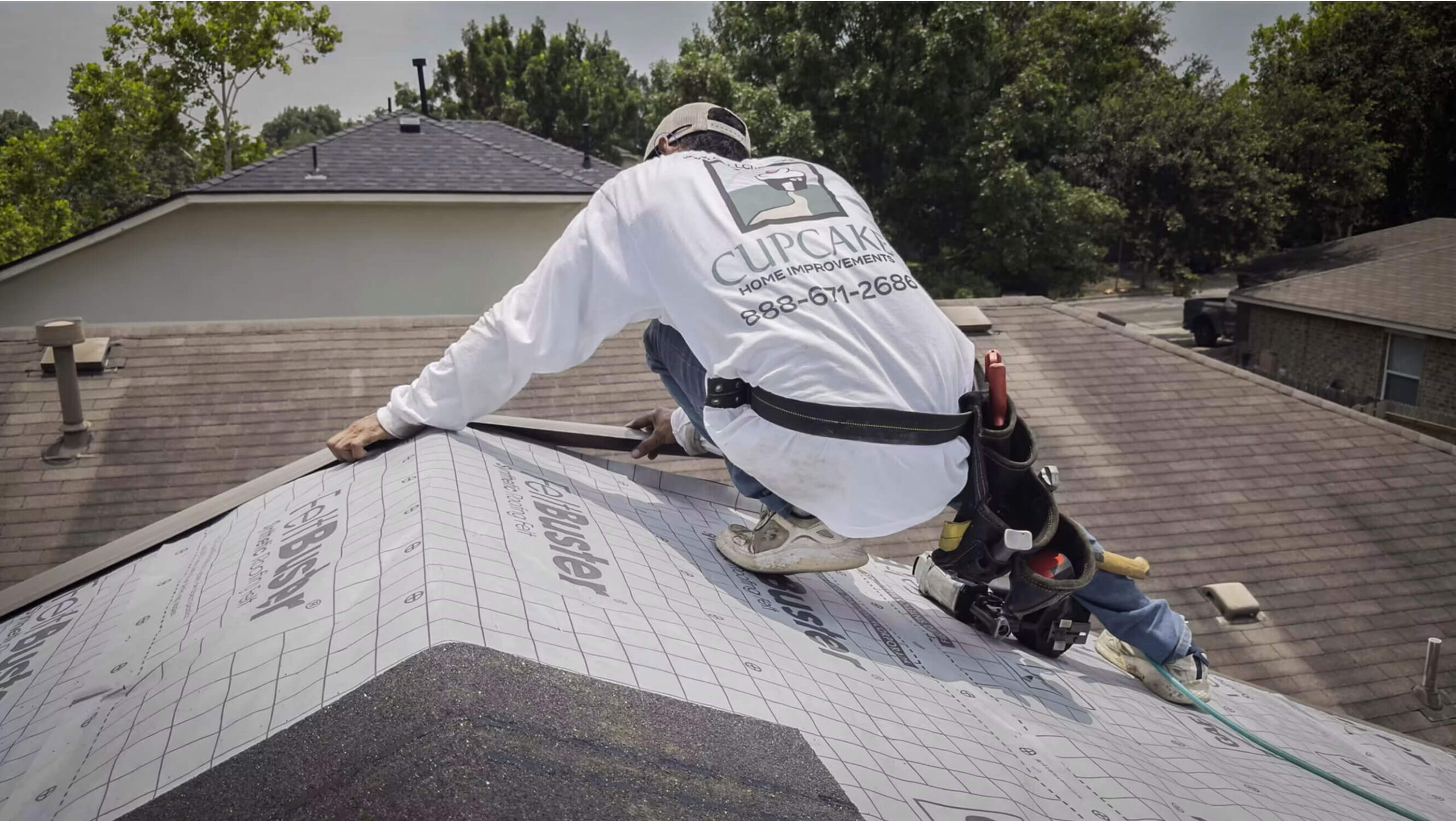
Hot Attic Problems: What Poor Ventilation Does to Your Roof and Home
A hot attic is not just a comfort problem — it is one of the most common root causes of premature roof aging in Central Texas. When attic ventilation fails to move heat and moisture out effectively, attic temperatures can exceed 150°F in summer. At those temperatures, asphalt shingles deteriorate faster than their rated lifespan, roofing nails work loose, and HVAC systems work harder than they should to keep the living space below comfortable. The problem compounds each season and rarely shows up as a single identifiable failure — it shows up as a roof that ages faster than expected, energy bills that don’t make sense, and upstairs rooms that won’t cool down. This page covers what a hot attic does to your roof and your home, how to recognize you have one, and what to do about it. For the full list of roofing problems common to Central Texas homes, see the common roofing problems overview or the roofing overview.
What a Hot Attic Actually Costs You
The damage from a chronically hot attic doesn’t happen in a single event — it accumulates. Most homeowners don’t connect the dots between attic conditions and the roofing or energy problems they’re experiencing until they’re already well into the consequences. Understanding what’s happening makes clear why ventilation is worth addressing before it becomes a replacement conversation.
Shortened Roof Lifespan
Asphalt shingles are rated for performance within a temperature range. When attic heat drives roof deck temperatures well above that range — consistently, season after season — the asphalt dries out faster, granule adhesion weakens, and shingles become brittle ahead of schedule. A 25-year shingle on a poorly ventilated roof in Central Texas often performs like a 15-year shingle. That gap costs a full replacement cycle earlier than it should have been needed.
Accelerated Granule Loss
Heat breakdown from below is one of the primary drivers of premature granule loss — the granule-to-asphalt bond weakens under sustained thermal stress before the shingle shows any other sign of failure. Once granules are gone from a section, the exposed asphalt takes direct UV radiation and rain impact, accelerating deterioration at an increasing rate each subsequent summer.
Nail Pops and Fastener Failure
The same thermal cycling that degrades shingles — expansion in summer heat, contraction in cooler months — works roofing nails progressively loose from the deck beneath. Attics that trap heat amplify this cycle significantly. Nail pops that appear on a relatively new roof, or in a consistent pattern across nail lines, are often a ventilation symptom rather than an installation error.
HVAC Strain and Higher Energy Bills
An attic sitting at 150°F or above is conducting heat into the living space below through the ceiling. That load works directly against air conditioning efficiency — the system runs longer cycles to maintain temperature, particularly in upstairs rooms. In Central Texas summers, a poorly ventilated attic can meaningfully increase cooling costs over a season, year after year.
How these consequences interact with overall roof lifespan in this climate is covered in detail in the guide on how long a roof lasts in Texas. The connection between hot attic conditions and granule loss and nail pops is covered on those pages — both problems share the same thermal root cause and often appear together on the same roof.
How Attic Ventilation Works — and Why It Fails
Attic ventilation works on a simple principle: cooler air enters low through intake vents — typically soffits — and hot, moist air exits high through exhaust vents near the ridge. When intake and exhaust are balanced and unobstructed, heat and moisture move through the attic continuously rather than accumulating. When that balance breaks down, heat and moisture stay trapped regardless of how many vents are visible on the roof.
The most common failure modes are not dramatic — a soffit vent blocked from the inside by blown-in insulation, exhaust vents placed too low on the roof to create effective airflow, multiple competing exhaust types fighting each other, or simply not enough intake to supply the exhaust capacity that exists. Any one of these leaves the attic retaining heat it should be shedding. The five specific mistakes that show up most frequently on Central Texas roofs are covered in detail in the attic ventilation mistakes guide. How ridge vents compare to box vents and what makes a ridge vent system actually perform is covered in the ridge vent overview.
How to Recognize a Hot Attic Problem
A hot attic rarely announces itself with a single obvious symptom. It shows up as a pattern — multiple things that don’t quite make sense until you look at them together. The indicators below, particularly in combination, are worth taking seriously rather than treating each one as a separate unrelated issue.
Attic is noticeably hot even in the morning or on mild days
An attic with working ventilation moves heat out overnight and into the early morning hours. One that stays hot into the morning — or feels brutal even on a mild day — is retaining heat it should have shed. A temperature gun reading above 120°F in the morning on a moderate day is a clear indicator of a ventilation problem.
Upstairs rooms that won’t cool down regardless of HVAC settings
When the attic above a living space is significantly hotter than it should be, heat conducts through the ceiling into the room below. If upstairs rooms consistently run warmer than the rest of the house or require the thermostat to be set much lower to feel comfortable, attic heat load is often a primary contributor — not duct sizing or equipment capacity.
Moisture, staining, or mold visible in the attic
Poor ventilation traps moisture as well as heat. In cooler months, moisture that enters the attic from the living space below has nowhere to go — it condenses on framing and sheathing, producing staining, mold growth, and over time, wood rot. Moisture symptoms in the attic during winter or mild weather are almost always a ventilation problem, not a roof leak.
Shingles aging faster than expected or showing early wear patterns
If a roof that should have years of service life remaining is showing significant granule loss, nail pops across nail lines, or shingles that are cracking or becoming brittle ahead of schedule, attic heat is a likely contributing factor. These symptoms on a roof under fifteen years old warrant looking at ventilation before assuming the shingles themselves are the problem.
Energy bills that seem high relative to the home’s size and insulation
HVAC systems working against an overheated attic run longer cycles and consume more energy to maintain temperature. If cooling costs seem disproportionate to the home’s square footage and insulation level — particularly during peak summer months — attic heat load is worth evaluating before assuming the equipment is undersized.
Why This Matters More in Central Texas
Ventilation problems exist in every climate, but they cost more in Central Texas than almost anywhere else. The combination of sustained summer heat, intense UV radiation, and recurring hail events means every additional degree of trapped attic heat is compounding on top of conditions that are already hard on roofing materials. A ventilation imbalance that might shave two or three years off a roof’s lifespan in a moderate climate can easily double that impact here — and it does so invisibly, season by season, until the roof fails ahead of schedule or a storm event reveals how compromised the system has become. The same heat that traps in a poorly ventilated attic also amplifies the granule loss and shingle aging that hail events initiate — two conditions reinforcing each other until the roof reaches end of life faster than any single cause would predict.
What to Do If You Suspect a Hot Attic Problem
The right starting point is clarity on what you actually have — whether intake exists and is open, whether exhaust types are competing, whether the system has ever been balanced for the roof’s geometry. Ventilation is easiest to evaluate and correct during a roof replacement or major repair, when decking and penetrations are accessible. But if symptoms are present on a roof that isn’t being replaced, an inspection can still identify whether ventilation is the root cause of what you’re seeing.
If the attic heat has already been compounding for years, the relevant question may not just be whether to fix the ventilation — it may be how much service life the current roof actually has left, and whether addressing ventilation alone makes sense or whether a broader conversation about the roof system is warranted. That decision framework is covered on the repair vs. replacement page. What a professional evaluation of your attic and roof covers, and how findings are documented before any decision is made, is explained on the roofing appointment overview.
Frequently Asked Questions: Hot Attic and Attic Ventilation
How hot should an attic get in Texas?
A well-ventilated attic in Central Texas will still get hot in summer — outdoor temperatures and solar gain make that unavoidable. What matters is the margin above ambient. A properly ventilated attic typically runs 10–20°F above outdoor temperature. An attic with ventilation problems can run 40–60°F above ambient, reaching 150–160°F or higher on peak summer days. Those temperatures are well above what asphalt shingles were designed to perform in, and the damage they cause to roofing materials compounds with each season of exposure.
Can I add vents to fix a hot attic?
Sometimes — but adding vents without understanding why the existing system is underperforming often doesn’t solve the problem and can make it worse. The most common hot attic cause is not too few exhaust vents — it’s blocked or missing intake. Adding more exhaust to a system without adequate intake doesn’t improve airflow; it just creates more pressure imbalance. Mixing exhaust vent types (ridge vents plus box vents, for instance) can cause one vent to pull air the wrong direction. Before adding anything, the existing system needs to be evaluated for intake adequacy, vent placement, and whether competing exhaust types are short-circuiting each other.
Does attic ventilation affect my energy bills?
Yes, meaningfully. An attic running 50°F above ambient is conducting heat into the living space below through the ceiling assembly. That load extends HVAC run time and increases energy consumption — particularly during peak cooling hours when the grid and your system are already working hardest. The effect is most pronounced in homes with older or thinner ceiling insulation, or where ducts run through the attic space. Improving ventilation reduces heat load at the source rather than trying to compensate for it with more cooling capacity.
How do I know if my soffit vents are actually working?
Soffit vents frequently look present and functional from the exterior but are blocked from the inside by blown-in insulation, never had the substrate behind the vent cover actually cut open, or are painted over and substantially restricted. The only reliable way to confirm they’re working is to get into the attic and verify that air is moving through each vent location — or at minimum that there is a clear, unobstructed opening behind each vent cover. Baffles are the standard solution for keeping blown-in insulation from choking off soffit airflow, and they’re commonly missing in attics where insulation was added after original construction.
Is a powered attic fan a good solution?
Powered attic fans are controversial — and for good reason. When intake is adequate, they can move more air than passive ventilation. But when intake is insufficient, they can depressurize the attic enough to pull conditioned air from the living space through ceiling penetrations, essentially air-conditioning the attic at your expense. They also add a mechanical component with a service life and potential failure points. Most ventilation professionals favor a well-designed passive system — correctly balanced intake and exhaust — over a powered fan that compensates for a system that was never properly planned.
When is the best time to address a ventilation problem?
Ventilation is always easiest to address during a roof replacement — when decking is accessible, penetrations can be properly planned, and the full intake and exhaust system can be evaluated and corrected as a single scope of work. Trying to retrofit ventilation on an existing roof is possible but more limited and more disruptive. If you’re approaching a replacement conversation for any reason, ventilation should be part of that discussion from the start — not an afterthought that gets addressed on the next roof.
Attic Running Hot? Let’s Find Out What’s Actually Going On.
A free inspection covers attic conditions alongside the roof — so you get a clear picture of whether ventilation is contributing to heat, moisture, or premature wear before any decisions are made.
- Attic and roof evaluated together
- Findings explained clearly before any decision
- No deposit required to get started
- No pressure — honest assessment first