

Class 4 Impact-Resistant Shingles: What They Are and When They Make Sense in Texas
Class 4 impact-resistant shingles are asphalt shingles that have passed the UL 2218 impact-resistance test — the highest commonly referenced rating for hail performance. They use SBS-modified asphalt that flexes under impact rather than fracturing, which reduces the likelihood of functional damage after a hail event. In Texas, where hail is a routine risk and insurance deductibles are often percentage-based, the upgrade cost is frequently offset by insurance premium discounts and reduced claim frequency over the life of the roof.
This page explains how Class 4 shingles are rated, how they perform in real conditions, and how to evaluate whether the upgrade makes financial sense for your home. It is part of the asphalt shingle overview and the broader roofing overview. For how Class 4 interacts with insurance claims and coverage, see the roofing insurance overview.
What the Class 4 Rating Actually Means
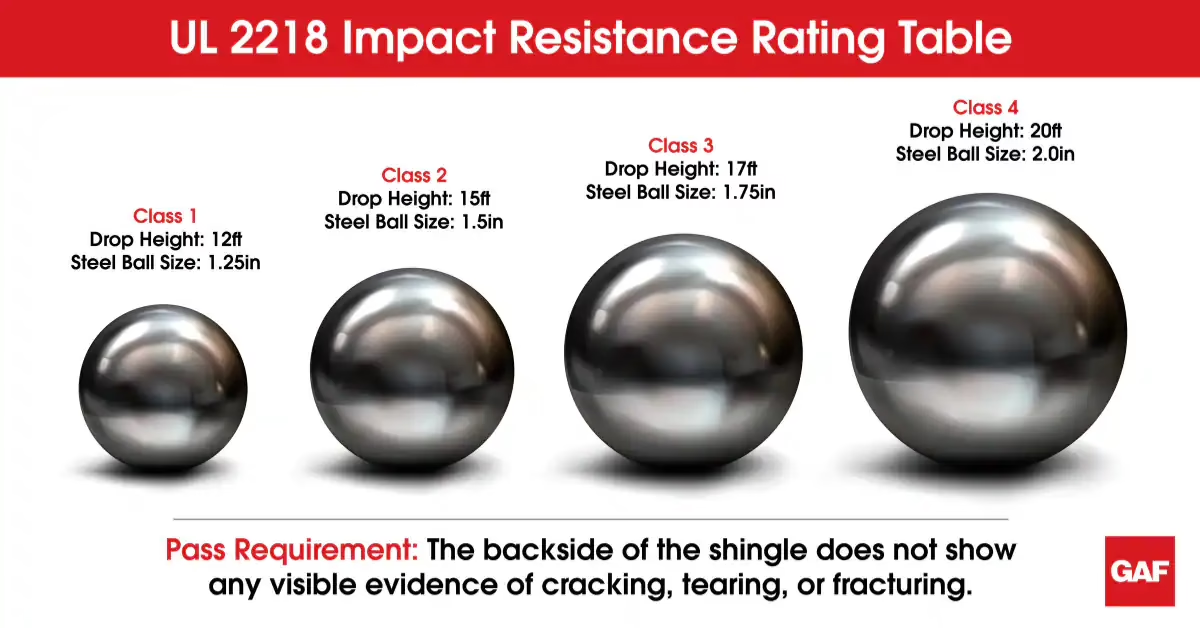
Class 4 is the highest impact-resistance rating under the UL 2218 test standard. The rating is based on standardized testing — not marketing language — and it means something specific about how a shingle performs under controlled impact conditions.
The UL 2218 test drops a two-inch steel ball from twenty feet onto the shingle surface. A shingle that does not crack through under these conditions qualifies as Class 4. The test is designed to simulate large hail impact at terminal velocity.
✓ What Class 4 Means
- Passed UL 2218 impact test at the highest classification level
- SBS-modified asphalt flexes under impact rather than fracturing
- Reduced likelihood of functional damage — cracks and punctures — after hail
- Qualifies for insurance premium discounts with many Texas carriers
✗ What Class 4 Does Not Mean
- Hail-proof — large enough hail can still cause cosmetic or functional damage
- Immune from cosmetic damage — surface marks and granule loss can still occur
- A guarantee against future claims
- Better than standard shingles if installed incorrectly
Class 4 Shingles and Insurance in Texas
Because hail claims drive significant losses in Texas, many carriers offer premium discounts for homes with Class 4 shingles. The logic is straightforward: impact-resistant roofs reduce claim frequency and severity, so the carrier’s risk exposure is lower.
Premium Discounts
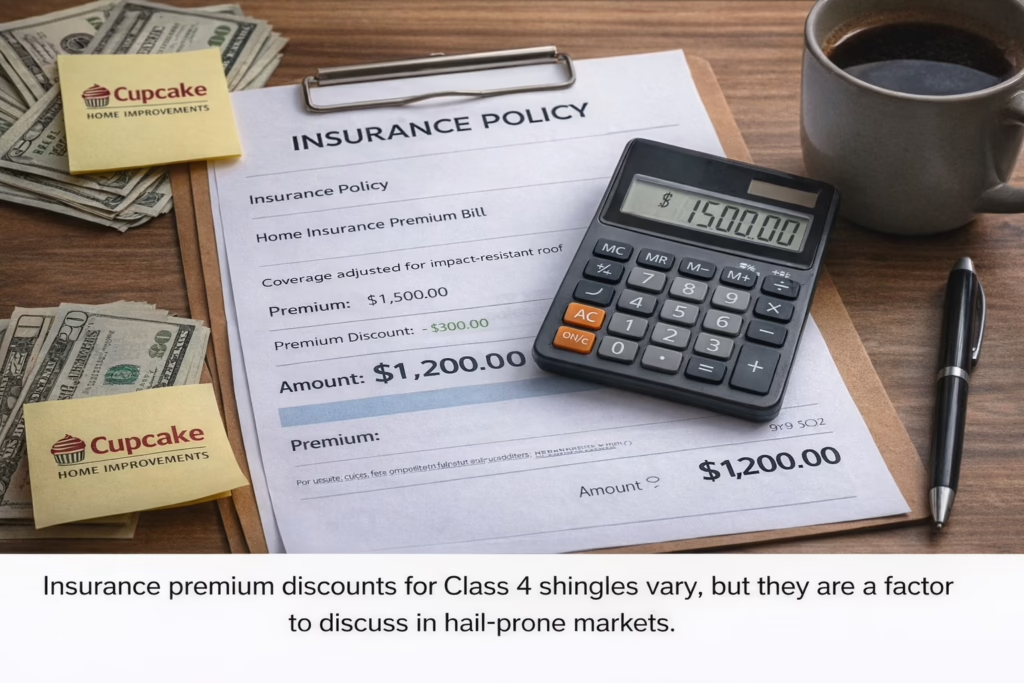
Many Texas carriers reduce wind and hail premiums for Class 4 roofs — commonly in the 15–30% range, though this varies significantly by carrier and policy. Some require a post-install inspection or UL 2218 documentation before applying the discount. Confirm the specific discount with your agent before the upgrade is finalized.
Deductible Interaction
A premium discount reduces what you pay annually — but your deductible structure stays the same. In Texas, a 2% wind/hail deductible on a $400,000 home is still $8,000 regardless of shingle class. Class 4 shingles reduce the likelihood of a claim, not the cost if one occurs. How Texas deductibles work is on the deductibles page.
Cosmetic Damage Exclusions
Many newer Texas policies exclude cosmetic damage — marks and surface changes that don’t affect water shedding. Class 4 shingles reduce functional damage but may still show cosmetic marks after a hail event. If your policy has a cosmetic exclusion, Class 4 doesn’t change that coverage limit. How cosmetic exclusions work is covered on the claim denials page.
Upgrade Timing on Insurance Claims
If you’re replacing an asphalt roof through an insurance claim, the carrier pays the approved scope for standard architectural shingles. Upgrading to Class 4 means you cover the cost difference — typically $2,000–$4,000 on an average Austin home. An active claim is often the most practical time to make the upgrade since the roof is already coming off. How coverage type affects what the carrier pays is on the ACV vs. RCV page.
When the Class 4 Upgrade Makes Sense
Class 4 shingles aren’t automatically the right choice for every home. The upgrade math depends on your carrier, your deductible structure, your timeline, and how often the Austin area actually gets hail that causes functional damage.
Strong Case for Class 4
- Your carrier offers a meaningful premium discount — enough to offset the upgrade cost in a reasonable timeframe
- You plan to stay in the home long enough for the premium savings to accumulate
- Roof replacement is already planned due to age or condition — the incremental upgrade cost is small relative to the full job
- You’re replacing through an insurance claim and the out-of-pocket upgrade delta is modest
Weaker Case for Class 4
- Your carrier offers no discount or a minimal one that doesn’t justify the premium
- You’re planning to sell the home within a few years — the premium savings won’t accumulate enough to recover the upgrade cost
- The roof is heavily shaded by trees where debris abrasion is the dominant damage mode
- Installation quality isn’t being addressed — a Class 4 shingle installed incorrectly won’t perform to its rating
The cost difference between standard architectural shingles and Class 4 on a typical Austin home runs $2,000–$4,000 installed. Whether that pencils out against expected premium savings depends on your carrier’s specific discount. Confirming the discount amount with your agent before the job is scheduled — not after — is the right sequence. Full cost context for roofing in Austin is on the roofing cost guide.
Why Installation Quality Determines Whether Class 4 Performs
The UL 2218 rating is earned in a controlled test environment with shingles installed correctly on a flat test deck. Real-world performance depends entirely on whether the installation matches those conditions. Fastener placement, decking condition, underlayment selection, ventilation balance, and flashing details all affect how a Class 4 shingle system performs over time — regardless of the shingle’s rating.
A Class 4 shingle installed with wrong fastener patterns, over a failing deck, or without proper ventilation will fail faster than a standard shingle installed correctly. The rating is the floor, not the ceiling — and it assumes the system was built right. What a correct installation looks like from start to finish is covered on the roof installation process page. Our 10-year workmanship warranty covers installation quality, not just materials — and it’s backed by documented installation standards, not just a promise.
Common Class 4 Misunderstandings
“Class 4 shingles mean I’ll never file a hail claim again.”
Class 4 reduces the likelihood of functional damage — cracks and punctures that compromise waterproofing — but it doesn’t eliminate hail damage entirely. Large enough hail can still cause functional damage to any shingle. What changes is the threshold: events that would crack a standard shingle may leave a Class 4 shingle intact. The rating reduces frequency and severity, it doesn’t guarantee immunity.
“All Class 4 shingles are the same.”
Class 4 is a minimum performance threshold, not a product specification. Two shingles can both pass the UL 2218 test while differing significantly in granule quality, laminate construction, UV resistance, and long-term durability. Passing the test establishes a floor — quality and lifespan vary considerably above that floor depending on the manufacturer and product line.
“The premium discount covers the upgrade cost quickly.”
It depends on the carrier and the discount amount. Some carriers offer substantial discounts that can recover the upgrade cost in a few years. Others offer modest or no discount in which case the upgrade is a durability decision, not a financial one. Confirming the actual discount with your agent before the upgrade — not after — is the only way to know whether the math works for your specific situation.
“A Class 4 roof means cosmetic hail damage won’t affect my claim.”
Class 4 shingles reduce functional damage — they can still show cosmetic marks after a hail event. If your policy includes a cosmetic damage exclusion, surface marks on a Class 4 shingle may not qualify for coverage regardless of how widespread they are. The shingle rating and the policy exclusion are separate things — one affects performance, the other affects coverage.
Frequently Asked Questions: Class 4 Impact-Resistant Shingles
What is a Class 4 impact-resistant shingle?
A Class 4 shingle is an asphalt shingle that has passed the UL 2218 impact-resistance test at the highest classification level. The test drops a two-inch steel ball from twenty feet onto the shingle surface — a shingle that doesn’t crack through qualifies as Class 4. Most Class 4 shingles use SBS-modified asphalt, which flexes under impact rather than fracturing. In practice, this means reduced likelihood of functional damage — cracks and punctures — after hail events compared to standard architectural shingles.
How much does a Class 4 roof cost compared to standard shingles?
On a typical Austin home, the upgrade from standard architectural shingles to Class 4 runs approximately $2,000–$4,000 installed — roughly 15–30% more than a standard replacement depending on roof size, slope complexity, and the specific product. The premium reflects the modified asphalt formulation and higher material cost. Whether that premium is offset by insurance savings depends on your carrier’s specific discount — which is worth confirming before the job is scheduled.
Will my insurance company discount my premium for a Class 4 roof?
Many Texas carriers do — but not all, and the discount amounts vary significantly. Some carriers offer percentage-based wind and hail premium reductions of 15–30%. Others offer modest discounts or none at all. Some require documentation of the UL 2218 certification or a post-installation inspection before applying the discount. Confirm the specific discount with your insurance agent before the upgrade is finalized — don’t assume the savings based on a general promise.
Can I upgrade to Class 4 when replacing through an insurance claim?
Yes — and an insurance claim is often the most practical time to make the upgrade. The carrier pays the approved scope based on equivalent standard architectural shingles. The homeowner covers the cost difference for the Class 4 upgrade — typically $2,000–$4,000 on an average Austin home. Since the roof is already being replaced, the incremental out-of-pocket for the upgrade is small relative to what the full project costs. Your coverage type affects how the carrier’s portion is paid — how that works is on the ACV vs. RCV page.
How long do Class 4 shingles last in Central Texas?
Realistically, 20–30 years in Central Texas conditions — longer than standard architectural shingles, which typically run 15–25 years in Texas heat and hail cycles. Manufacturer warranties often run 30–50 years, but those are prorated warranties under controlled conditions, not realistic performance guarantees for Central Texas. Actual lifespan depends heavily on ventilation quality, installation standards, and how many hail events the roof weathers. The SBS modification that makes Class 4 shingles impact-resistant also improves UV and thermal resistance, which extends lifespan beyond the impact benefit alone.
Is a Class 4 roof worth it if I’m planning to sell soon?
Probably not primarily for the insurance discount — premium savings accumulate over time, and a short ownership horizon doesn’t leave enough runway to recover the upgrade cost through reduced premiums. That said, a Class 4 roof can be a marketable feature in a hail-prone market like Austin, and it may support a higher asking price or a smoother inspection process during a sale. Whether the upgrade pencils out as a resale investment depends on the specific market and buyer pool — it’s less clear-cut than the long-term ownership math.
Wondering If Class 4 Makes Sense for Your Roof?
We’ll inspect your roof, walk through the upgrade math against your carrier’s discount, and give you a written estimate for both options — so you can make the call with real numbers, not assumptions.
- Full inspection with photo documentation
- Class 4 and standard pricing provided side by side
- No deposit required to get started
- No pressure — just a clear picture of what makes sense