

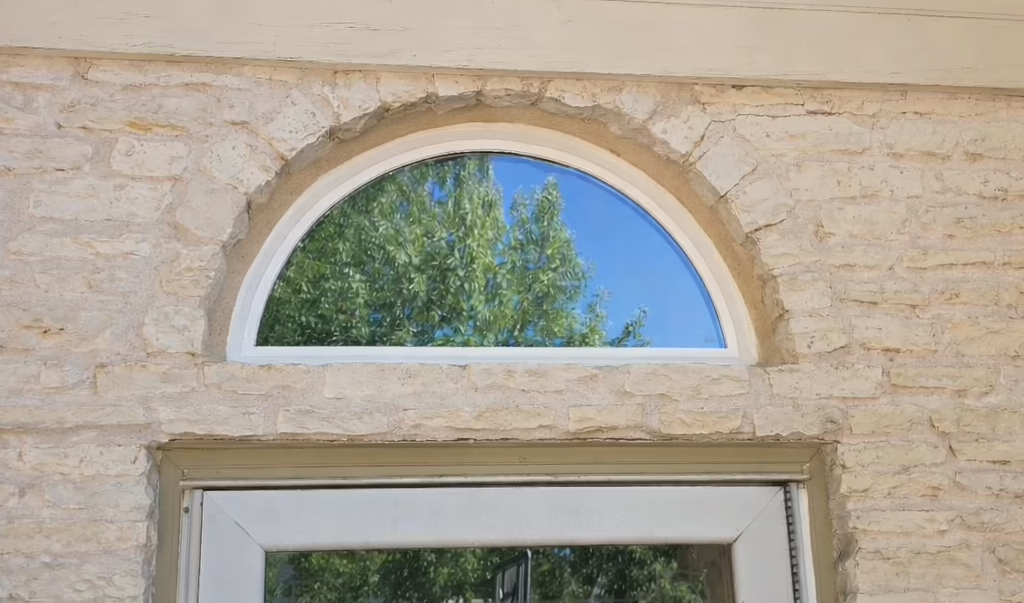
Geometric Windows
Warranty
Design-Driven Light and Architectural Balance
Geometric windows are fixed, custom-shaped windows designed to shape how a home looks, feels, and receives light. They’re used to add architectural interest, frame views, and fill spaces where standard window types don’t belong.
If you’re comparing styles, start with the full overview of replacement window types.
How Geometric Windows Work
Geometric windows are fixed units fabricated in custom shapes such as triangles, circles, arches, trapezoids, or polygons. Because they don’t open, they’re designed purely for light, balance, and architectural impact.
🔷 Fixed by Design
Geometric windows do not open. The fixed configuration is intentional — it allows for larger uninterrupted panes, stronger thermal performance, and shapes that couldn’t be achieved with an operable unit. Ventilation and egress must be provided by adjacent windows.
📐 Custom Fabrication
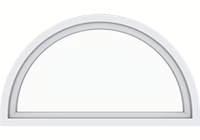
Each unit is fabricated to the opening — triangles, circles, half-rounds, trapezoids, octagons, and compound shapes are all possible. Because there is no standard size, the rough opening, framing, and unit dimensions must be coordinated precisely before fabrication begins.
Where Geometric Windows Work Best
Geometric windows are most effective when used as part of a broader window layout rather than as standalone features. Placement and scale relative to the surrounding architecture determine whether the result looks intentional or afterthought.
Entryways and Stairwells
Geometric windows bring in light in spaces where privacy matters and operable windows aren’t needed. A half-round or triangle above an entry door or stairwell landing is a common application where standard rectangular units would feel out of place.
✓ Ideal use — light without ventilation requirement
Vaulted and Cathedral Ceilings
The triangular or trapezoidal wall space created by a roofline or vaulted ceiling is difficult to fill with standard windows. Geometric units are fabricated to match the exact angle and dimension of that space, filling it without awkward gaps or oversized framing.
✓ Purpose-built for non-rectangular wall planes
Paired with Operable Windows
A geometric unit placed above or beside an operable window — a casement, double hung, or slider — handles the design and light load while the adjacent unit provides ventilation. This pairing is common in living rooms and great rooms where both functions are needed.
→ Pair with picture windows or casements for airflow
Solar and Light Control
Because geometric windows are fixed, glass selection drives the entire performance outcome. Low-E coatings and solar control glass are particularly important for south- and west-facing units in Central Texas, where unmanaged heat gain through a large fixed pane can be significant.
→ Glass selection matters more with fixed units
Precision Matters More with Geometric Windows
Geometric windows leave no margin for error. Because they’re fixed, custom-shaped, and often placed high or in prominent locations, mistakes in sizing, flashing, or sealing are difficult — or impossible — to correct later.
🔧 Installation Focus
Exact opening prep, precise flashing at all angles, and continuous air sealing around a non-rectangular perimeter. A geometric unit installed without proper flashing at the corners of a triangle or the curve of a half-round is a water intrusion problem waiting to develop.
📏 Sizing and Alignment
The unit must align with rooflines, ceiling slopes, and adjacent windows. A geometric window that is a few degrees off or misaligned with the surrounding architecture draws attention to the error rather than the design. Measurement and opening prep happen before fabrication — there’s no adjusting after the unit arrives.
See how we approach precision window installs: window installation process.
Strengths and Tradeoffs
✓ Strengths
Visual impact and architectural expression in spaces where standard windows don’t fit. Larger uninterrupted glass area than equivalent operable units. Strong thermal performance — no moving parts means fewer sealing failure points. Fabricated to exact dimensions, so the fit is precise when the opening is prepared correctly.
↔ Tradeoffs
No ventilation. No egress. Custom fabrication means longer lead times and no off-the-shelf replacement if a unit is damaged. Placement and sizing must be intentional — a geometric window that’s too small, too large, or slightly misaligned is permanent. Glass selection cannot be changed after installation.
Brands and Options
Geometric windows vary by shape, size, frame construction, and glass options. Rather than duplicating brand details on every type page, start here:
Replacement window brands we install →
Frequently Asked Questions
Can a geometric window serve as an egress window?
No. Geometric windows are fixed — they do not open. A fixed window cannot satisfy egress requirements under any circumstance, regardless of size or shape. If a bedroom or habitable space requires egress compliance, a separate operable window must be installed to meet IRC minimums. See the egress windows page for requirements.
How long does custom fabrication take?
Lead times vary by manufacturer and shape complexity, but geometric units typically take longer than standard operable windows — often several weeks from confirmed order to delivery. Opening preparation and framing work can proceed during that window, but installation cannot happen until the unit arrives. Confirm lead times with your project scope before scheduling other work around the installation date.
Does installing a geometric window require a permit in Austin?
A like-for-like replacement in the same rough opening typically does not require a permit. Adding a new opening or enlarging an existing one to accommodate a geometric unit does require a permit through Austin’s Development Services Department. If the installation involves structural changes — such as altering a header or modifying framing for a non-standard shape — a permit is required regardless of whether the opening size changes.
What glass options are available for geometric windows?
Geometric windows support the same glass packages as standard fixed units — Low-E coatings, argon fill, solar control glass, and tempered or laminated glass where code or safety requires it. In Central Texas, solar heat gain coefficient (SHGC) is typically the most important glass specification for south- and west-facing geometric units. Glass selection should be made before fabrication and cannot be changed afterward.
Can geometric windows be combined with operable windows in the same opening?
Yes, and this is a common configuration. A half-round or triangle above a double hung or casement provides the architectural element while the operable unit below handles ventilation. The framing must account for both units, and the installation sequence matters — the fixed geometric unit is typically set after the rough opening is confirmed and flashed, with the operable unit below installed and sealed independently.
Plan It Right Before Fabrication Begins
If you’re considering geometric windows, we’ll help you plan placement, sizing, and integration so the result looks intentional — and performs as part of the home’s envelope.
- Sizing and alignment confirmed before any unit is ordered
- No deposit required to get started
- Written scope before any work begins
- Local crews who know Central Texas construction — not a traveling team