

Awning Windows: Where They Work Best and What to Expect
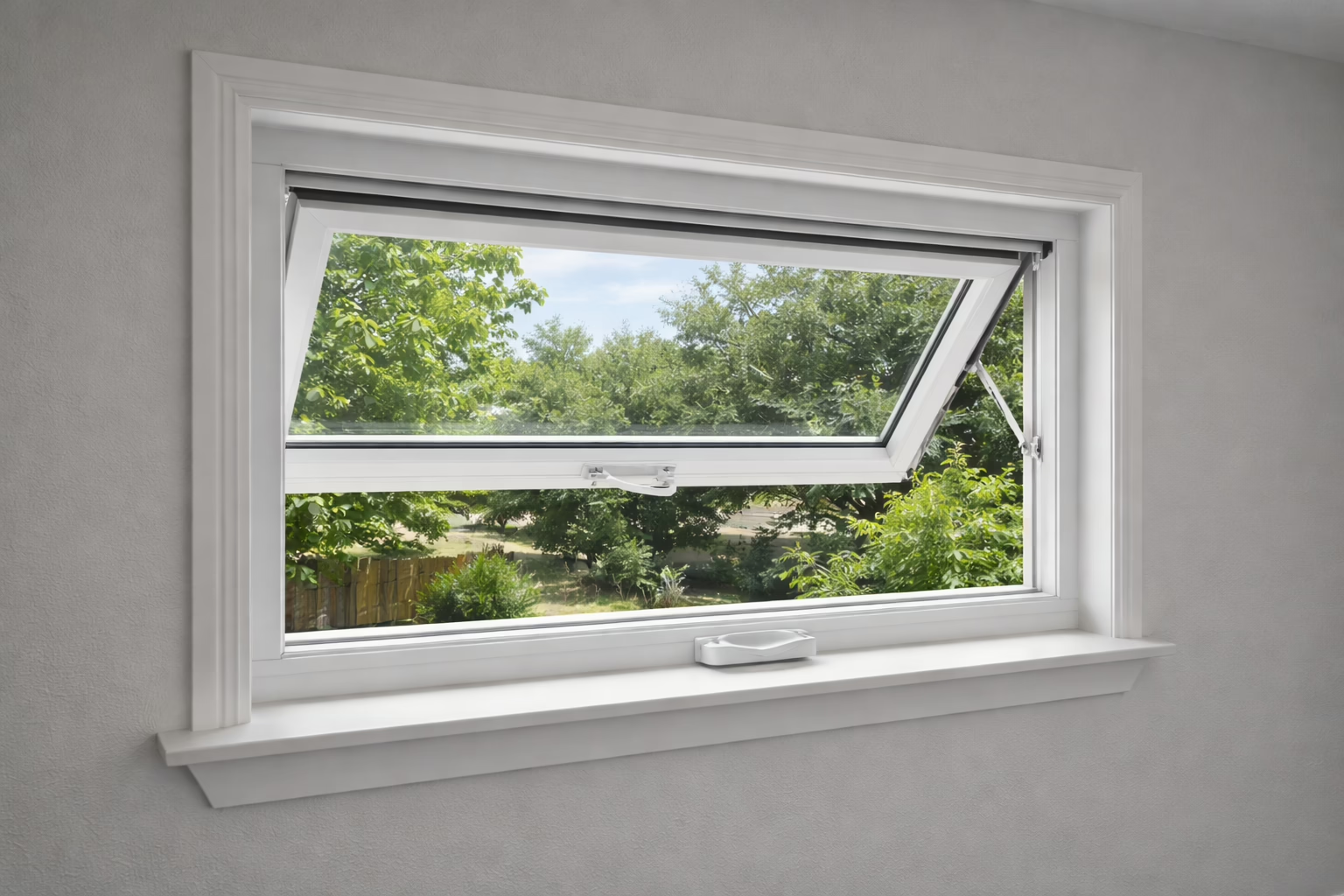
Awning windows are hinged at the top and open outward, creating a small canopy over the opening that allows ventilation while shedding rain. They are chosen for locations where controlled airflow matters more than maximum ventilation — bathrooms, high wall placements, narrow wall sections, and alongside fixed picture windows where adding an operable unit without disrupting the glass area is the goal. Their compression-seal design outperforms double hung windows on air and water infiltration, making them a strong specification for tight-sealing applications in Austin’s heat. For the full index of window styles and configurations we install in the Greater Austin Metro, see the replacement window types overview, or start with the replacement windows overview for the full picture.
Controlled Ventilation with Weather Protection
Awning windows are often selected for locations where full-size operable windows aren’t practical, but ventilation is still needed. They’re a functional solution rather than a focal-point window — chosen for what they do in a specific location, not for architectural impact.
🌧️ Rain-Tolerant Airflow
Because the sash opens outward from the top, it acts as a small canopy over the opening. You can leave an awning window cracked during light rain without water getting in — a practical advantage in Central Texas where afternoon storms can roll in quickly.
🪟 Pairing Flexibility
Awning windows are commonly placed above or below fixed picture windows to add ventilation without breaking up the glass area. The combination gives you a large, uninterrupted view with controlled airflow — something neither window type provides on its own.
How Awning Windows Work
Awning windows operate on top hinges and open outward using a crank or handle. When open, the sash forms a small canopy that helps deflect rain while still allowing fresh air inside.

Performance Considerations
Awning windows perform best when their limitations are understood and planned for. They excel at controlled ventilation in specific locations — not maximum airflow across a room.
Airflow
The opening angle and sash size limit total airflow compared to a casement or slider of the same width. Awning windows move air effectively for the immediate area — a bathroom, utility room, or narrow wall section — but are not the right choice if cross-ventilation for a large room is the goal.
⚠ Controlled — not maximum airflow
Water Management
The top-hinge design sheds water well when the window is open, but the flashing at the head and sides must be installed correctly to prevent intrusion when the window is closed. The hinge point is where most awning window water problems originate — a worn seal or improperly flashed head allows water to track inward along the hinge mechanism.
⚠ Hinge flashing is the critical detail
Security
The limited opening size and outward swing make awning windows difficult to enter from the outside when open. For ground-floor installations in areas where security is a consideration, this is a practical advantage over casements or sliders that open wider and are easier to access.
✓ Limited opening is a security benefit
Egress
Most standard awning window sizes do not meet IRC egress minimums — the opening angle limits the net clear area below the required 5.7 square feet. Awning windows should not be relied upon for egress compliance in bedrooms without verifying the specific unit’s performance data against IRC minimums.
✕ Generally does not meet egress minimums
If egress compliance is required, see the egress window requirements page for IRC dimensions and what window types qualify.
Awning vs. Casement
Awning and casement windows share similar compression sealing mechanics — both press the sash firmly against the frame when closed, which is why both outperform double hung windows on air and water infiltration. But they serve different roles. Awning windows are the right call for compact spaces, high wall locations, and rain-exposed openings where a smaller controlled vent is the goal. Casement windows are the right call when you want a wider opening, maximum ventilation, or a primary operable unit in a bedroom or living space — casements open the full sash area and can meet egress requirements in standard residential sizes.
Installing Awning Windows Correctly
Awning windows depend on proper slope, flashing, and sealing to perform correctly over time. Because the sash opens outward from the top, water management details at the hinge and head matter more than with many other styles.
🔧 Flashing and Sealing
The head flashing must extend under the exterior cladding and slope away from the wall. The hinge mechanism sits at the top of the frame — any gap or deteriorated seal at the hinge point creates a direct path for water. These details are set during installation and are difficult to address after the window is in place.
📐 Alignment and Operation
An awning window that isn’t perfectly square in the rough opening will bind when operated and won’t close with even pressure against the weatherstripping. Uneven closure is how air and water infiltration starts. Getting the opening square and shimmed correctly before the unit goes in determines how the window operates for its entire service life.
See how we install windows as a water-managed system: window installation process.
Frequently Asked Questions
Can an awning window be left open during rain?
During light to moderate rain, yes — the outward-opening sash acts as a canopy over the opening and deflects water away from the interior. During heavy rain or high winds, the window should be closed. Austin’s periodic intense storms can drive water horizontally, which will overwhelm the canopy effect regardless of how the window is designed.
Where are awning windows most commonly installed?
Bathrooms, laundry rooms, and narrow wall sections where a taller window would be impractical. They’re also frequently placed above or below picture windows to add ventilation to a fixed glass installation. High wall placement — above eye level — is a common use case where the outward swing clears occupants and furniture while still providing airflow.
Do awning windows meet egress requirements?
Generally no. Most standard awning window sizes do not produce a net clear opening large enough to meet IRC egress minimums. The opening angle limits the usable clear area, and few standard residential sizes reach the required 5.7 square feet. Do not use an awning window as the sole operable window in a bedroom expecting it to satisfy egress requirements without verifying the specific unit’s performance data first.
How do awning windows seal compared to double hung windows?
Awning windows use compression sealing — when the crank closes the sash, it presses the entire perimeter against the frame gasket. Double hung windows use sliding seals, which allow more air infiltration over time as the weatherstripping wears. For locations where tight sealing matters — particularly in Austin’s hot summers where HVAC efficiency is a priority — awning windows outperform double hung on this metric.
Does installing an awning window require a permit in Austin?
A like-for-like replacement in an existing rough opening typically does not require a permit. If the opening size or location is changing, a permit is required through Austin’s Development Services Department. For awning windows being added to an existing fixed opening or installed in a new location, confirm the scope with Development Services before the project is finalized.
Find Out Where Awning Windows Make Sense in Your Home
We’ll assess your openings, exposure, and ventilation goals during the initial consultation — before any work is scoped or priced.
- Window type and placement reviewed for your specific situation
- No deposit required to get started
- Written scope before any work begins
- 10-year workmanship warranty on every installation