

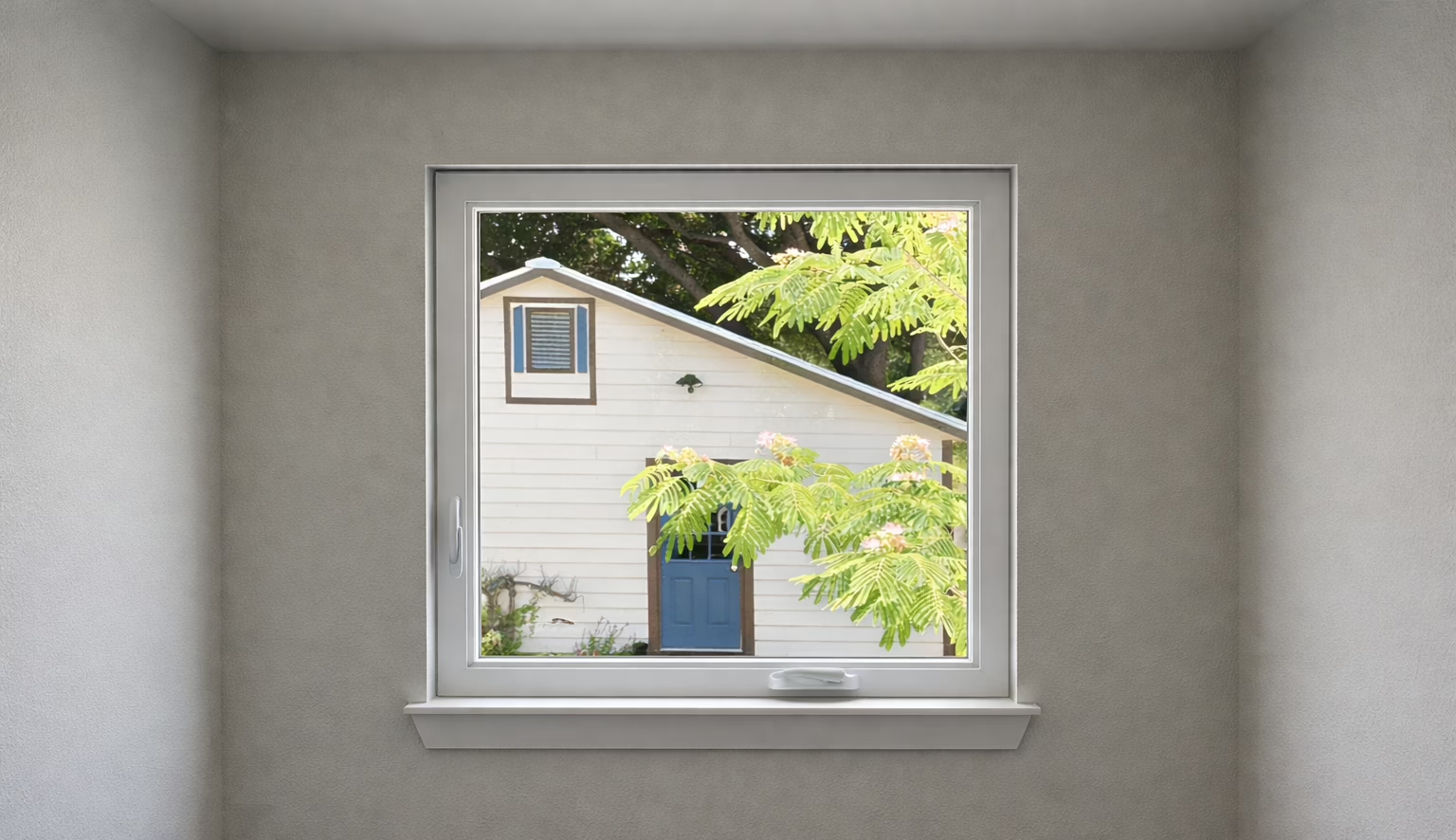
Casement Replacement Windows: How They Work and When They Make Sense
Casement windows are hinged at the side and open outward on a crank, closing against the frame with a compression seal that makes them among the tightest-sealing operable window types available. When properly installed, the sash presses against a continuous perimeter gasket — the same closing mechanic as a door — eliminating the sliding weatherstrip interfaces that degrade over time in double hung and sliding windows. That sealing advantage comes with one real constraint: casements require exterior clearance for the outward swing, which makes them impractical near patios, walkways, decks, and tight side yards. In Central Texas, where cooling season is long and air infiltration drives HVAC load, casements are often the strongest operable window specification where that clearance exists. For the full index of window styles and configurations we install in the Greater Austin Metro, see the replacement window types overview, or start with the replacement windows overview for the full picture.
Maximum Seal with Intentional Airflow
Casements are a performance-first choice. They open fully, can angle the sash to direct outdoor air into the living space rather than simply allowing it to pass through, and seal more completely when closed than most other operable window configurations. The tradeoffs are specific — they need exterior swing clearance, the hardware carries real load and needs to be quality-grade, and installation precision matters more than with sliding types. When those conditions are met, casements consistently outperform other operable window types on sealing and ventilation.
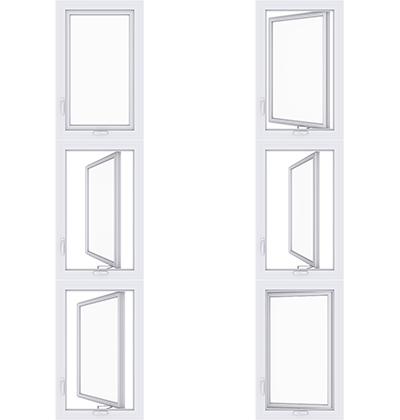
How Casement Windows Perform
Sealing and Energy Performance
The compression seal is what separates casements from sliding and double hung windows on air infiltration. When the crank pulls the sash closed, it draws the entire perimeter of the sash against a continuous gasket with even pressure — the same principle as a door. There is no sliding interface, no track gap, and no rail-to-jamb contact point that wears over time. The result is a window that maintains its seal over its service life in a way that weatherstripped sliding types cannot. In Central Texas, where HVAC runs most of the year and air infiltration is a direct driver of energy cost, this distinction is meaningful in practice — not just on paper. The compression seal is only as effective as the installation, however. A unit that isn’t set square will fail to close with even perimeter pressure, and no amount of hardware adjustment will compensate for a racked frame.
Ventilation and Comfort
Casements open fully — the entire sash width clears the opening — and because the open sash angles outward, it can be positioned to catch and direct breezes into the room. This makes them particularly effective in rooms that feel stuffy or thermally uneven: a casement on the prevailing breeze side of a room will move air more deliberately than a double hung or slider of the same size. The crank mechanism also makes operation easy in locations that would be hard to reach with a conventional sash — over counters, in utility rooms, or in high wall positions.
Egress Compliance
Casements are one of the most reliable window types for egress compliance. Because the sash clears the full opening when open, the net clear area equals the rough opening minus the frame — in standard residential sizes, most casements reach or exceed the IRC minimum of 5.7 square feet. This makes them a common specification for bedrooms where egress compliance is required and the window type is being chosen or replaced. If egress compliance is a requirement, verify the specific unit’s net clear opening against IRC minimums before ordering — the egress window requirements page has the full dimensional breakdown.
Hardware and Long-Term Operation
Casement hardware — the hinges, the crank operator, and the multi-point lock — carries load every time the window is opened, held open in wind, and closed. Quality hinges and a well-engineered crank mechanism matter more here than in a double hung where the sash is supported by the frame channel. A casement that closes smoothly and locks without force is a correctly installed casement on quality hardware. One that binds, requires force to latch, or doesn’t close with even perimeter pressure has either an installation problem, a hardware quality problem, or both.
Clearance Planning
The outward swing is the limiting factor for casements. The sash needs unobstructed clearance through its full arc — typically 18 to 24 inches depending on the unit width. Walkways, patios, decks, landscaping, HVAC equipment, and tight side yards all need to be evaluated before specifying a casement for that opening. Where exterior clearance is limited, slider windows or awning windows are often the practical alternative — awnings in particular work well where vertical clearance exists but horizontal swing does not.
Casement vs. Double Hung
These are the two most common operable window types, and they solve different priorities. Casements lead on sealing performance, directed airflow, and egress compliance — the compression seal and full-opening sash are genuine advantages that double hungs don’t replicate. Double hung windows lead on operational familiarity, exterior clearance flexibility, and top-and-bottom ventilation — opening both sashes allows warm air to exit high while cooler air enters low, which is a natural ventilation pattern casements can’t produce. The choice is usually driven by what the specific opening requires: if clearance exists and sealing performance is the priority, casement. If clearance is tight, exterior features conflict with a swing, or the room benefits from split-sash ventilation, double hung.
Where Casement Windows Make Sense
Living spaces with noticeable drafts, heat gain, or temperature unevenness — casements address the air infiltration contributing to those conditions more effectively than sliding types. Bedrooms where egress compliance is required and the opening geometry supports a full casement sash. Rooms where directing outdoor airflow into the space matters — casements on the windward side of a room move air more deliberately than other operable types. Openings where uninterrupted glass and unobstructed views are part of the design intent — no center rail, no meeting rail, just continuous glass. High or over-counter locations where crank operation improves accessibility for openings that would be awkward to operate with a conventional sash lift. Combinations alongside picture windows or awning windows in larger wall openings where fixed glass handles the view and operable units handle the ventilation.
Installation Details That Matter for Casements
Casements are less forgiving than many other window types because the compression seal’s effectiveness depends entirely on whether the sash closes with even perimeter pressure — and that depends on the unit being set perfectly square. A rough opening that isn’t level and plumb, or a unit shimmed without consistent perimeter contact, will produce a casement that binds, fails to latch smoothly, or leaves a gap in the seal at one corner. These are installation problems set permanently at the time of installation. The flashing details at the head and sides matter here as well — because the sash opens outward, water management at the hinge side and head is more complex than on a fixed window, and any gap in the flashing is a direct path for water intrusion. The full approach to how we install windows as a water-managed building envelope system is on the window installation process page.
Frequently Asked Questions
Why do casement windows seal better than double hung or sliding windows?
The compression seal. When a casement closes, the crank draws the sash against a continuous perimeter gasket with even pressure around the entire frame — the same mechanism as a door. Double hung and sliding windows use weatherstripped interfaces that the sash slides against, which allow more air movement and degrade over time as the strips compress and wear. The compression seal doesn’t degrade from the act of opening and closing — it either seals correctly or it doesn’t, based on whether the unit is installed square. In Austin’s long cooling season, that difference in air infiltration translates directly to HVAC load.
Can casement windows meet egress requirements?
Yes — casements are one of the most reliable window types for egress compliance. Because the sash clears the full opening, the net clear area is close to the rough opening size minus the frame. In standard residential sizes, most casements meet or exceed IRC minimums of 5.7 square feet net clear area with 20-inch minimum width and 24-inch minimum height. Verify the specific unit’s net clear opening before ordering — the egress window requirements page has the full dimensional requirements and what IRC compliance involves.
How much exterior clearance does a casement window need?
Typically 18 to 24 inches through the full arc of the sash swing, depending on the unit width. The sash needs to clear unobstructed from the closed position through fully open. Walkways, patios, landscaping, HVAC equipment, and deck railings all need to be evaluated against that arc before specifying a casement for that opening. If clearance is limited, awning windows or slider windows are usually the practical alternative.
My casement window is hard to crank or doesn’t close fully — what causes that?
The most common causes are a frame that’s no longer square (from settling or movement in the rough opening), worn or damaged crank hardware, and debris in the hinge mechanism. A casement that closed smoothly at installation and gradually became difficult is usually a frame alignment issue — the rough opening has shifted enough to prevent even sash-to-frame contact. A casement that was never smooth from day one is usually an installation problem. Hardware-specific issues — stripped crank gears, seized hinges — are replaceable on most quality window brands. This is also covered on the windows hard to open page.
Does installing a casement window require a permit in Austin?
A like-for-like replacement in the same rough opening typically does not require a permit. Enlarging an existing opening, adding a new opening, or installing a casement in a location that previously had a different window type with a different rough opening size all require a permit through Austin’s Development Services Department. Confirm the scope with Development Services before finalizing the project.
Want to Know if Casements Are Right for Your Openings?
We’ll assess your exterior clearance, ventilation goals, and any egress requirements during the initial consultation — before any work is scoped or priced.
- Window type matched to your specific opening conditions
- No deposit required to get started
- Written scope before any work begins
- 10-year workmanship warranty on every installation