

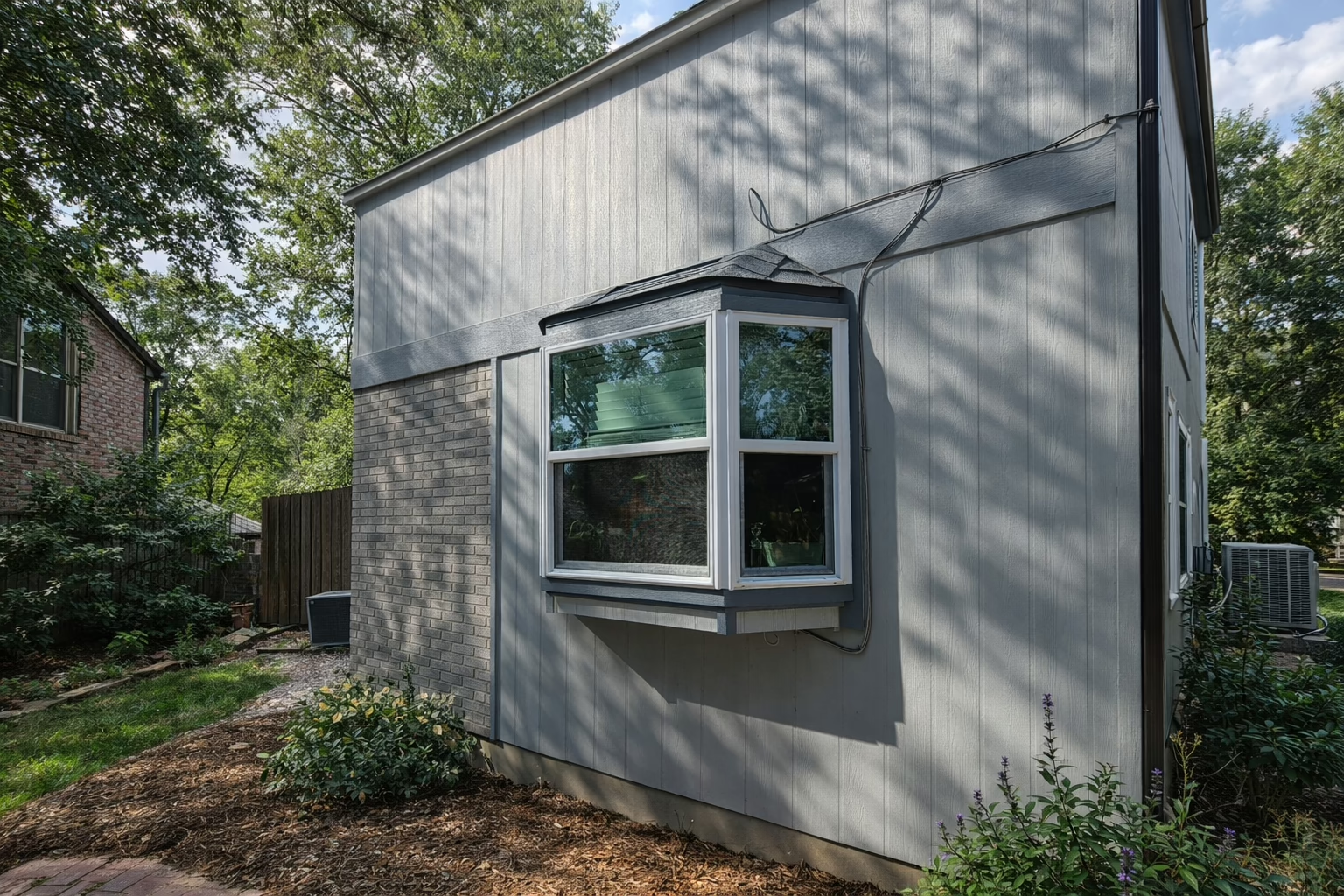
Garden Windows: Style, Function, and Where They Make Sense
Garden windows project outward from the exterior wall to create a small shelf-like space while bringing in natural light from multiple angles. They are most commonly installed over kitchen sinks and counters — chosen for the combination of usable surface space, multi-directional daylight, and the way they change the feel of a room without expanding its footprint. Because the outward projection increases rain exposure and structural load, correct flashing, support, and sealing are more critical than with flat replacement windows. For the full index of window styles and configurations we install in the Greater Austin Metro, see the replacement window types overview, or start with the replacement windows overview for the full picture.
Light, Space, and a Built-In Shelf
Garden windows are chosen less for ventilation performance and more for how they change the feel and function of a space. They add usable surface area without expanding the room’s footprint, and they capture light from directions a flat window cannot.
🌿 Kitchen-Friendly Design
Garden windows are most commonly installed over kitchen sinks or counters, where the shelf and multi-angle glass work together. The projection creates a small dedicated space that doesn’t compete with the rest of the room.
☀️ Multi-Angle Daylight
Unlike a flat window that only faces one direction, a garden window captures light from the front and both sides throughout the day. This makes them particularly effective on north-facing walls where a standard window would bring in limited direct light.
How Garden Windows Work
Garden windows extend beyond the exterior wall and are built as a small window box with glass on multiple sides. Many designs include operable side vents for airflow, depending on the configuration.
Performance and Practical Considerations
Garden windows are more complex than standard flat window replacements. Their performance depends heavily on proper support, sealing, and water management.
Ventilation
Side vents on garden windows offer limited airflow — enough for the immediate area but not a substitute for whole-room ventilation. If cross-ventilation is a primary goal, a casement or double hung in the same space will outperform a garden window on that metric alone.
⚠ Limited — side vents only
Energy Performance
The fixed glass panels on a properly sealed garden window perform well thermally. The risk area is the perimeter — the box construction creates more sealing surfaces than a flat replacement, and any gaps at the top flashing or side returns are where air and water intrusion begins.
✓ Good when installed and sealed correctly
Water Management
The outward projection increases rain exposure on three sides. A properly installed garden window includes a sloped roof section, continuous flashing at the top and sides, and a sill that drains away from the wall. Skipping any of these steps is how a garden window becomes a water intrusion problem within a few seasons.
⚠ Requires complete flashing at all surfaces
Structural Support
Garden windows carry more weight than flat replacements — the box, the glass on three sides, and whatever is placed on the shelf. The rough opening framing and support brackets must be adequate before installation. On older homes, the existing sill framing may need reinforcement before the unit goes in.
⚠ Verify sill support before installation
Garden vs. Bay & Bow
Both styles project outward, but they serve very different purposes and scales. Garden windows are a contained kitchen upgrade — compact projection, a functional shelf, and added light without structural modifications to the floor or roofline. Bay and bow windows are a different scale of project entirely: large architectural impact, expanded floor space, a seating alcove or significantly wider view, and considerably more structural involvement and cost. If the goal is a room transformation rather than a kitchen accent, bay and bow is the right conversation.
Installing Garden Windows Correctly
Because garden windows project outward, installation details matter more than with flat replacements. Proper support, flashing, and sealing determine whether the window performs — or becomes a leak risk.
🔧 Structural and Sealing Focus
Support brackets must be rated for the load, anchored into framing — not just the sill. The top flashing must extend under the exterior cladding, not just over it. Side returns need continuous sealant and trim integration. These aren’t optional details; they’re the difference between a garden window that lasts and one that leaks within a few years.
🔆 Glass Selection
Glass on three sides means solar exposure from multiple angles throughout the day. In Central Texas, Low-E and solar control glass are important for managing heat gain, particularly on east- and west-facing kitchen walls where morning and afternoon sun hits the side panels directly.
See how we install projecting window systems: window installation process.
Frequently Asked Questions
Can a garden window serve as an egress window?
Only if the operable side vents meet IRC net clear opening minimums — 5.7 sq ft of clear area, 20-inch minimum width, and 24-inch minimum height. In practice, most garden window side vents are too small to qualify. If the room is a bedroom requiring egress compliance, do not assume the garden window satisfies the requirement. Verify the specific unit’s performance data against IRC minimums before installation.
Does installing a garden window require a permit in Austin?
A like-for-like replacement in the same rough opening typically does not require a permit. If the opening is being enlarged or modified to accommodate the garden window’s projection requirements, a permit is required through Austin’s Development Services Department. Confirm the scope with Development Services before finalizing the project.
How much does a garden window installation cost in Austin?
Garden window installation costs more than a standard flat replacement of the same rough opening size — the unit itself is more complex, and the installation involves more flashing, support, and sealing work. The exact number depends on the opening size, wall construction, and whether any framing reinforcement is needed. For a broader look at what window replacement costs in the Greater Austin Metro, see the replacement window cost page. A written scope before any work begins is the only reliable way to establish the specific number for your project.
How do I maintain a garden window?
The primary maintenance items are the perimeter sealant and the flashing. Inspect the exterior caulk at the top, sides, and sill annually — particularly after significant rainfall or temperature swings. Any cracking or separation at the flashing line should be addressed before water finds its way behind the wall. The side vents, if operable, should be checked for smooth operation and weatherstripping condition each year.
Are garden windows a good fit for Austin’s climate?
Yes, with the right glass selection. The multi-angle light is an asset, but it also means more solar exposure than a flat window of the same size. Low-E glass with a low solar heat gain coefficient (SHGC) is important for south-, east-, and west-facing installations. Austin’s periodic heavy rainfall also makes proper flashing and water management non-negotiable — a garden window without complete exterior integration will develop water intrusion issues over time.
See If a Garden Window Is Right for Your Kitchen
We’ll assess your opening, exposure, and framing during the initial consultation — before any work is scoped or priced.
- Structural support and flashing reviewed before any unit is ordered
- No deposit required to get started
- Written scope before any work begins
- 10-year workmanship warranty on every installation