

Picture Windows: Where They Fit Best and What to Consider
Picture windows are fixed, non-operable windows designed to maximize natural light and uninterrupted views. Because they have no moving parts, they eliminate the air-leak paths that operable windows develop over time — making them one of the most thermally efficient window configurations when correctly specified and installed. Performance is determined almost entirely by glass selection and installation quality rather than hardware or operation. They don’t provide ventilation or egress and are typically paired with adjacent operable units where those functions are needed. For the full index of window styles and configurations we install in the Greater Austin Metro, see the replacement window types overview, or start with the replacement windows overview for the full picture.
Light, Views, and Thermal Simplicity
Picture windows are chosen when the priority is visual impact and thermal performance — not ventilation. They frame views, maximize daylight, and contribute to the building envelope’s efficiency without adding mechanical complexity. The tradeoff is simple and honest: no airflow, no egress, and no adjustment after installation. In rooms where those tradeoffs are acceptable, picture windows are often the strongest window specification available.

Recent Picture Window Projects Across the Austin Area
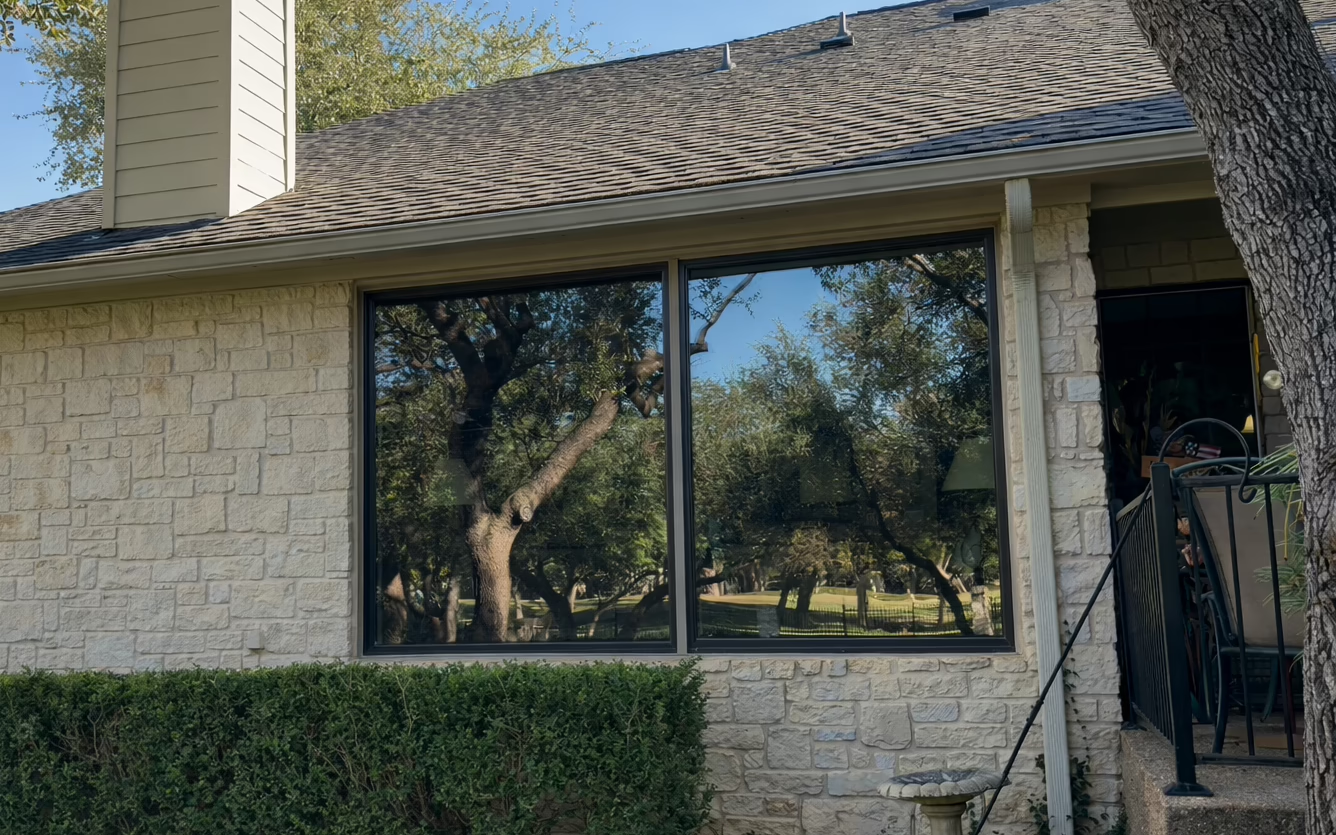
Real picture window replacements completed for Austin-area homeowners — before and after, different materials, different conditions. This is what a properly installed picture window looks like when the framing, flashing, and finish details are handled correctly.


How Picture Windows Perform
Energy Efficiency and Thermal Performance
The thermal advantage of a fixed window is structural: there are no weatherstripped tracks, no sash-to-frame sliding interfaces, and no hardware penetrations — all of which are air-leak paths in operable windows that worsen as the window ages. A picture window’s perimeter seal is set once at installation and doesn’t degrade from operation. In Central Texas, where HVAC load is driven heavily by solar gain and air infiltration, a correctly specified picture window holds its performance longer than an equivalent operable unit.
Glass selection is everything for a fixed window. With no sash hardware to manage, the entire performance outcome — solar heat gain, visible light transmission, U-value — is determined by the glass package. Low-E coatings with a low solar heat gain coefficient (SHGC) are essential for south- and west-facing picture windows in Austin, where the combination of large glass area and sustained solar exposure creates significant heat gain without proper solar control. See the window materials overview for how frame material affects sightline width on large picture window openings.
Ventilation and Egress
Picture windows provide neither ventilation nor egress. In most homes they are paired with adjacent operable units — commonly casements or awning windows — to meet airflow needs while preserving the large uninterrupted glass area. For bedrooms or habitable spaces where egress compliance is required, the picture window cannot satisfy the requirement regardless of size — see the egress window requirements page for what qualifies.
Frame Material and Sightlines
For large picture window openings, frame material affects how much of the view the frame itself consumes. Vinyl produces a wider frame profile at comparable structural ratings. Fiberglass — specifically Pella’s Impervia line — allows slimmer frames at the same structural rating, producing a larger visible glass area in the opening. For wide picture windows where maximizing the view is part of the design intent, fiberglass is worth the cost premium. For standard residential sizes, vinyl performs well and is the more common specification.
Where Picture Windows Work Best
Picture windows are most effective in locations where light and views are the primary driver and ventilation can be provided by an adjacent unit. Living rooms and great rooms with scenic views or large wall openings where the glass is meant to read as the dominant element. Dining areas and open-plan spaces where daylight improves the room throughout the day. Architectural groupings where a fixed center unit is flanked by operable casements or awnings. High or hard-to-reach locations — above doors, in stairwells, on high walls — where opening the window isn’t practical and ventilation is handled elsewhere. They are also the natural pairing for geometric window configurations where a fixed architectural unit is placed above or beside a standard rectangular opening.
Installation Details That Matter
Because picture windows are fixed, installation quality is immediately exposed — there are no moving parts to mask an issue, and no operational adjustment to compensate for a poorly set unit. Proper head flashing that runs under the exterior cladding, continuous perimeter air sealing, and correct setting of the unit in the rough opening all determine whether the window holds its thermal performance or develops a water intrusion problem at the perimeter. For large-format picture windows, the structural integrity of the rough opening framing matters more than with standard-size units — the frame carries more dead load and sees more differential movement from thermal expansion. Details on how we approach the installation as a water-managed building envelope system are on the window installation process page.
Frequently Asked Questions
Are picture windows more energy efficient than operable windows?
Generally yes, for the same glass package. Fixed windows eliminate the air-leak paths that operable windows develop at weatherstripped interfaces, and those paths worsen as the window ages. The performance advantage of a picture window is most significant in Central Texas, where air infiltration and solar gain are the dominant HVAC load drivers. That said, the glass package matters far more than the operable vs. fixed distinction — a picture window with a poorly specified glass package will underperform a quality casement with proper Low-E and solar control glass.
Can a picture window serve as an egress window?
No. Picture windows are fixed and cannot be opened. A fixed window cannot satisfy egress requirements under any circumstance, regardless of size. If the room is a bedroom requiring egress compliance, a separate operable window must be installed to meet IRC minimums. See the egress window requirements page for what qualifies and what dimensions apply.
What glass should I specify for a picture window in Austin?
For south- and west-facing picture windows, Low-E glass with a low solar heat gain coefficient (SHGC) is the most important specification. The large fixed glass area means more solar exposure than most operable windows, and without proper solar control the heat gain through the glass will be significant during Austin’s long summers. For north-facing picture windows, solar gain is less of a concern and the specification emphasis shifts to U-value for overall thermal performance. We match the glass package to the orientation and room use — there isn’t a single right answer for every opening.
What window types pair best with picture windows?
Casement windows are the most common pairing — they provide ventilation and can meet egress requirements while the picture window handles the large glass area. Awning windows are frequently placed above or below picture windows to add ventilation without breaking up the glass area. Geometric windows are commonly placed above picture windows as architectural accents. The pairing is usually driven by what the room needs in terms of airflow and egress, with the picture window handling the view and light load.
Does a picture window require a permit in Austin?
A like-for-like replacement in the same rough opening typically does not require a permit. Enlarging the opening to accommodate a wider or taller picture window does require a permit through Austin’s Development Services Department. If the installation involves structural modifications — such as altering or removing a header — a permit is required regardless of whether the finished opening size changes.
Want to Know if a Picture Window Is Right for Your Opening?
We’ll assess your opening, orientation, and ventilation needs — and give you a straight recommendation on glass package and whether a fixed or operable unit makes more sense.
- Glass package matched to your orientation and room use
- No deposit required to get started
- Written scope before any work begins
- 10-year workmanship warranty on every installation