

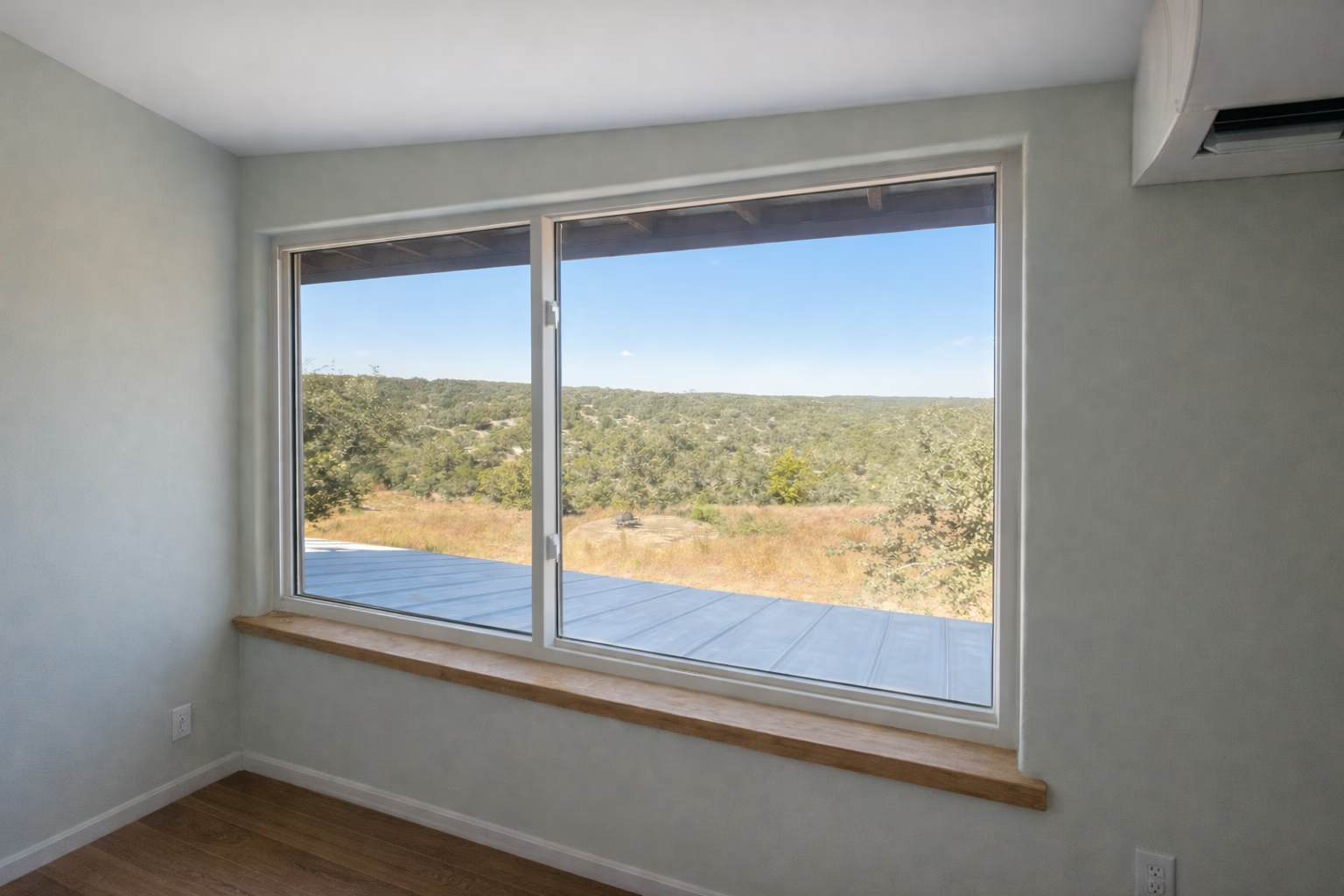
Slider
Sliding windows operate horizontally along a track, making them a natural fit for wide openings where vertical operation is awkward and exterior clearance is limited — near patios, decks, walkways, and tight side yards. The tradeoff is sealing: sliders use a sliding weatherstrip interface rather than a compression seal, which means air infiltration tends to be higher than an equivalent casement or awning window and increases over time as the weatherstrip wears. For wide openings where the outward swing of a casement isn’t practical and ease of operation matters more than maximum sealing performance, sliders are a strong and practical choice. For the full index of window styles and configurations we install in the Greater Austin Metro, see the replacement window types overview, or start with the replacement windows overview for the full picture.
Wide Openings with Simple, Space-Saving Operation
Sliding windows are chosen for practicality. They solve wide openings cleanly, avoid swing conflicts with exterior features, and offer a familiar, easy day-to-day experience. They are not chosen for maximum ventilation or sealing performance — those are areas where other window types outperform them. Understanding that distinction upfront is what makes slider specification go well.

How Sliding Windows Work
A sliding window has one operable sash that glides left-to-right (or right-to-left) on rollers along a track, with the other sash fixed. Some configurations allow both sashes to move. The open sash covers roughly half the total window width, so ventilation is limited to approximately half the opening area — a single-slider in a 48-inch opening provides about 24 inches of vent width.
How Sliding Windows Perform
Sealing and Air Infiltration
This is the most important performance distinction to understand before specifying a slider. Sliding windows use a brushed or pile weatherstrip that the sash slides against — a friction interface that allows some air movement and degrades over time as the strip compresses and wears. Casement and awning windows use compression sealing — the crank pulls the sash firmly against a continuous perimeter gasket, sealing it more like a door than a sliding panel. In Central Texas, where cooling season is long and air infiltration directly affects HVAC load, the sealing difference is real. If tight air sealing is a primary specification goal, casement or awning is the stronger call. If wide opening geometry makes those types impractical, quality replacement-grade vinyl sliders from brands like Anlin or ProVia deliver solid performance within the limits of the sliding seal design.
Tracks, Rollers, and Long-Term Operation
Sliders rely on smooth tracks and quality rollers. Dirt and debris accumulation in the track is the most common cause of dragging and uneven movement — it is also entirely preventable with occasional cleaning. Quality replacement-grade vinyl sliders use rollers engineered for long-term smooth operation; builder-grade slider tracks are thinner and wear faster. A slider that isn’t perfectly level in the rough opening will drag from day one and develop latch alignment problems over time. Getting the opening level, square, and shimmed correctly before the unit goes in is the single most important installation detail for long-term operation.
Egress Considerations
A slider can qualify as an egress window, but the geometry requires attention. The net clear opening equals the open panel area only — roughly half the total window width. To reach the IRC minimum of 5.7 square feet with a 24-inch minimum height, the open panel needs to be wide enough to produce that area. A slider in a wide rough opening can qualify; a standard-size single slider often cannot without verification against the specific unit’s performance data. If the room is a bedroom requiring egress compliance, confirm the specific unit’s net clear opening against IRC minimums before ordering. See the egress window requirements page for the full dimensional requirements.
Sliding vs. Casement
Sliders and casements solve different problems. Sliders are the right call when the opening is wide, exterior clearance for a swinging sash is limited, and operational simplicity is the priority. Casements are the right call when tight air sealing, maximum ventilation, and egress compliance are the priorities — and when the exterior clearance for an outward swing exists. For wide openings near patios or decks where a casement swing would be a conflict, sliders are often the only practical option.
Where Sliding Windows Make the Most Sense
Wide living room, family room, and bedroom openings where a double-hung or casement would require a narrower unit to fit the same rough opening. Rooms adjacent to patios, decks, walkways, or tight side yards where an outward-swinging sash would conflict with exterior features. Spaces where the wide horizontal glass area and unobstructed sightline are part of the design intent — large glass, low profile, minimal frame interruption. They are also commonly specified alongside picture windows in wide wall openings where a fixed center unit and sliding flanking units together fill the opening without requiring operable sashes that swing outward.
Installation Details That Matter for Sliders
Sliding windows are especially sensitive to level, square, and plumb openings. A sill that isn’t level will cause the sash to drift toward one end of the track under gravity, wearing the rollers unevenly and eventually preventing the latch from engaging. A jamb that isn’t plumb will cause the sash to bind at the corners. These are installation problems — not product problems — and they are set permanently at the time of installation. Proper opening prep, shimming, and perimeter sealing before the unit goes in determines how the window operates for its entire service life. Details on how we approach the installation as a system are on the window installation process page.
Frequently Asked Questions
Do sliding windows seal as well as casement windows?
No — and this is the most important performance distinction between the two types. Sliding windows use a weatherstrip that the sash slides against, which allows more air infiltration than the compression seal that casement and awning windows use. The compression seal presses the sash firmly against a continuous perimeter gasket when closed, producing significantly tighter sealing. In Central Texas, where cooling season dominates and air infiltration affects HVAC load directly, the difference is worth understanding before specifying. If tight sealing is the priority and the exterior clearance exists for an outward swing, casement is the stronger specification. If the wide opening geometry makes a casement impractical, a quality replacement-grade slider is still a meaningful upgrade over a worn builder-grade window.
Can a sliding window qualify as an egress window?
Yes, but verification is required. The net clear opening of a slider equals the open panel area only — roughly half the total window width. To meet IRC egress minimums of 5.7 square feet net clear area with a 24-inch minimum height and 20-inch minimum width, the open panel needs to be large enough to reach those dimensions. A slider in a wide rough opening can qualify; a standard-size unit often cannot without checking the specific unit’s performance data. Do not assume egress compliance based on nominal window size — verify against the manufacturer’s net clear opening specification. See the egress window requirements page for the full dimensional requirements.
Why does my sliding window drag or not close properly?
The most common causes are debris in the track, worn or damaged rollers, and an opening that isn’t level. Track debris is the easiest fix — clean the track channel thoroughly and test operation. Worn rollers on an older window may be replaceable depending on the manufacturer. A window that never operated smoothly from installation day is typically an opening-prep problem: a sill that isn’t level causes the sash to drift and bind. If the window is new and already dragging, the installation should be reviewed before the issue is attributed to the product. This is also covered on the windows hard to open page.
Are sliding windows a good fit for Austin’s climate?
Yes, with appropriate glass specification. The wide horizontal format works well in Austin homes, particularly for openings near outdoor living areas. The main climate consideration is glass package — for south- and west-facing sliders, Low-E glass with a low SHGC is important for managing solar gain through the large glass area. The sealing limitation of sliding windows matters more in Austin than in cooler climates because the cooling season is long and air infiltration adds directly to HVAC load. Quality replacement-grade vinyl from brands like Anlin or ProVia delivers solid performance within those constraints.
Does installing a sliding window require a permit in Austin?
A like-for-like replacement in the same rough opening typically does not require a permit. If the opening size or location is changing, a permit is required through Austin’s Development Services Department. For wider slider installations that involve enlarging an existing opening or adding a new one, confirm the scope with Development Services before the project is finalized.
Not Sure if a Slider Is the Right Call for Your Opening?
We’ll assess your opening geometry, exterior clearance, and performance priorities — and give you a straight recommendation on whether a slider, casement, or another type makes more sense.
- Window type matched to your specific opening conditions
- No deposit required to get started
- Written scope before any work begins
- 10-year workmanship warranty on every installation