

Window Types
Different window types solve different problems — ventilation, cleaning access, light, views, egress compliance, and long-term air sealing performance. Choosing the wrong type for an opening produces problems that no amount of quality glass or frame material can fix. This page explains how to match window type to function before worrying about brands, materials, or pricing. For the full overview of replacement windows in the Greater Austin Metro, see the replacement windows overview.
Window Types We Install
If you already know the type you’re after, jump directly to the detailed pages below. If not, start with the decision guidance — most homeowners make better choices once they understand where and why each window type works best, rather than defaulting to what was there before.
How to Choose the Right Window Type
The right window type depends less on style preference and more on function — specifically, what the opening needs to do and where it sits in the home. Ventilation needs matter: bedrooms, kitchens, and bathrooms typically require operable windows, while living areas with good cross-ventilation can tolerate more fixed glass. Egress requirements are non-negotiable in sleeping rooms — windows must open and meet minimum size and clearance thresholds per code, which eliminates fixed options entirely in those locations. The egress windows page covers IRC requirements in detail.
Cleaning access matters more than most homeowners anticipate until they’re three stories up with a squeegee. Upper-floor windows benefit from types that tilt or swing inward for interior cleaning. Sun exposure affects type selection too — west- and south-facing openings in Austin’s climate benefit from window types with tighter compression seals and glass packages tuned for solar control. And opening geometry matters: wide horizontal openings often work better with sliders or picture windows than with double-hungs, while narrow tall openings are natural casement territory. Some windows exist primarily as architectural elements — they’re chosen for visual impact, not operation — and those decisions should be made deliberately rather than by default.
This is why most homes use several window types rather than a single style everywhere.
Common Window Type Selection Mistakes
The most common mistakes we see are function-based, not aesthetic. Installing fixed picture windows in bedrooms where egress is required is a code compliance problem that requires a full replacement to correct — not a minor fix. Overusing double-hung windows throughout a home where casements would seal better is a performance decision that adds up to measurable air infiltration over time, particularly on west and south exposures. Choosing sliders for high-sun-exposure openings without accounting for air sealing tradeoffs — sliders don’t compress-seal the way casements do — affects both energy performance and long-term weatherstripping wear. Treating bay and bow windows as cosmetic upgrades rather than structural systems leads to installation shortcuts that show up as water intrusion, operational binding, and settling within a few years. The common thread is selecting window types before understanding how the room is actually used and what the opening demands.
Ventilation-Focused Window Types
Single-Hung Windows
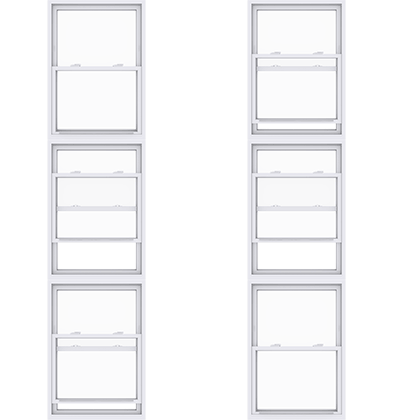
Single-hung windows have a fixed upper sash and an operable lower sash. They are commonly chosen for value-driven replacements and rooms where top-sash ventilation is not required. They are appropriate in locations where egress is not a code requirement and interior cleaning access is manageable from outside.
Double-Hung Windows
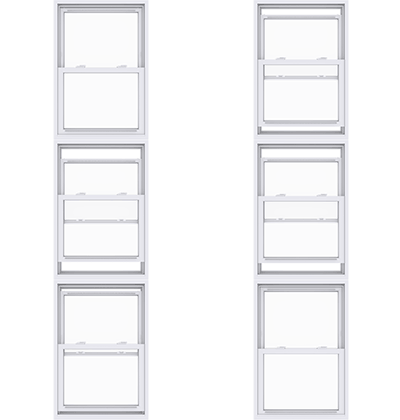
Double-hung windows allow both sashes to open and typically tilt inward for interior cleaning. They are the most common residential window type in Central Texas — used in bedrooms where ventilation, egress, and cleaning access are all requirements, and in any location where operational flexibility matters.
Casement Windows
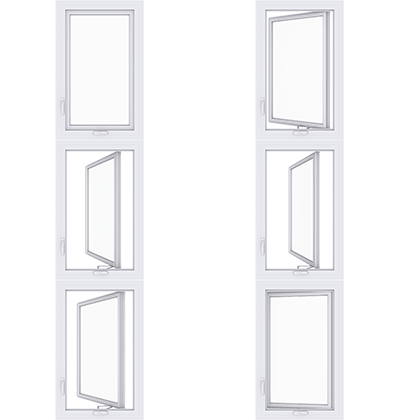
Casement windows swing open on side hinges and compress-seal when closed — which is why they outperform double-hungs on air infiltration in Central Texas conditions. They are used where maximum airflow, tight energy performance, and unobstructed views are priorities, and are a strong choice for west- and south-facing exposures where seal quality matters most.
Awning Windows

Awning windows hinge at the top and open outward, which allows ventilation during light rain — the outward swing sheds water away from the opening. They are commonly used in bathrooms, paired with picture windows for ventilation without sacrificing the view, and in locations where the sill height or exterior conditions make other operable types impractical.
Slider Windows
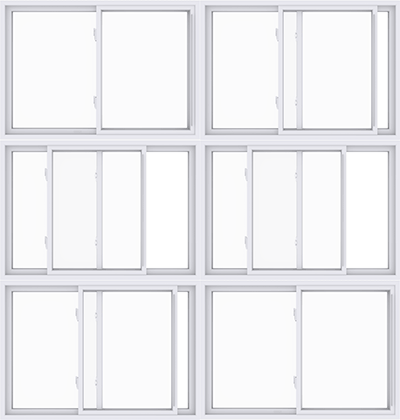
Slider windows operate horizontally and are suited for wide openings where vertical sash movement is not practical. They are commonly used in contemporary homes and in openings that are significantly wider than they are tall. Air sealing performance is lower than casements — a tradeoff worth understanding before specifying them on high-sun exposures.
Egress Windows
Egress windows are operable windows sized and configured to meet the International Residential Code requirements for emergency escape and rescue openings in sleeping rooms. In Central Texas homes, egress compliance is required in every bedroom — which means existing windows in older homes frequently need to be evaluated and often replaced to meet current requirements. Egress is not a style category; it is a code requirement that constrains which window types and sizes are permitted in a given room.
Light and View Window Types
Picture Windows
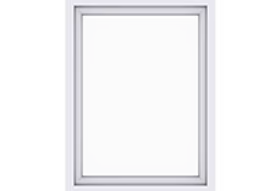
Picture windows are fixed — no sash operation, no weatherstripping wear, maximum glass area for light and views. Because they don’t open, they seal better than any operable type and are well suited to living areas, stairwells, and anywhere light is the primary goal. They are almost always paired with nearby operable windows when ventilation is needed in the space.
Geometric Windows
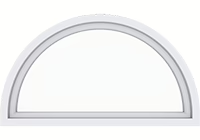
Geometric windows introduce architectural interest through non-rectangular shapes — arches, circles, triangles, trapezoids, and custom angles. These are typically fixed and used as accent elements above doorways, in gable ends, or alongside standard windows to add visual character. Custom fabrication means lead times and per-unit cost are higher than standard configurations.
Architectural and Feature Window Types
Bay and Bow Windows
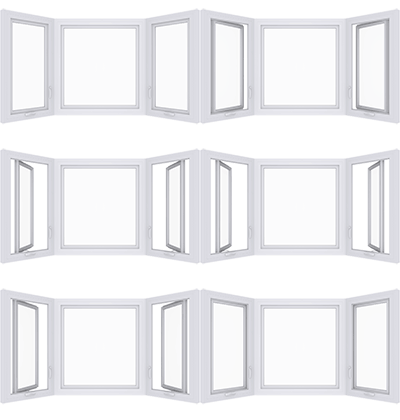
Bay and bow windows project outward from the wall plane and combine fixed and operable units in a single assembly. They add light, interior volume, and exterior architectural character — but they are structural systems, not cosmetic upgrades. Proper support, flashing, and roofing over the projection are required for long-term performance. Treating them as a straightforward window swap is the most common mistake in bay and bow installation.
Garden Windows
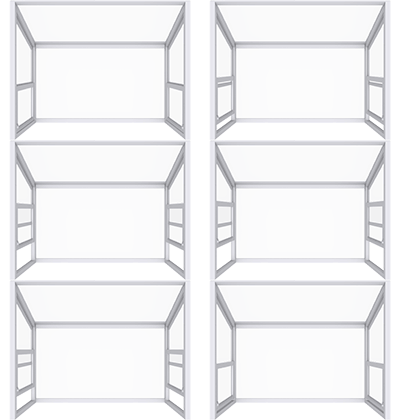
Garden windows extend outward similarly to a small bay but are typically used in kitchens — the shelf space and three-sided glass are suited to plants, herbs, and objects that benefit from direct light. They include operable side vents in most configurations and are installed into existing kitchen openings without structural modification in most cases.
Most Homes Use Multiple Window Types
It is rare for a home to use a single window type throughout. Common combinations that solve real functional problems include:
- Picture windows paired with awnings — maximum light and views with ventilation on demand
- Casements flanking a large fixed center — compression-sealing operable units around a focal glass area
- Double-hungs in bedrooms, casements in living areas — matching type to functional priority by room
- Geometric or architectural windows used selectively — visual impact at key locations without proliferating custom costs
Choosing the right combination across the home is as consequential as choosing the right window for any single opening. Once you know the types that fit your home, the next decisions are frame material, brand selection, and installation method.
Frequently Asked Questions
Which window type is best for energy efficiency in Central Texas?
Casement windows are the top performer on air infiltration because they compress-seal against the frame when closed — there is no sash sliding in a track, which is where most air leakage occurs in double-hung and slider configurations. For heat gain management, type is less important than glass package — low-E coatings tuned for solar control reduce heat gain significantly regardless of window type. The combination of casement operation with a solar-control glass package is the strongest specification for west- and south-facing openings in Austin’s climate.
Do all bedroom windows need to meet egress code?
Yes. The International Residential Code requires that every sleeping room have at least one emergency escape and rescue opening — a window that can be operated from inside without tools, meets minimum net clear opening dimensions, and is reachable from the floor. In Central Texas, this means many older homes have bedrooms where the existing windows are non-compliant by current standards. A professional assessment will identify which windows need to be replaced to meet egress requirements. Details on the specific measurements and what qualifies are covered on the egress windows page.
Can I replace a double-hung window with a casement in the same opening?
Usually yes, with some conditions. The rough opening dimensions need to accommodate the casement unit being specified, and the exterior cladding — particularly brick or limestone — may require modification if the opening is being resized. In most cases, switching from double-hung to casement in an existing opening is straightforward and does not require structural changes. We assess the opening during the initial evaluation and confirm what the conversion involves before quoting.
Are bay and bow windows more expensive to replace than standard windows?
Yes, significantly. Bay and bow windows involve more units, structural support requirements, roofing over the projection, and exterior finishing work that standard windows don’t require. Removal is also more complex because the projection typically includes framing, a roof or roof element, and interior trim that all need to be addressed. They are priced as a system, not as a per-window count. For a detailed breakdown of what affects total project cost, see our replacement window cost page.
What is the difference between a slider and a casement for a wide opening?
Both can work in wide openings, but they perform differently. A slider operates horizontally and only opens half the total glass area at any time — practical for wide openings where you need ventilation without projecting hardware outward. A casement projects outward when open, which works well in locations where the exterior clearance allows it and compression-seal performance is a priority. For wide openings in high-sun-exposure locations, a casement typically outperforms a slider on air sealing. For wide openings where exterior projection is constrained — a patio, a walkway, a narrow side yard — a slider is often the better fit.
Not Sure Which Type Fits Your Home?
Tell us which rooms you’re solving for and what matters most — egress, heat control, noise, views, or cleaning access — and we’ll help you select the right types and install them correctly for Austin conditions.
- Free on-site assessment covering every window in the home
- Type, material, and glass package recommendations explained clearly
- No deposit required to get started
- Written scope before any work begins